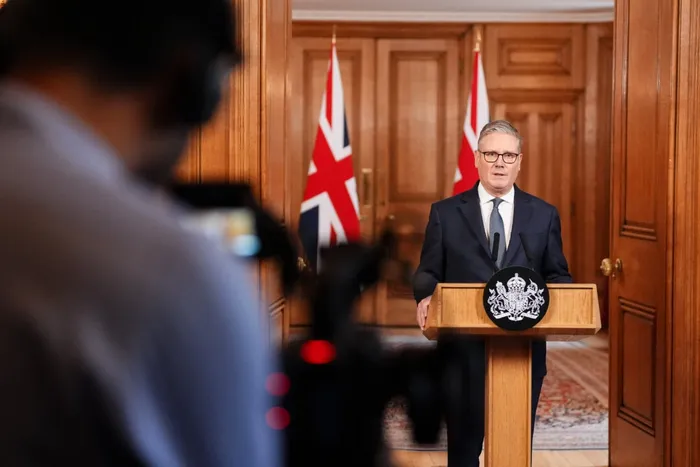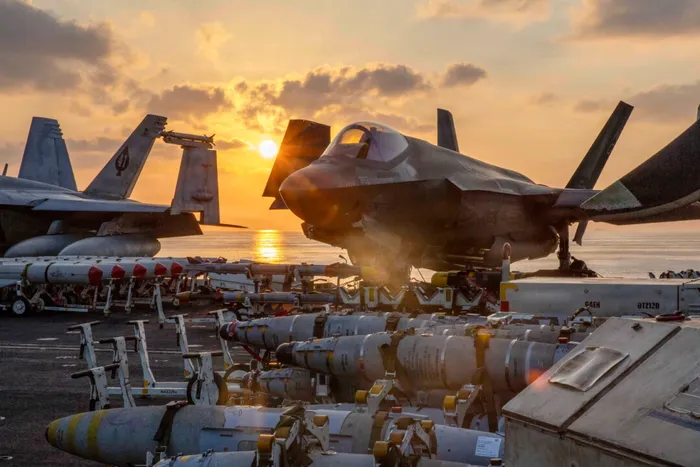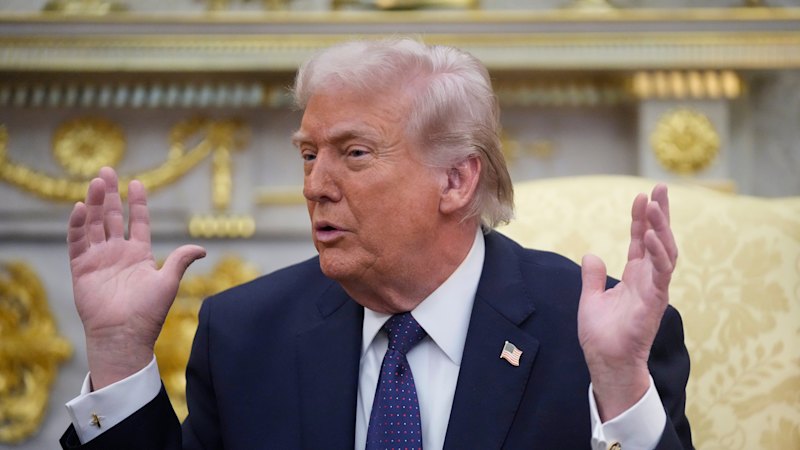
Donald Trump just threw a massive wrench into the "Special Relationship" between the U.S. and the U.K. during his latest press appearance. While the world watched the fallout from the most recent wave of military strikes against Iranian targets, the former president wasn't just talking about missiles and drones. He took a direct, incredibly personal swipe at British Prime Minister Keir Starmer. According to Trump, the current occupant of 10 Downing Street isn't even in the same league as the legendary wartime leader Winston Churchill.
This isn't just standard political trash talk. It's a calculated critique of how the West handles Middle Eastern aggression. Trump claims that Iran has been decimated by these recent strikes, but he’s simultaneously arguing that the leadership currently in place in London lacks the "iron will" needed to finish the job or maintain global order.
The Churchill comparison that stung London
Comparing any British Prime Minister to Winston Churchill is the ultimate litmus test in U.K. politics. For Trump to explicitly state that Starmer doesn't measure up is a move designed to undermine Starmer's credibility on the world stage. Trump’s rhetoric often leans on the imagery of "strongmen" versus "weak" bureaucrats. By invoking Churchill, he’s pointing to a perceived lack of backbone in the Labour government’s foreign policy.
Critics of Starmer have often described him as cautious or legalistic. Trump seized on that exact sentiment. He didn't just disagree with Starmer’s policies; he attacked his persona. For a Prime Minister who has spent months trying to build bridges with the Trump camp in anticipation of a potential second term, these comments are a massive setback. It’s a reminder that Trump values optics and "toughness" over traditional diplomatic protocols.
The timing of this "spray" is particularly brutal. Starmer has been trying to balance support for U.S.-led military actions with a domestic audience that's increasingly skeptical of long-term Middle East involvement. When Trump says "This isn’t Winston Churchill we’re dealing with," he's telling the British public—and the world—that he thinks the U.K. is currently a junior partner that can't be relied upon for heavy lifting.
Iran is decimated and the shift in Middle East power
Trump’s assessment of the military situation was equally blunt. He claimed that Iran has been decimated following the latest round of strikes. This refers to the coordinated efforts to neutralize IRGC-linked facilities and proxy command centers that have been harassing international shipping and regional stability.
While the Pentagon usually uses carefully measured language like "significant degradation of capabilities," Trump goes for the jugular. He wants the credit for the "Maximum Pressure" campaign he started years ago, suggesting that the current strikes are only effective because of the groundwork his administration laid.
Whether Iran is truly "decimated" is a matter of intense debate among intelligence analysts. While their infrastructure has taken a pounding, their proxy networks in Lebanon, Yemen, and Iraq remain active. However, Trump’s narrative is simple: the enemy is on the ropes, and now is the time for a leader who knows how to close the deal, not someone he views as a career politician.
Why the Starmer Trump feud matters for 2026
We’re looking at a serious shift in how the U.S. and U.K. might interact over the next few years. If Trump returns to the White House, his relationship with Starmer starts at sub-zero. Historically, the U.S. President and the U.K. Prime Minister need to be in lockstep to influence NATO and the G7.
Starmer’s team has been desperate to show they can work with anyone. They’ve met with Mike Pompeo. They’ve chatted with JD Vance. But Trump’s recent comments show that those efforts might be irrelevant. If he doesn't respect the person at the top, the policy doesn't matter.
The fallout for NATO and trade
If Trump views the U.K. leadership as "weak," it impacts more than just Middle East strikes. It affects:
- Defense spending targets and U.K. contributions to NATO.
- The possibility of a post-Brexit free trade agreement, which has been stalled for years.
- Intelligence sharing through the Five Eyes alliance.
You can't ignore the irony here. Starmer has actually been quite supportive of the recent strikes. He’s used the Royal Air Force to join U.S. operations. Yet, for Trump, it’s not about the action; it’s about the "vibe" of leadership. He wants a partner who looks and acts like a historical titan. In his eyes, Starmer just doesn't fit the costume.
The reality of the recent strikes
Let's look at what actually happened on the ground. The strikes targeted missile silos, drone launch sites, and storage bunkers. The goal was to stop the constant barrage of attacks on commercial vessels in the Red Sea. From a purely military standpoint, the operations were successful. Precision munitions hit their marks. Logistics chains were broken.
But Trump is looking at the political win. He’s framing the success of these strikes as a validation of his own "peace through strength" philosophy. He’s basically saying, "See? When you actually hit them, they crumble." It’s a direct challenge to the more cautious, escalatory-management style favored by the current Western establishment.
Common misconceptions about the U.S. and U.K. alliance
People often think the Special Relationship is unbreakable regardless of who is in charge. That's a myth. It's actually very fragile and depends heavily on the personal chemistry between leaders. Think Thatcher and Reagan or Blair and Clinton. When that chemistry is missing, the alliance becomes purely transactional and far less effective.
Trump’s "decimated" comment also ignores the resilience of decentralized insurgent groups. You can blow up a building, but you can't always blow up an ideology or a black-market supply chain. By oversimplifying the victory, Trump sets a high bar for what "winning" looks like—a bar that Starmer might find impossible to clear in the eyes of the American right.
How Starmer can pivot from this critique
Starmer's best move isn't to trade insults. That’s a game he’ll lose every time against Trump. Instead, he’s likely to double down on the "adult in the room" persona. He’ll point to the results of the strikes and the stability of the coalition.
But he has to be careful. If he looks too much like a follower of U.S. policy without getting anything in return, his domestic critics will pounce. They'll say he’s being bullied by a man who hasn't even taken office yet. It’s a tightrope walk over a very deep canyon.
The reality is that Iran isn't going anywhere, and neither is the need for a strong U.S.-U.K. partnership. If these two leaders can't find common ground, the only real winner is Tehran. They thrive on Western disunity.
Watch the next few months closely. If Starmer starts adopting more "Churchillian" rhetoric or taking a harder line on defense, you'll know Trump’s comments got under his skin. If he stays the course, he’s betting that the world prefers a steady hand over a loud one.
You should pay attention to the upcoming diplomatic summits. See if Starmer makes a play to connect with other European leaders to form a "Trump-proof" security bloc. That’s the real tell. If he moves closer to Paris and Berlin, it’s a sign he’s given up on winning over the Mar-a-Lago crowd. Check the official government briefings on defense exports to see if there's a shift in how the U.K. positions its military readiness in response to these "weakness" allegations.