Donald Trump has a long history of using shock value to dominate a room, but his recent attempt at a joke regarding Pearl Harbor didn't just land poorly—it hit a cultural wall in Tokyo. For an American audience, a reference to December 7, 1941, usually stays within the lines of "Remember Pearl Harbor" or a general nod to historical resolve. In Japan, the baggage is heavier. It involves the memory of a devastating war, a total national collapse, and a subsequent decades-long alliance that many Japanese citizens take very seriously. When you treat that history as a punchline, you aren't just being "politically incorrect." You're showing a fundamental misunderstanding of your closest Pacific ally.
The comment reportedly happened during a private meeting where Trump brought up the surprise attack. It wasn't a policy statement. It was one of those "Trumpisms" intended to show strength or perhaps just to get a rise out of the people in the room. But the ripple effect in Japanese media and political circles was immediate. While some American pundits might dismiss it as "just Donald being Donald," the Japanese public doesn't always see it that way. They see a potential leader of the free world trivializing the most traumatic turning point in modern Asian history.
Why the Pearl Harbor joke didn't work
Humor rarely travels well across borders, especially when it involves war. In Japan, the concept of "wa" or harmony is central to diplomatic and social interactions. Abruptly bringing up a bloody historical defeat to make a point about trade or defense isn't seen as "tough talk." It's seen as "kyuki yomenai"—someone who can't read the room.
The Japanese public has spent eighty years moving past the Imperial era. They've built a pacifist identity that is now being tested by rising tensions with China and North Korea. When a former and potentially future U.S. President brings up Pearl Harbor, it reminds the Japanese people of the old "occupier" mentality. It suggests that, despite the Treaties of Mutual Cooperation and Security, Washington might still view Tokyo through the lens of a defeated enemy rather than a partner.
The Sanae Takaichi factor
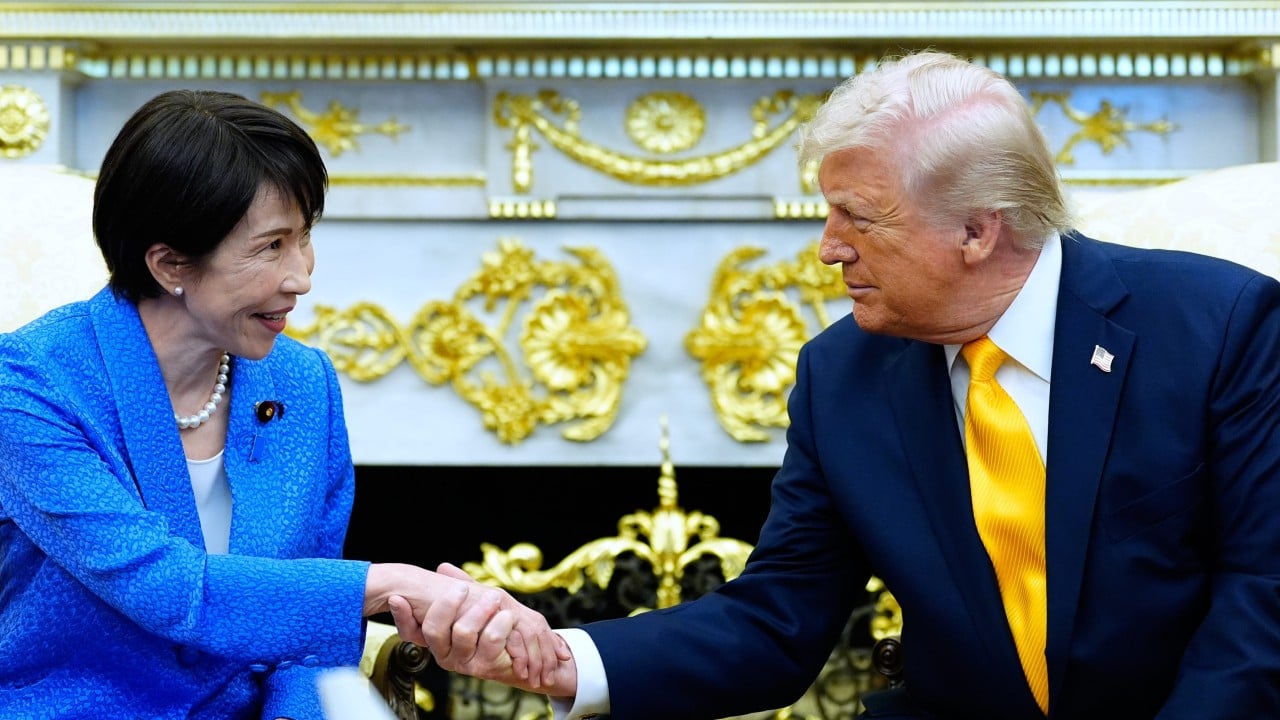
While Trump was busy stumbling through his rhetoric, Sanae Takaichi stepped up. Takaichi, a prominent figure in the Liberal Democratic Party (LDP), handled the situation with a level of poise that caught everyone's attention. She didn't go on a tirade. She didn't demand an immediate apology that would derail diplomatic channels. Instead, she offered a measured, firm response that defended Japanese dignity without burning bridges.
Takaichi represents a specific brand of Japanese conservatism. She's hawkish, proud, and doesn't shy away from history. Her ability to navigate Trump’s bluster made her look like the "adult in the room." For many in Japan, seeing a female leader stand her ground against a brash American figure was a powerful image. It signaled that Japan isn't just a silent partner anymore. The praise she received wasn't just about her words; it was about her timing. She filled the leadership vacuum that often appears when foreign leaders make off-the-cuff remarks that catch the Japanese cabinet off guard.
The strategic cost of casual rhetoric
Diplomacy is often built on boring, predictable language. There's a reason for that. When you're dealing with nuclear-armed neighbors and complex supply chains, "predictable" is a good thing. Trump’s "joke" creates unnecessary friction. It forces Japanese politicians to spend their political capital defending the alliance to a skeptical public.
If you're a Japanese voter, you might ask why your country is spending billions on U.S. military hardware if the American leadership still makes light of your national tragedies. It strengthens the hand of those who want Japan to distance itself from the U.S. and pursue a more independent—and potentially more volatile—defense path.
Public perception in Tokyo and beyond
If you walk through Ginza or Shibuya and ask people about this, you won't always get anger. You’ll often get a sigh. There’s a "Trump fatigue" that exists globally, but in Japan, it’s mixed with a genuine fear of abandonment. The joke wasn't just offensive; it was a reminder of "America First" in its rawest form.
- It signaled that historical sensitivities are secondary to the whim of the speaker.
- It highlighted the power imbalance in the relationship.
- It forced a spotlight on Takaichi, who used the moment to consolidate her own base.
The Japanese press, from the conservative Yomiuri Shimbun to the more liberal Asahi Shimbun, had to navigate how to report this without inciting too much anti-American sentiment. They know the alliance is vital. But they also know their readers expect respect.
What this means for the future of U.S. Japan relations
We have to look at the math of the Pacific. China is expanding its naval reach. North Korea is testing missiles with alarming frequency. The U.S. needs Japan's ports, its technology, and its geographic position. Making "jokes" about the start of World War II is a strategic blunder disguised as a quip.
Takaichi’s rise in the polls following this incident shows that the Japanese electorate is hungry for leaders who can handle "The Trump Experience" without folding. She proved that you can be a staunch ally while still demanding a basic level of decorum. It’s a lesson other world leaders have struggled to learn over the last decade.
Realities of the 2026 political climate
The world in 2026 is far more interconnected and far less patient than it was in 2016. Information moves in seconds. A comment made in a room in Mar-a-Lago or a rally in the Midwest is translated and dissected in Tokyo before the speaker has even finished their next sentence. There is no such thing as a "local" joke anymore.
Japan is currently navigating its own internal debates about military spending and its pacifist constitution. These are deeply sensitive topics. When an American leader brings up the war in a flippant way, it makes those internal debates even more explosive. It gives ammunition to those who argue that the U.S. is an unreliable, culturally deaf partner.
How to talk about history without blowing up an alliance
If you're in a position of power, history isn't a toy. It's a map. You need to know where the landmines are.
- Context is everything: If you're talking to a Japanese official, focus on the shared future, not the scars of the past.
- Respect the "Wa": Understand that silence or a polite nod doesn't mean your joke was funny; it often means you've caused an awkward rift.
- Acknowledge the evolution: Japan is not the nation it was in 1941. Treating it as such is a massive failure of modern intelligence.
The takeaway here isn't just that Trump said something controversial. He does that every day. The takeaway is that Japan is changing. The praise for Takaichi shows a Japan that is more willing to push back, more protective of its national narrative, and less willing to let "casual" insults slide.
Watch how other LDP leaders react in the coming months. You'll likely see a shift toward this more assertive style of communication. They've seen that it works. They've seen that the public responds well to a leader who can tell a superpower to stay in its lane without ending the friendship. This is the new blueprint for dealing with "America First" diplomacy. It’s not about shouting; it’s about the quiet, firm correction that leaves the other person looking like the one who lost their cool.
Moving forward, expect Japanese officials to be much more selective about the "private" settings they enter with American politicians who have a history of these outbursts. The cost of a bad joke is simply getting too high for Tokyo to ignore.