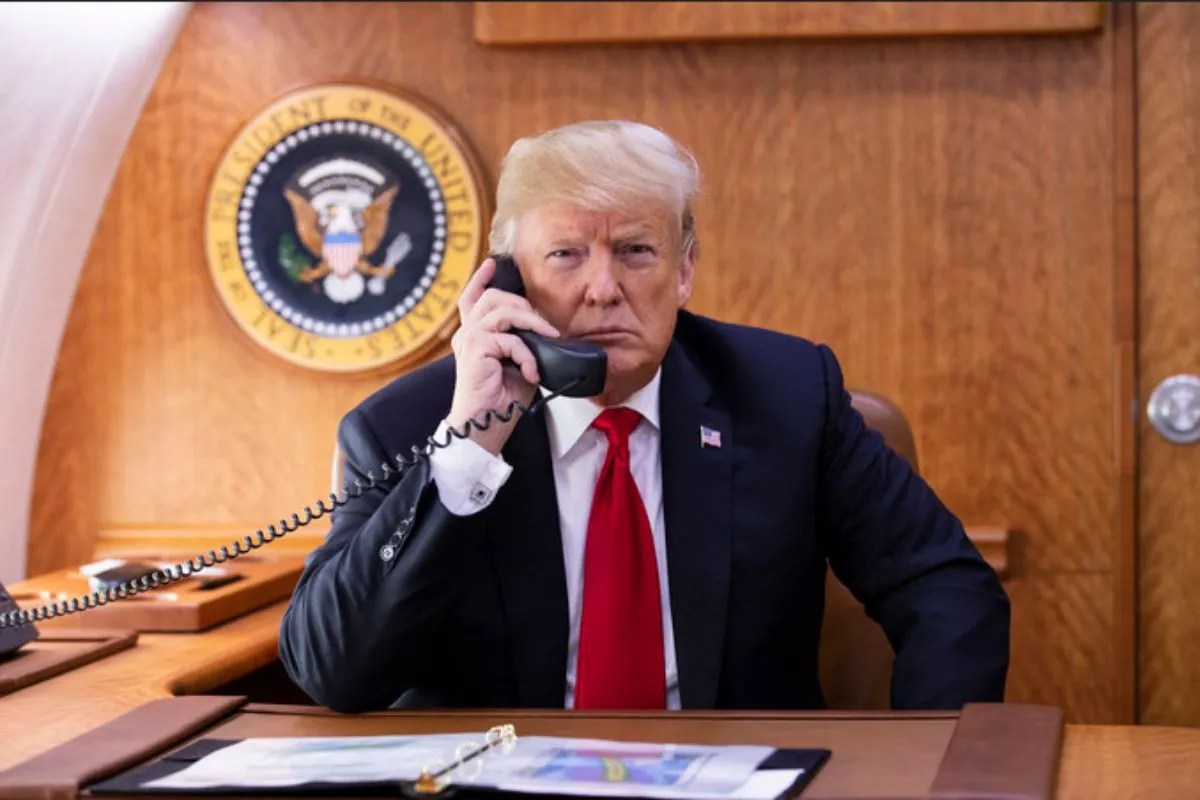
The headlines are shouting about a shift in the wind. They claim that because Donald Trump prefers a "phone call" over a sit-down summit in Pakistan regarding Iranian relations, we are witnessing a new era of streamlined diplomacy. They call it efficiency. I call it a liquidation sale of Pakistani sovereignty.
The lazy consensus among South Asian analysts is that a direct line to Mar-a-Lago or the Oval Office simplifies the messy, three-way friction between Islamabad, Tehran, and Washington. It doesn’t. It bypasses the institutional safeguards that keep middle powers from being crushed between superpowers. If you think a 10-minute chat between two billionaires or heads of state replaces decades of rigorous, face-to-face bilateral negotiation, you haven’t been paying attention to how real leverage is built. Discover more on a connected issue: this related article.
The Myth of the Digital Handshake
Mainstream media is obsessed with the "optics" of the phone call. They frame it as Trump being "decisive" and Pakistan being "flexible." This is a fundamental misunderstanding of how the Persian-Pakistan corridor operates.
Geopolitics is not a Zoom meeting. It is a physical, geographic reality. More journalism by The Guardian delves into similar perspectives on this issue.
When you move negotiations to a digital or telephonic vacuum, you strip away the regional context. Iran isn't just a "topic" on a call; it is a neighbor with shared borders, energy pipelines, and sectarian complexities that cannot be resolved through a handset. By shifting to "phone-only" diplomacy, Pakistan isn't gaining a direct line to the White House; it is losing its seat at the table.
I’ve seen dozens of trade deals and security pacts fall apart because one side thought they could "wing it" on a call. In the world of high-stakes diplomacy, if you aren't in the room, you are on the menu.
The Energy Pipeline Fallacy
Let’s talk about the elephant in the room: the IP (Iran-Pakistan) Gas Pipeline.
The competitor's narrative suggests that Trump’s intervention will somehow "clear the air." Nonsense. The U.S. stance on the IP pipeline has always been one of strangulation via sanctions. Trump’s "phone call" approach is likely a mechanism to deliver ultimatums without the messy optics of a televised disagreement in Islamabad.
- The Status Quo Logic: "If we talk to Trump directly, we can negotiate a sanctions waiver."
- The Reality: The U.S. Treasury Department does not grant waivers based on a "good talk." They grant them based on strategic necessity.
By avoiding formal summits, the U.S. avoids making public concessions. They keep the pressure high while offering the illusion of intimacy. It’s a classic sales tactic: make the client feel like they have a "special connection" while you’re hiking the interest rate.
Why Islamabad is Playing a Losing Hand
Pakistan’s current leadership seems to believe that personal rapport with Trump can offset structural economic deficits. This is a gamble with a 0% success rate.
The "phone call" strategy works for Trump because it allows him to dominate the narrative. He can tweet (or post on Truth Social) his version of the call before the Pakistani Foreign Office has even finished their tea. This is asymmetric information warfare.
When a superpower insists on informal communication, it’s because they want to avoid the legal and diplomatic record that comes with formal state visits. They want the freedom to change their mind tomorrow without the "receipts" of a joint communique.
The Cost of Bypassing Tehran
You cannot solve the "Iran problem" by talking to the U.S. in isolation.
- Border Security: Who handles the Balochistan border? Not the man on the phone in D.C.
- Trade Flows: Who manages the illicit and licit trade that keeps local economies alive? Not a telecommuter.
- Regional Stability: When the U.S. inevitably shifts its focus to the South China Sea, Pakistan is still stuck next to Iran.
Ignoring the neighbor to please the distant landlord is a recipe for a domestic security nightmare. I’ve seen this play out in corporate restructuring: the CEO listens to a consultant 3,000 miles away and ignores the plant manager on the ground. The result is always a strike or a shutdown.
The Sanctions Trap
The world talks about "peace talks" as if they are a moral pursuit. They aren't. They are a financial one.
The U.S. uses the dollar as a weapon. If Pakistan thinks a "phone call" will mitigate the risk of being gray-listed by the FATF or hit with secondary sanctions for dealing with Iran, they are delusional.
Imagine a scenario where the U.S. promises "flexibility" on a call. Pakistan moves forward with an Iranian energy deal. Six months later, a different faction in D.C. (or the same one, on a different day) decides to enforce the letter of the law. Without a signed, formal diplomatic framework established during an official summit, Pakistan has zero legal recourse.
"But Trump said..." is not a valid defense in international law.
The Intellectual Laziness of "Simplified Diplomacy"
We need to stop praising the "death of the summit." Summits are boring, expensive, and tedious—and that is exactly why they work. They force hundreds of bureaucrats to align their interests. They produce documents that have the weight of the state behind them.
A phone call is just a vibration in the air.
If Pakistan wants to be treated as a sovereign power, it must stop behaving like a vassal state waiting for a call from its master. The "convenience" of this new arrangement is actually a downgrade in status.
What No One Admiits About the "Iran-Pakistan-US" Triangle
The real tension isn't about peace; it's about transit.
China’s CPEC (China-Pakistan Economic Corridor) is the third leg of this stool. Trump’s "phone call" strategy is as much about containing Chinese influence as it is about Iran. By tethering Pakistani decision-making to a direct, informal U.S. line, Washington effectively creates a bottleneck for Chinese expansion into the Middle East.
If you’re sitting in Islamabad, you should be asking: "Why does the most powerful man in the world want to talk to me on a burner phone instead of standing on my soil?"
The answer is simple: He doesn't want to commit. He wants to control.
The Strategy for Survival
If Pakistan wants to flip the script, it needs to stop picking up the phone.
Demand the summit. Demand the formal state visit. Demand the signed treaties. If the U.S. refuses to engage with the physical reality of the region, then Pakistan should lean into its regional alliances with Tehran and Beijing.
Leverage is not found in a "good relationship" with a volatile leader. Leverage is found in being so integral to the regional architecture that the superpower has no choice but to show up in person.
The current path is a slow slide into irrelevance. Every time a leader agrees to "settle it over the phone," they are admitting that their time, their soil, and their people aren't worth the flight time.
Stop treating diplomacy like a customer service hotline. You aren't calling to troubleshoot a router; you are negotiating the survival of a nuclear-armed nation. Act like it.
Don't wait for the ring. Build the pipeline. Let them call you when they're ready to talk business, not just "check in."



