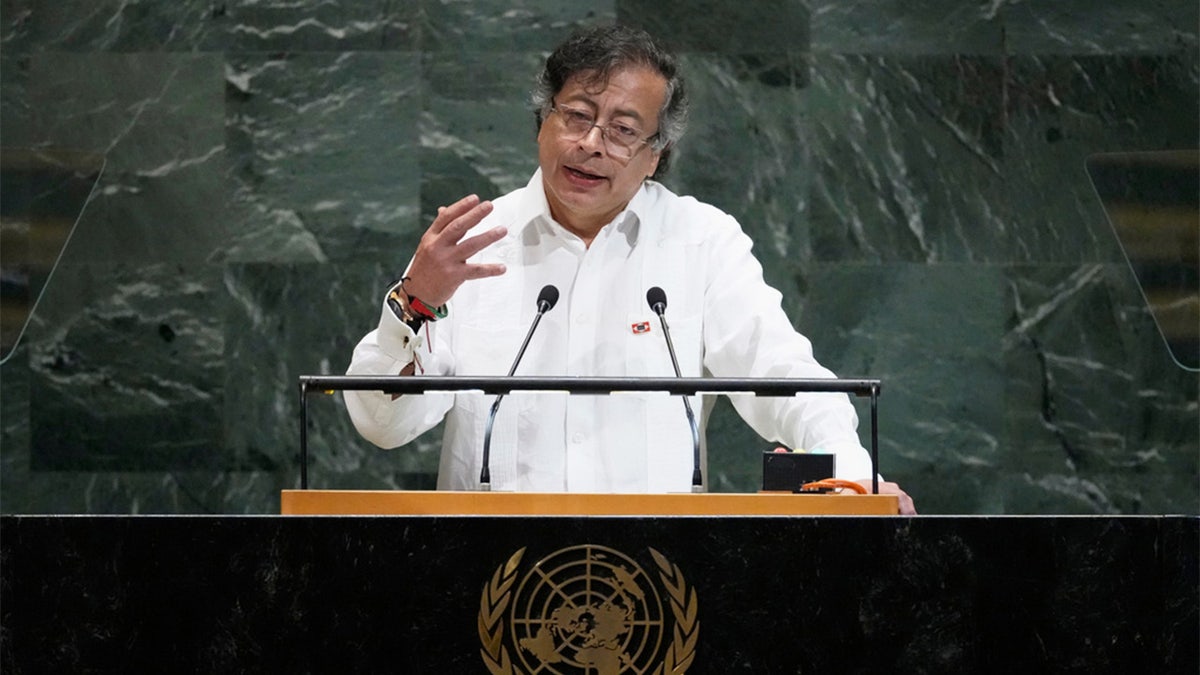
In a small, windowless room in Vienna, the air usually smells of stale coffee and the ozone scent of high-end air purifiers. Diplomats sit in chairs that have felt the weight of a thousand stalemates, nursing lukewarm water and watching the clock. Outside, the world moves at a frantic pace, driven by the five-second refresh of a social media feed. Inside, they are trying to bargain for time on a scale that feels almost geologic.
Twenty years. Meanwhile, you can explore related developments here: The Logistics of Civil Disobedience Strategic Friction in Urban Protest Operations.
That is the number currently hovering over the negotiating table like a heavy fog. Recent reports suggest the United States is quietly pushing for a two-decade moratorium on Iran’s uranium enrichment. To a casual observer, twenty years sounds like a sentence. To a nuclear physicist or a grand strategist, it is something much rarer: a generational pause. It is the attempt to freeze a ticking clock before the gears grind into something irreversible.
To understand the weight of this request, you have to look past the spreadsheets and the satellite imagery of reinforced bunkers. You have to look at the atoms themselves. To understand the bigger picture, we recommend the excellent article by BBC News.
The Invisible Alchemy
Imagine a handful of sand. Most of it is dull, grey, and inert. But tucked away in that handful are a few grains of vibrant, glowing gold. If you want to make something powerful, you have to separate those gold grains from the grey.
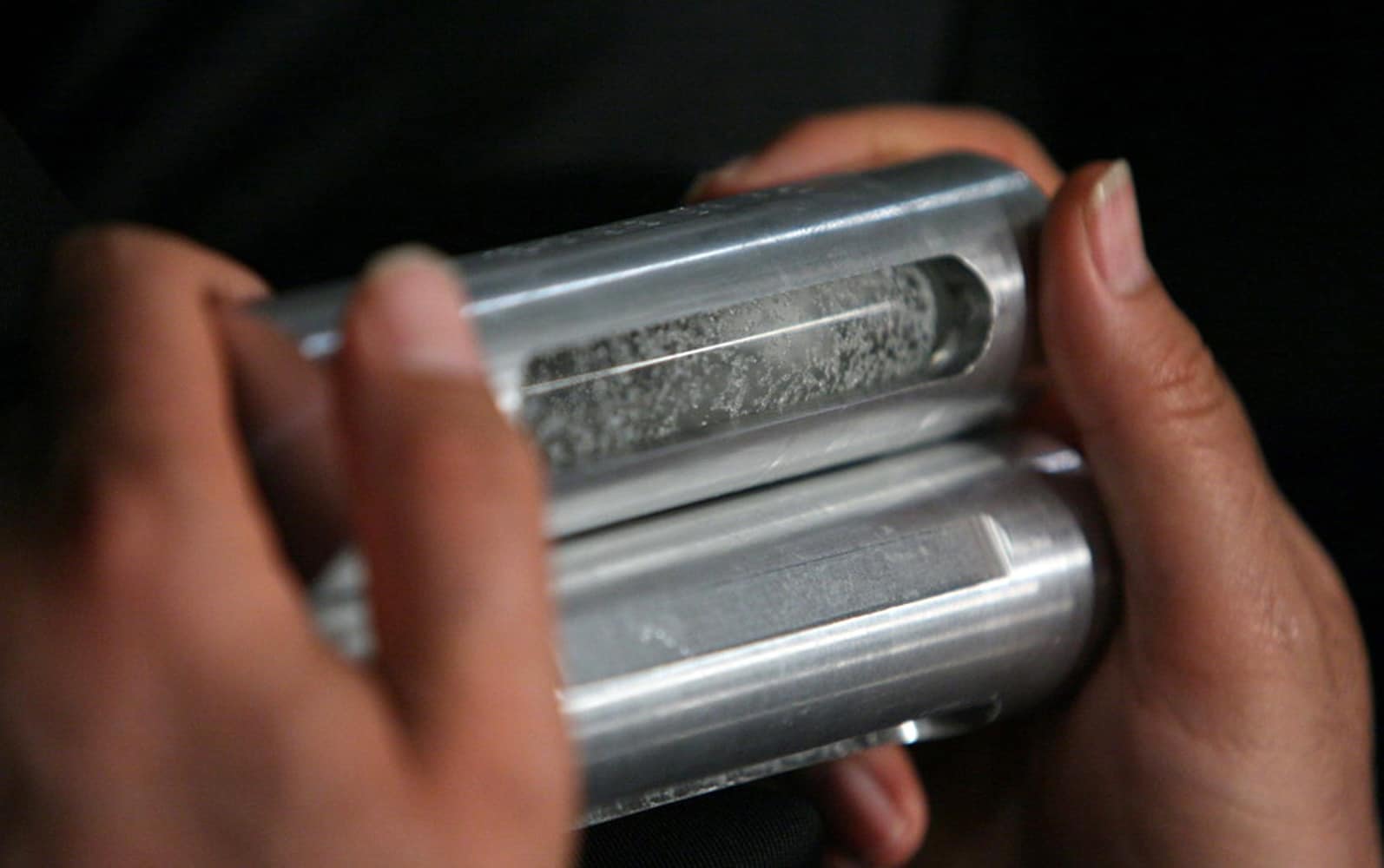
Uranium enrichment is, essentially, the world’s most dangerous sorting task. Naturally occurring uranium is mostly U-238, which is stable and relatively harmless. The "gold" is U-235, the isotope that can sustain a nuclear chain reaction. In its raw form, uranium contains less than one percent of this isotope. To run a power plant, you need to spin that uranium in high-speed centrifuges until the concentration hits about 3.5 to 5 percent.
But the physics of enrichment is a slippery slope. The effort required to get from 0 percent to 5 percent is immense. However, once you’ve reached 20 percent—the level used for medical research and isotopes—you have already done about 90 percent of the work needed to reach "weapons-grade" 90 percent.
The hill gets steeper, but the distance to the top gets shorter.
Right now, Iran has pushed its enrichment to 60 percent. In the world of nuclear diplomacy, this is the equivalent of standing on a ledge with one foot dangling over the side. You aren't falling yet, but you’ve finished the climb. The U.S. proposal for a 20-year pause isn't just about stopping the enrichment; it’s about demanding that the climber climb back down and stay in the valley for long enough for the world to change.
The Ghost in the Centrifuge
Consider a technician named Abbas. He is a hypothetical composite of the thousands of engineers working in facilities like Natanz or Fordow. Abbas isn't a villain in a spy thriller. He is a man who studied hard, who understands the elegant mathematics of rotational fluid dynamics, and who goes to work every day to monitor rows of screaming silver cylinders.
When he looks at a centrifuge, he sees a marvel of engineering. When a strategist in Washington or Tel Aviv looks at the same machine, they see a countdown.
This disconnect is the heartbeat of the conflict. For Iran, the right to enrich is a matter of national pride and "technological sovereignty." It is the proof that they cannot be kept in the shadow of the West. For the U.S. and its allies, that same technology is a shadow that threatens to darken the entire Middle East.
A 20-year pause is an attempt to solve a psychological problem with a chronological solution. If you can stop the spinning for two decades, the "breakout time"—the window of time needed to produce enough material for a bomb—stays wide enough for diplomacy to breathe. If the spinning continues, that window shrinks from months to weeks, then to days.
When the window is only days wide, there is no time for phone calls. There is only time for reflex. And in the nuclear age, reflexes are usually fatal.
The Weight of Two Decades
Why twenty years? Why not five, or fifty?
Twenty years is the length of a generation. It is the time it takes for a child born today to become a voter, a soldier, or a scientist. In twenty years, the current leadership in both Tehran and Washington will likely have moved on. The world’s energy needs will have shifted. We might be fused to a completely different technological grid.
The U.S. is betting on the idea that if you can hold the status quo long enough, the reasons for the conflict might eventually evaporate. It’s a gamble on human evolution.
But time is not a neutral resource. In the streets of Tehran, the impact of these high-level negotiations isn't measured in isotopes; it’s measured in the price of eggs and the availability of heart medication. Sanctions, the primary lever used to force these pauses, act like a slow-motion siege.
The invisible stakes are found in the hospitals. When enrichment is restricted, the production of medical isotopes used for cancer treatment often becomes a bargaining chip. A mother waiting for a PET scan in a Tehran clinic is inextricably linked to a centrifuge spinning miles underground, which is in turn linked to a proposal drafted in a carpeted office in D.C.
The diplomat’s "pause" is the civilian’s "uncertainty."
The Shadow of the Past
We have been here before. The 2015 Joint Comprehensive Plan of Action (JCPOA) was supposed to be the definitive answer. It was a masterpiece of technical nuance that ultimately fell victim to political volatility. When the U.S. withdrew in 2018, the "clock" started ticking again, faster than before.
Since then, the trust has disintegrated. Trust is easy to burn and agonizingly slow to regrow. It grows at the speed of a redwood tree, while the threat of nuclear proliferation grows at the speed of a wildfire.
The current reported demand for a 20-year pause is an admission of failure. It is an admission that short-term "fixes" don't work for long-term existential threats. You cannot patch a crumbling dam with scotch tape; you have to stop the flow of water entirely until the structure can be rebuilt.
But how do you convince a nation to mothball its most prized scientific achievement for twenty years? You don't do it with logic alone. You do it by offering a future that is more attractive than a weapon.
The carrot must be as massive as the stick. This means a total reintegration into the global economy, a lifting of the weight that has crushed the Iranian middle class, and a guarantee that the rules won't change again with the next election cycle.
That last part is the hardest. How do you promise twenty years of stability in a world that can't seem to guarantee twenty months?
The Silence of the Machines
If the reports are true and a 20-year pause is achieved, the immediate result won't be a parade. It will be a profound, heavy silence.
The centrifuges will slow. The high-pitched whine that has defined the last two decades of Middle Eastern geopolitics will fade. Technicians like Abbas will go home, perhaps to work on solar arrays or civil infrastructure. The diplomats in Vienna will finally go outside and find a better cup of coffee.
But the knowledge doesn't go away. You can’t un-split the atom. You can’t erase the blueprints or the years of expertise gained in the pursuit of the threshold. A 20-year pause is not a disappearance; it is a choice to keep the power dormant.
It is an act of collective willpower.
We often think of history as a series of loud explosions and dramatic collapses. But sometimes, the most important historical events are the things that don’t happen. The war that was avoided. The bomb that was never built. The twenty years of peace that were bought, second by agonizing second, at a mahogany table.
The stakes are invisible because they are the air we breathe. We only notice the air when it starts to burn.
If this pause holds, the generation born this year will reach adulthood in a world where the "Iran nuclear crisis" is a chapter in a history book rather than a headline on a screen. That is the true human element of the negotiation. It isn't about the purity of the uranium; it’s about the purity of the future we are leaving for people who haven't even been born yet.
The clock is still ticking. The diplomats are still sitting in their uncomfortable chairs. The atoms are still waiting.
In the end, twenty years is a long time to hold your breath. But when the alternative is the fire, you learn to savor the stillness. You learn that a pause isn't just a gap in the action. It is the action itself. It is the most difficult, most courageous thing a human being can do: deciding to wait.
The world holds its breath with them. We wait to see if the silence will last, or if the spinning will begin again, faster and louder than before, until the clock finally strikes midnight.