Viktor Orban’s recent threat to choke off gas flows to Ukraine has met a surprisingly icy reception in Kyiv. While the Hungarian Prime Minister gambles on using his country’s position as a transit hub to extract concessions from both the EU and Ukraine, the Ukrainian Ministry of Foreign Affairs has signaled that they are already several steps ahead. Kyiv has clarified that it has identified and secured alternative supply volumes, effectively neutralizing the leverage Budapest thought it held over the region’s winter heating prospects. This isn't just a spat over pipelines; it is the final breakdown of a decade-long energy dependency that Moscow used to pull the strings of Eastern European sovereignty.
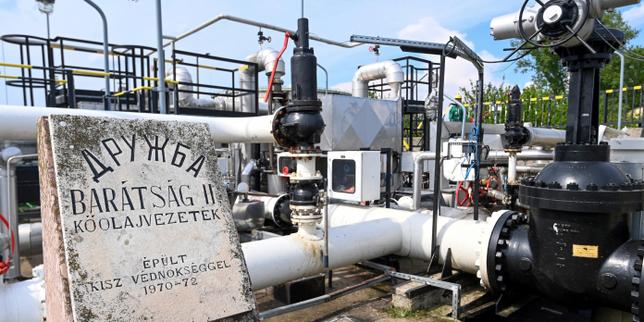
The current friction centers on the reverse flow mechanism. For years, Ukraine has not technically "imported" gas from Russia in the traditional sense. Instead, it buys gas from European hubs—essentially Western gas that travels through European pipelines back into Ukraine. Hungary, with its strategic interconnectors, has been a major gateway for this trade. When Orban suggests that these deliveries might cease, he is attempting to weaponize a logistical bottleneck. However, the energy market of 2026 is fundamentally different from the one that existed before the full-scale invasion.
The Infrastructure of Independence
The reason Kyiv remains unfazed by Hungarian posturing lies in the massive diversification of the European gas grid. Since 2022, the continent has undergone a violent but necessary decoupling from Russian state-controlled energy. New interconnectors between Poland, Slovakia, and Romania have created a web of supply that no longer relies on a single point of failure. If the tap at the Hungarian border turns off, the gas simply reroutes through the Baltic Pipe or flows up from the LNG terminals in Greece and Croatia.
Ukraine has also spent the last three years optimizing its own domestic production. While the front lines remain active, the western regions of Ukraine sit atop significant natural gas reserves. By focusing on deep-drilling technology and internal grid resilience, the state-owned energy giant Naftogaz has brought the country closer to self-sufficiency than at any point in its post-Soviet history.
The Strategy of Underground Storage
Kyiv holds a card that Orban often chooses to ignore in his public addresses. Ukraine possesses the largest underground gas storage (UGS) facilities in Europe. These vast salt caverns and depleted reservoirs can hold more than 30 billion cubic meters of gas.
European traders currently use these facilities to store their own excess supply during the summer months when prices are low. This creates a mutual hostage situation, but one where Ukraine holds the physical keys. If Hungary were to unilaterally block transit, it would risk the assets of major European energy players who rely on those storage units to balance the entire EU market. The diplomatic blowback for Budapest would be immediate and likely involve the freezing of more than just energy flows.
Analyzing the Orban Doctrine
To understand why Hungary continues to bark despite having no teeth in this fight, one must look at the internal politics of Fidesz. Orban’s political brand is built on the idea of the "Hungarian Exception." He positions himself as the only leader capable of keeping Hungarian utility bills low by maintaining a "pragmatic" (read: subservient) relationship with the Kremlin.
However, this pragmatism is increasingly expensive. By isolating Hungary from the rest of the EU’s energy strategy, Orban has actually made his country more vulnerable to price spikes. When he threatens Ukraine, he is performing for a domestic audience and a Russian benefactor, not making a sound economic move. The Ukrainian foreign ministry’s retort was not just a defense of their energy security; it was a public exposure of the fact that Hungary’s energy threats are based on an outdated map of European power.
Market Realities Versus Political Theater
Gas prices at the Title Transfer Facility (TTF)—the primary European benchmark—no longer react with the same volatility to Orban’s rhetoric. Traders have baked "Hungary risk" into their models for years. The market knows that the Vertical Corridor, a project linking Greece to Ukraine via Bulgaria and Romania, is now operational. This pipeline allows gas to bypass the traditional East-West routes entirely.
When a diplomat says they "know where to get the volumes," they are referring to the liquefied natural gas (LNG) hitting the shores of Alexandroupoli and the increased output from Norwegian shelf fields. The era where a single politician in Budapest could freeze Kyiv is over.
The Logistics of the Alternative
Securing the volumes is half the battle; the other half is the physics of the grid. Pipelines require specific pressure levels to function. If Hungary stops pumping, the pressure in certain sections of the Ukrainian transit system could drop, making it harder to move gas from the west of the country to the industrial east.
Ukraine’s engineers have anticipated this. They have spent the last two winters practicing "reverse mode" operations, where the entire national grid is flipped to push gas from west to east. This is a complex feat of fluid dynamics, requiring massive compressor stations to work against the original design of the pipes. The fact that Ukraine survived the targeted bombardment of its energy infrastructure in previous winters suggests that a simple valve-turning by a neighbor is a manageable problem.
The Role of Romania and Slovakia
Romania has quietly emerged as a regional energy powerhouse. With the development of the Neptun Deep project in the Black Sea, Bucharest is on track to become the largest gas producer in the EU. Ukraine has already begun negotiating long-term supply contracts that would see Romanian gas flowing directly north, bypassing the Hungarian system entirely.
Slovakia, too, remains a more reliable partner than Hungary. Despite its own complicated internal politics, Bratislava understands that the transit fees it earns from moving gas into Ukraine are vital for its national budget. The "Slovak Route" remains the primary artery for Western gas entering the Ukrainian market, and there is little appetite in Bratislava to follow Orban’s lead into a diplomatic dead end.
The Cost of the Bluff
Every time Orban makes these threats, he accelerates the irrelevance of Hungarian infrastructure. European energy companies are risk-averse. If a transit route is deemed "politically unstable," they will invest in alternatives. By attempting to bully Kyiv, Hungary is essentially devaluing its own pipeline network.
Ukraine's response was a masterclass in modern diplomacy. It didn't plead. It didn't offer concessions. It simply pointed to the market. The message was clear: "We have the contracts, we have the pipes, and we have the storage. You have a fading monopoly."
The shift in power is permanent. The leverage that Moscow once exercised through its European satellites has evaporated into a market defined by diversity and redundancy. Ukraine isn't just surviving the energy war; it is winning it by proving that the old rules of geography no longer apply.
The next time a threat emerges from Budapest, the market won't even blink. The pipes are already being redirected, and the contracts are already signed. Hungary can keep the gas it refuses to send, but it will find itself holding a commodity that fewer and fewer people need to buy from them. The volumes have been found elsewhere.