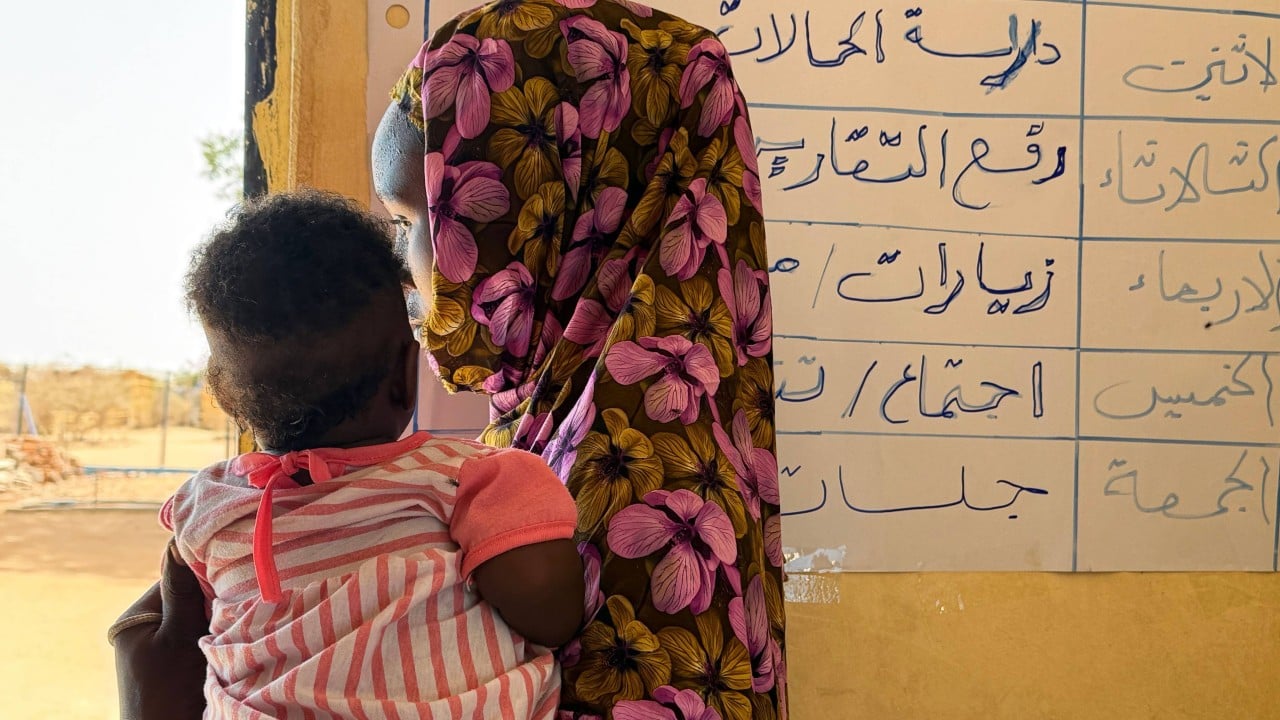
The silence in the clinic is heavy. It is not the silence of peace, but the airless, suffocating quiet of a room where the air has been sucked out. In Sudan, the sun beats down on the dust of displaced persons camps, and the heat is a physical weight. But inside the hearts of the women waiting for a word with a counselor, the temperature is absolute zero.
Amina is twenty-four. That is not her real name, but for our purposes, it is the name of a ghost. She sits with her hands folded so tightly that her knuckles are the color of bleached bone. She does not look up when the door opens. She does not look up when the wind rattles the corrugated metal roof. Amina is a survivor of a weapon that leaves no shrapnel behind. Expanding on this theme, you can find more in: Rebecca Grynspan and the Survival of the United Nations.
In the current conflict tearing Sudan apart, bodies are being used as maps of conquest. The UN reports a surge in sexual violence so systematic it can only be described as a tactical choice. This is not the chaos of war; it is the architecture of it. When a city falls, the survivors carry the siege home within their own skin.
The Invisible Wound
We talk about war in terms of territory. We talk about who holds the airport, who controls the bridges, and who has the most ammunition. We rarely talk about the psychological fallout that occurs when the most private boundaries are shattered. Observers at The Washington Post have shared their thoughts on this trend.
For Amina and thousands like her, the trauma does not end when the soldiers move on to the next village. That is just the prologue. The real war begins in the dark, in the sleepless hours when the mind loops the same horrific film. Post-Traumatic Stress Disorder is a clinical term, but for a woman in Khartoum or Darfur, it is a living, breathing shadow. It manifests as a heart that won't stop racing. It shows up as a sudden, paralyzing fear of the sound of a truck engine.
Psychologists working on the ground see the same patterns. The brain, in an attempt to protect itself, begins to shut down. This is dissociation. It is the feeling of being a passenger in your own body, watching your life happen from a great, cold distance. It is a survival mechanism that eventually becomes a prison.
A System Under Siege
Sudan’s healthcare system was already fragile. Now, it is a skeleton. Imagine trying to treat a massive mental health crisis when the hospitals are being shelled and the pharmacies are empty.
There is a staggering lack of specialized care. In many regions, there isn't a single psychiatrist for hundreds of miles. The burden falls on community volunteers and overstretched NGOs. They are trying to hold back a flood with a handful of sand. The UN estimates that millions of people are now in need of psychological support, yet the resources available could barely serve a small town.
Consider the math of misery. If ten percent of a population experiences direct sexual violence, and each of those individuals has a family, the ripple effect of trauma touches everyone. It poisons the way mothers interact with children. It breaks the trust between neighbors. It creates a generational scar that, if left untreated, will dictate the future of the nation long after the guns fall silent.
The Weight of the Unspoken
The most dangerous part of this crisis is the stigma. In many Sudanese communities, to be a victim of sexual violence is to carry a perceived stain. The shame is misplaced, but its effects are lethal.
Amina cannot tell her father what happened. She cannot tell her brothers. If she speaks, she risks being cast out. This forced silence is a secondary assault. It prevents women from seeking medical care, from getting tested for STIs, and from accessing the few counseling sessions that exist. They are forced to carry the weight of a national tragedy in total isolation.
This is the hidden cost of the conflict. The physical injuries might heal, but the internal collapse is total. When we look at the statistics—the thousands of reported cases—we must remember that these are only the women who were brave enough or desperate enough to speak. The true number is likely a multiple we are not yet ready to face.
The Biology of Fear
Trauma is not just "in the head." It is a physiological reality. When a human being undergoes the level of terror reported in Sudan, the endocrine system is flooded with cortisol and adrenaline.
The amygdala, the brain's alarm system, becomes hyper-reactive. The prefrontal cortex, which handles logic and calm reasoning, goes offline. This is why survivors describe being "stuck" in the moment of the attack. Their bodies literally believe the threat is still happening, every minute of every day.
To heal this requires more than just a conversation. It requires a sustained, safe environment that Sudan currently cannot provide. We are witnessing the systematic destruction of the Sudanese psyche, a deliberate hollowing out of the people who are meant to rebuild the country.
Beyond the Headlines
The news cycle is a fickle thing. It focuses on the explosion, the fire, the fleeing crowds. It rarely stays for the aftermath. But the aftermath is where the real story of Sudan is being written.
It is written in the clinics where women wait for hours just for five minutes of validation. It is written in the eyes of children who have seen their mothers broken and don't understand why the world has gone quiet.
We are not just looking at a humanitarian disaster. We are looking at a fundamental test of global empathy. If we treat these reports as "standard" consequences of war, we become complicit in the normalization of the unthinkable. These are not just facts in a UN briefing. These are the shattered pieces of a million lives.
The sun begins to set over the camp. Amina finally stands up. She hasn't spoken much, but she has been heard by someone. It is a small victory, a tiny spark in a very deep cave.
The war for Sudan’s territory continues in the streets, loud and violent. But the war for its soul is being fought in the quiet, one broken memory at a time. The world watches the maps. The survivors watch the door. They are waiting to see if anyone will acknowledge the war they are still fighting inside themselves.
Amina walks back to her tent, her shadow long and thin against the cooling sand. She is still here. For now, that has to be enough.