The diplomatic stalemate between Washington and Tehran isn't just about a broken nuclear deal or regional influence. It’s about a fundamental breakdown in the mechanics of negotiation. Right now, Iranian officials are pointing squarely at what they call "maximalist demands" from the United States as the primary barrier preventing direct, face-to-face talks. If you’re looking for a quick fix to the tension in the Middle East, you won’t find it in the current rhetoric. The gap between what the US wants and what Iran is willing to give has become a chasm.
For years, the two nations have relied on intermediaries—often European or Omani diplomats—to shuttle messages back and forth. This "proximity talk" method is slow, clunky, and prone to misinterpretation. Yet, Iran remains firm. They won't sit across a table from American officials until the US drops its "all or nothing" approach. It’s a high-stakes game of geopolitical chicken where neither side wants to blink first.
The problem with asking for everything at once
Diplomacy usually works on the principle of give and take. You trade a little bit of this for a little bit of that. But according to Tehran, the US has abandoned this script. Iranian officials argue that the Biden administration, and the subsequent policy shifts leading into 2026, have tried to expand the scope of negotiations far beyond the original 2015 nuclear agreement (the JCPOA).
Washington wants to talk about Iran’s ballistic missile program. They want to talk about regional proxies in Yemen, Lebanon, and Iraq. They want a "longer and stronger" deal that essentially reshapes Iran’s entire defense strategy. To Iran, these are maximalist demands. They view them as a direct threat to their national sovereignty and a moving of the goalposts. When one side asks for the moon before even agreeing to sit down, the other side tends to stay home.
Trust is a dead currency in Tehran
You can't understand the refusal to talk without looking at the 2018 withdrawal from the JCPOA. When the US walked away from a deal that Iran was demonstrably following, it didn't just kill a treaty. It killed trust. Imagine signing a contract for a house, moving in, and then having the seller show up three years later saying the contract is void but they’re keeping your deposit. You wouldn’t exactly be rushing to sign a new deal with that person.
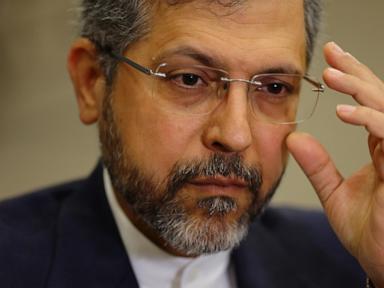
Iranian negotiators, including high-ranking officials in the foreign ministry, keep coming back to this point. They argue that direct talks provide a "political gift" to the US without any guarantee of results. In their view, if the US can’t even stick to a deal that was already signed, what’s the point of a face-to-face meeting to discuss a new one? They want tangible proof—usually in the form of permanent sanction relief—before they’ll even consider a handshake.
Sanctions haven't forced a surrender
There’s a long-standing theory in Washington that if you just squeeze an economy hard enough, the government will eventually cave. It’s called "Maximum Pressure." We’ve seen it for nearly a decade now. While these sanctions have undeniably crippled the Iranian Rial and made life incredibly difficult for ordinary citizens, they haven't achieved the primary goal of changing the government’s core behavior.
Instead of caving, Iran has pivoted. They’ve strengthened ties with Moscow and Beijing. They’ve built a "resistance economy" that, while battered, still functions. This shifts the leverage. When the US enters a room expecting a desperate opponent, they find a defiant one instead. This disconnect is why the term "maximalist" keeps appearing in Iranian press releases. They feel the US is acting as if it has all the cards, while Tehran believes it has proven it can survive the worst Washington has to throw at it.
The role of intermediaries in a fractured world
Since direct talks are off the table, the world relies on "shuttle diplomacy." Countries like Qatar and Oman have become the unofficial mailrooms of international relations. While this keeps a total communication blackout from happening, it’s a terrible way to handle nuclear security.
- Delayed responses: A message that should take five minutes takes five days.
- Lack of nuance: You lose the ability to read the room or pick up on subtle diplomatic cues.
- Third-party interference: Every intermediary has their own national interests to protect.
This indirect method is a symptom of the "maximalist" problem. Iran uses the lack of direct talks as leverage, while the US uses sanctions as leverage. It’s a cycle that produces a lot of noise but very little progress.
Why the US refuses to back down
It’s not just Iran being difficult. The US government has its own domestic pressures. Any administration that appears "soft" on Tehran faces a wall of opposition in Congress. To many American lawmakers, Iran’s regional activities and its advancement in uranium enrichment are existential threats to allies like Israel.
From the American perspective, asking for a broader deal isn’t "maximalist"—it’s common sense. They argue that the 2015 deal was too narrow and that the world has changed since then. They see Iran’s refusal to talk directly as a stall tactic to buy time for their nuclear program. Both sides are trapped in their own narratives, and neither side’s narrative has room for the other’s concerns.
The danger of the status quo
The real risk here isn't just a lack of meetings. It’s the "escalation ladder." When there is no direct line of communication, small misunderstandings in the Persian Gulf or the Strait of Hormuz can turn into shooting wars. We’ve seen dozens of incidents involving tankers and drones over the last few years. Without a face-to-face channel, the margin for error is razor-thin.
Iranian officials have been very clear: they aren't closing the door on diplomacy entirely. They’re closing the door on what they perceive as a lopsided negotiation. They want the US to return to the original terms of the nuclear deal and prove that its signature actually means something. Until then, expect more of the same. More sanctions, more enrichment, and more messages sent through Omani diplomats.
What actually needs to happen
If there’s ever going to be a breakthrough, the "maximalist" labels have to go. Both sides are currently performing for their own domestic audiences rather than negotiating for a global one. Realistically, the US would need to offer a significant, "front-loaded" sanction waiver to get Iran to the table. Conversely, Iran would need to show a willingness to discuss regional security in a way they haven't before.
Don't hold your breath for a historic photo op anytime soon. The current climate is too toxic. The "maximalist" tag is a convenient shield for Tehran, and the "maximum pressure" tag is a convenient hammer for Washington. Until someone decides that a deal is more valuable than a talking point, the chairs at the negotiating table will stay empty.
Watch the oil markets and the enrichment levels at Fordow. Those are the only metrics that matter right now. Everything else is just noise in a long-running geopolitical drama that hasn't found its final act. The next time you hear an official complain about "maximalist demands," recognize it for what it is: a sign that the two most important players in the room aren't even in the building yet.