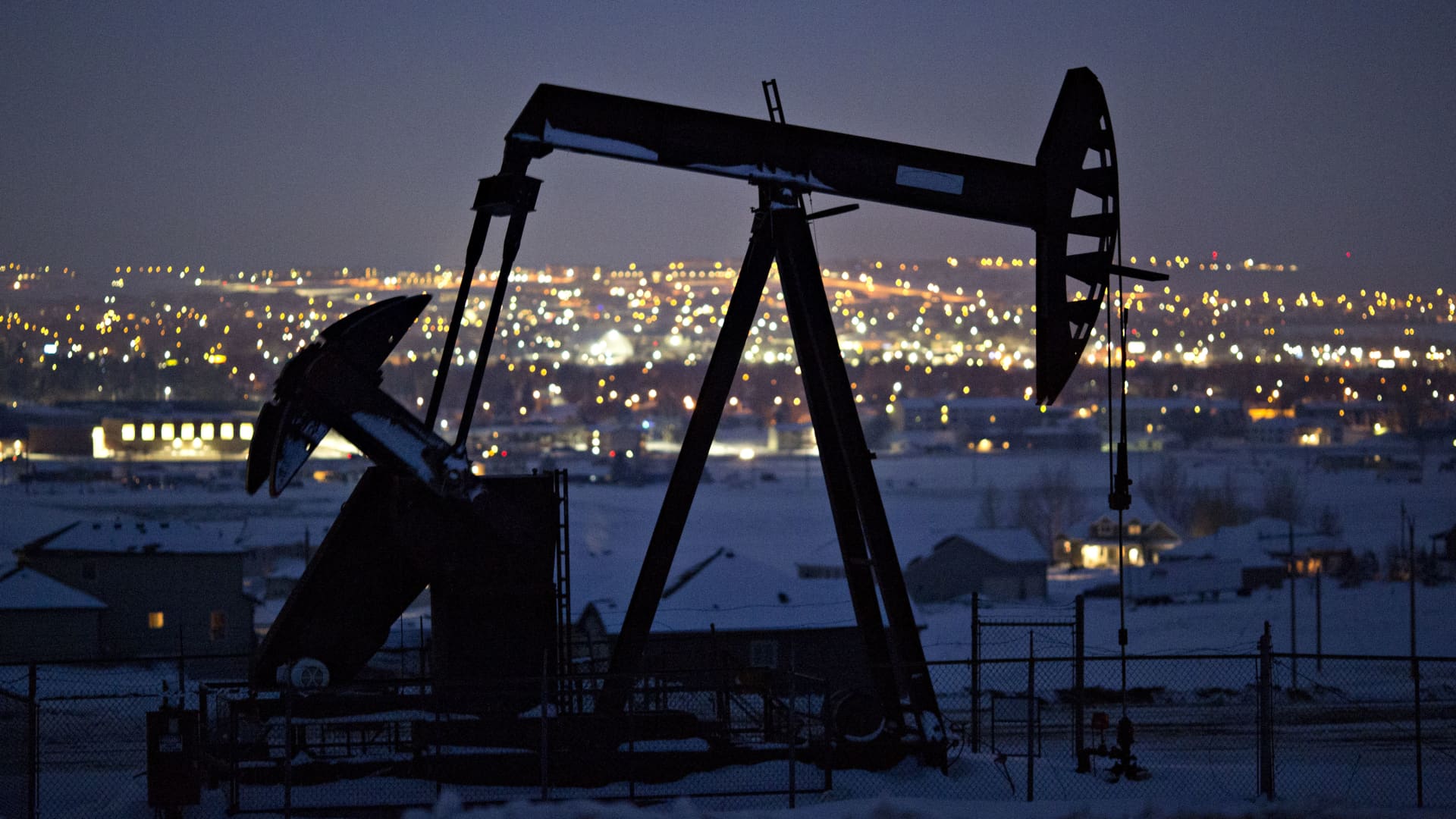
The belief that American drillers can just "turn on the tap" to rescue the global economy is a dangerous myth. For years, the US shale revolution acted as a safety net, but that net has some massive holes in it. As of March 2026, with the Middle East engulfed in a direct conflict involving Iran and shipping through the Strait of Hormuz slowing to a crawl, the world is looking toward West Texas for a miracle.
It’s not coming.
I’ve watched this industry transition from a "drill-at-all-costs" Wild West into a disciplined, shareholder-focused machine. The CEOs of the biggest US producers are being blunt: they aren’t the global swing producers anymore. If you're expecting 13.5 million barrels per day to suddenly jump to 15 million to offset a war, you’re fundamentally misunderstanding how the oil patch works today.
The end of the growth at any cost era
The primary reason US shale won’t save us is a shift in psychology. A few years ago, a price spike would have triggered a massive wave of new drilling. Today, companies like EOG Resources and Pioneer (now part of ExxonMobil) are under strict orders from Wall Street to prioritize dividends and buybacks. They’ve spent the last decade burning cash; they aren’t about to throw away their newfound profitability just to dampen a temporary price spike.
Investors don't want "more" oil; they want "better" returns. This capital discipline is a hard ceiling. Most firms are planning for WTI prices in the $60 range for their 2026 budgets. Even with oil jumping toward $80 following the weekend's strikes in Iran, the physical reality of drilling doesn't change overnight. You can't just manifest a rig and a crew in 24 hours.
Geological reality and the productivity plateau
Beyond the money, there’s the dirt. The "sweet spots" in the Permian Basin—the areas where oil practically leaps out of the ground—are being used up. We're seeing a clear plateau in operational efficiency. Between 2015 and 2022, we saw annual productivity gains of up to 15%. In the last year, that’s dropped to less than 2%.
Basically, the easy oil is gone. To maintain current levels, we have to drill more just to stay in the same place. It's the Red Queen’s race.
- Inventory Depletion: Tier 1 acreage is finite. Drillers are moving to Tier 2 and Tier 3 land, which requires more water, more sand, and more money to get less oil.
- Infrastructure Chokeholds: Even if we could pump more, we’re hitting the limits of our pipelines and export terminals.
- The Labor Gap: 57% of companies are keeping their headcounts flat. There isn't a reserve army of oilfield workers waiting for a phone call.
Why the Strait of Hormuz matters more than the Permian
The math is simple and terrifying. The Strait of Hormuz moves roughly 20 million barrels of oil and petroleum products every single day. That’s a fifth of global consumption. Total US production sits around 13.5 million barrels per day.
Even if the US could somehow double its growth rate—which it can't—it would only add a few hundred thousand barrels over several months. That’s a drop in the bucket compared to a total blockade of the Gulf. When Iran threatens the waterway, they aren't just threatening a price hike; they're threatening a physical shortage that no amount of American fracking can fix.
The OPEC trap
While the US is stuck in neutral, OPEC+ is playing a different game. They recently agreed to a production hike of 206,000 barrels per day for April 2026. On the surface, it looks like they’re trying to stabilize the market. Underneath, it’s a strategic move to reclaim market share. Saudi Arabia and the UAE have the one thing the US lacks: spare capacity.
They can turn a valve and have more oil in the market in weeks. US shale takes six to nine months from the time a budget is approved to the time the first drop of oil hits a refinery. In a fast-moving war, that lag time is an eternity.
What this means for your wallet
Expect volatility to be the only constant. We’re likely looking at retail gasoline prices breaking above $3.00 a gallon in the US, and much higher in Europe and Asia. The global supply surplus that built up in 2025 is being eaten away by geopolitical risk premiums.
If you're waiting for a "shale surge" to bring prices back down to 2024 levels, you’re going to be waiting a long time. The industry has matured. It’s no longer the chaotic teenager of the energy world; it’s a cautious adult that knows exactly how much a mistake costs.
Watch the rig counts. If they don’t move significantly in the next thirty days despite $80+ oil, you'll know the CEOs were telling the truth: the era of US shale as the world's emergency backup is officially over. Check your local energy costs and consider hedging where you can.