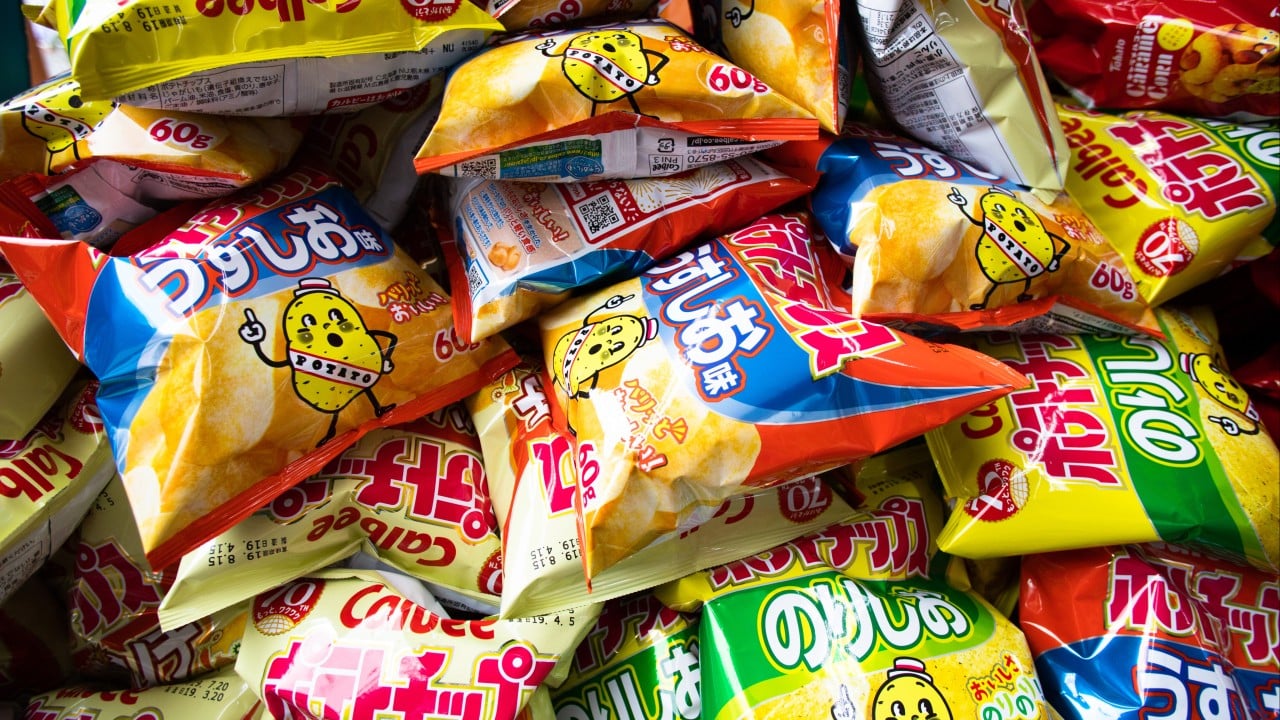
Walk into any Japanese convenience store—a konbini glowing like a fluorescent oasis at 2:00 AM—and you will find a wall of foil bags that define the sensory profile of a nation. It is the wall of Calbee. For decades, the ritual has been the same. You reach for a bag of Pizza Potato or the iconic Usu-shio (lightly salted) chips. You expect the resistance of the bag, the rush of nitrogen-preserved air, and, most importantly, the specific, high-pitched snap of a perfectly fried potato slice.
That snap is under siege. You might also find this similar coverage interesting: The GameStop Hubris and Why eBay Refused to Even Sit at the Table.
It isn't a lack of potatoes or a shift in consumer taste that is threatening one of Japan’s most reliable comforts. Instead, the crisis is flowing through the fryers. The vegetable oil that transforms a wet starch slice into a golden shard of joy has become a luxury item. What used to be a background cost, an invisible utility like the electricity running the conveyor belts, is now a predator eating the profit margins of Japan’s snack king.
The Kitchen is Getting Cold
Consider a grandmother in Osaka. She isn't a CEO. She doesn't track global commodity futures on a Bloomberg terminal. But she knows that the bag of chips she buys for her grandson is lighter than it was last year. Or perhaps it costs twenty yen more. To her, this is just another "price hike," a vague ghost haunting her grocery list. As discussed in detailed reports by The Wall Street Journal, the results are widespread.
Behind that twenty-yen increase lies a geopolitical nightmare. Japan imports roughly 90% of its edible oil. When the price of palm, soy, and rapeseed oils spiked globally due to supply chain fractures and the conflict in Ukraine—a region often called the breadbasket (and oil-vat) of the world—Calbee found itself staring into an empty fryer.
In a board room in Tokyo, the math is brutal. When the cost of your primary cooking medium rises by double digits, you have two choices. You can raise prices and risk the wrath of a deflation-sensitive public, or you can shrink the bag. Calbee, a brand that has spent seventy years becoming a staple of the Japanese pantry, had to do both.
The "oil crunch" is a sterile term. It sounds like a mechanical failure. In reality, it is a slow-motion erosion of a cultural touchstone.
The Invisible Ingredient
We rarely think about oil until it’s gone or unaffordable. It is the ghost in the machine of the snack industry. For Calbee, oil isn't just a heat transfer medium; it is a flavor carrier. The specific blend of oils used determines the mouthfeel of a Jagarico stick—those crunchy potato batons that have a cult following.
Imagine the technical precision required to keep a chip consistent when your input costs are swinging like a pendulum. The engineers at Calbee aren't just fighting inflation; they are fighting to keep the soul of the product intact while the world burns through the resources needed to make it.
The pressure is immense because the Japanese consumer is uniquely unforgiving. In many Western markets, "shrinkflation" is an annoyance. In Japan, where the relationship between a brand and a customer is built on a foundation of omotenashi (hospitality) and meticulous quality, a smaller bag feels like a broken promise. It feels like a betrayal of the childhood memories of every salaryman who grabs a bag of Consommé Punch on his way home from a grueling twelve-hour shift.
A Domino Effect in the Pantry
But why Calbee? Why is this one company the bellwether for a global crisis?
It is because Calbee is Japan’s potato logic. They control over half of the potato chip market in the country. They are the scale. When the leader of the pack flinches, everyone else braces for impact. The oil crisis didn't just drain the color from their balance sheets; it signaled a fundamental shift in the security of the Japanese diet.
For years, the globalized world operated on the assumption of "just in time" delivery. The oil would always flow from Southeast Asia and Eastern Europe. The potatoes would always come from Hokkaido. The prices would stay flat because the world was stable.
That stability is a memory.
Now, we see the true cost of dependency. Japan’s reliance on foreign oil for its domestic snacks has turned a simple potato chip into a geopolitical casualty. The "crunch" isn't just the sound of a chip breaking; it’s the sound of a supply chain snapping.
The Stakes of a Snack
It is easy to dismiss this as a triviality. It’s just junk food, right?
That perspective ignores the role of the "small luxury." In a society often characterized by intense work pressure and rigid social structures, the ability to buy a reliable, delicious snack for under 150 yen is a vital pressure valve. It is the cheapest form of escapism. When that becomes more expensive, or when the quality is compromised because the company has to switch to cheaper, lower-grade oils to survive, the quality of life for millions takes a microscopic, but measurable, hit.
The invisible stakes are the loss of normalcy.
Calbee’s struggle to secure affordable oil is a mirror of a larger struggle facing every island nation. How do you maintain a high standard of living when the basic building blocks of your lifestyle—energy, oil, wheat—are held hostage by events thousands of miles away?
The Fryer’s Last Stand
The company is pivoting. They are looking at more efficient frying technologies. They are exploring domestic oil alternatives, though the scale required is daunting. They are trying to communicate to their customers that the "drain in color"—the literal and metaphorical dulling of the brand's vibrancy—is a temporary measure.
But the data suggests otherwise. Global oil prices are not returning to their 2019 baselines. The era of cheap, abundant calories is ending.
Think back to that konbini aisle. The bags are still there. The bright reds and yellows of the Calbee branding still pop under the lights. But look closer at the weight printed on the bottom corner. Look at the price tag. The chips are still golden, but the cost of that luster is being paid by the consumer in ways that go beyond yen.
We are living through the end of the "easy" snack. Every crunch now carries the weight of a world in friction. When you bite into a potato chip today, you aren't just tasting salt and starch. You are tasting the complex, expensive, and increasingly fragile choreography of a planet that is running out of ways to keep the fryers hot.
The grandmother in Osaka hands the bag to her grandson. He doesn't notice the missing five grams. He doesn't see the narrowed margins or the frantic hedging of commodity traders in Tokyo. He just hears the snap. He smiles.
For now, the childhood remains intact. But the oil is running thin, and the silence in the factory, usually drowned out by the roar of the fryers, is getting louder every day.
:max_bytes(150000):strip_icc():focal(708x236:710x238)/United-Airlines-First-Class-Cabin-041024-d7f929ad60ef4a9e95d6ebdeaf87d6a4.jpg)