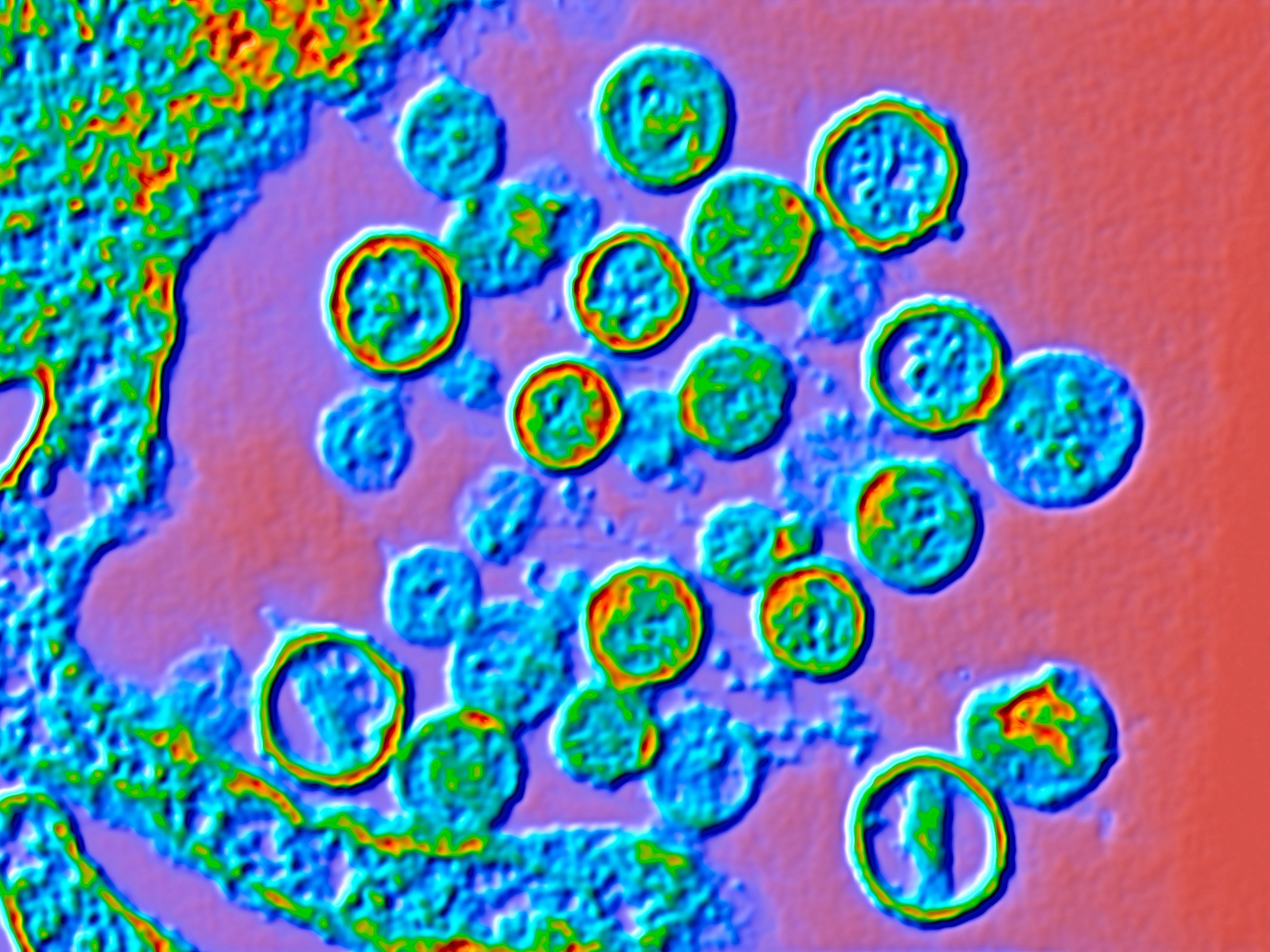
Public health crises are governed by two distinct forces: biological virulence and psychological resonance. The intersection of these forces creates a distortion in risk assessment where the public treats low-probability, high-consequence events as imminent threats while ignoring high-probability systemic shifts. Comparing Hantavirus to SARS-CoV-2 (the virus responsible for COVID-19) reveals a fundamental mismatch between viral mechanics and societal reaction. While Hantavirus Pulmonary Syndrome (HPS) maintains a case fatality rate (CFR) of approximately 38%—dwarfing the 1-2% peak observed in COVID-19—it lacks the transmission vectors necessary to achieve pandemic status. The "COVID PTSD" observed in modern news cycles is a byproduct of high-sensitivity diagnostic infrastructure and a fundamental misunderstanding of viral R0 (basic reproduction number) values.
The Triad of Viral Constraint
To evaluate why Hantavirus cannot replicate the societal shutdown of the early 2020s, one must analyze the three structural constraints that limit its expansion: transmission mechanics, reservoir specificity, and the incubation-to-mortality ratio. If you enjoyed this post, you should read: this related article.
1. Transmission Asymmetry
SARS-CoV-2 achieved global saturation through aerosolized human-to-human transmission. This creates an exponential growth curve where $R_0 > 1$. Hantavirus, specifically the New World strains like Sin Nombre, operates on a dead-end host model. Humans typically contract the virus via the inhalation of aerosolized droppings, urine, or saliva from infected rodents (primarily the deer mouse).
Human-to-human transmission is virtually non-existent for North American strains. The Andes virus in South America has shown limited evidence of person-to-person spread, but even there, the transmission chain usually breaks after one or two generations. This creates a stochastic distribution of cases rather than an exponential one. When a case appears in a modern urban center, the public reaction is a "flashback" response—psychological trauma from 2020 projected onto a biologically incompatible threat. For another perspective on this story, refer to the recent update from WebMD.
2. Reservoir Specificity and Geographic Isolation
The prevalence of Hantavirus is tied directly to the population dynamics of the Peromyscus maniculatus (deer mouse). This introduces a biological ceiling on the virus. Unlike respiratory viruses that utilize humans as their primary vehicle, Hantavirus is a zoonotic spillover event. Outbreaks are linked to environmental fluctuations, such as increased rainfall leading to higher pinyon nut production, which in turn spikes rodent populations. This "bottom-up" ecological pressure means Hantavirus remains a rural or suburban risk, unable to sustain the density-dependent transmission required for urban pandemic surges.
3. The Pathophysiological Velocity
A critical factor in the "success" of a pandemic virus is its ability to remain asymptomatic while the host remains mobile. SARS-CoV-2 utilized a long incubation period (2-14 days) and high asymptomatic spread to infiltrate global supply chains. Hantavirus operates on a different clinical timeline:
- Prodromal Phase: 1-5 days of non-specific febrile illness (fever, myalgia).
- Cardiopulmonary Phase: Rapid progression (within 24 hours) to pulmonary edema and shock.
The speed at which Hantavirus incapacitates the host is a self-limiting feature. A virus that kills or hospitalizes 40% of its hosts within days of symptom onset creates a "burnout" effect, preventing the wide-scale movement of infected individuals through international travel hubs.
The Psychological Infrastructure of Health Anxiety
The phenomenon of "COVID PTSD" in the context of Hantavirus reports is not a medical condition but a breakdown in public data literacy. The post-2020 media environment utilizes a high-frequency reporting model where any singular viral death is amplified through social algorithms. This creates a "Heuristic of Availability," where people judge the probability of an event based on how easily examples come to mind.
This anxiety is exacerbated by the clinical similarities between the initial stages of HPS and COVID-19. Both begin with fever, cough, and shortness of breath. However, the underlying mechanisms of respiratory failure differ significantly. COVID-19 involves a complex cytokine storm and progressive alveolar damage over weeks. HPS causes a sudden, massive leak of plasma into the lungs (capillary leak syndrome) triggered by the body’s immune response to the viral antigen in the pulmonary endothelium.
Quantifying the Misalignment: Data vs. Perception
Analyzing the historical data sets for Hantavirus in the United States reveals a static risk profile. Since its identification in 1993, the CDC has tracked roughly 800-900 cases total.
| Metric | Hantavirus (HPS) | SARS-CoV-2 (COVID-19) |
|---|---|---|
| Transmission Type | Zoonotic (Rodent-to-Human) | Respiratory (Human-to-Human) |
| Basic Reproduction Number ($R_0$) | Effectively 0 in humans | 2.5 - 15.0 (variant dependent) |
| Case Fatality Rate (CFR) | ~38% | <1.0% - 3.0% (age/variant dependent) |
| Annual U.S. Incidence | 20-50 cases | Millions |
The disconnect lies in the severity-to-prevalence ratio. The high CFR of Hantavirus makes every single case a potential headline, whereas the lower CFR of COVID-19 required mass infection to achieve high absolute mortality. The public perceives the high CFR of Hantavirus as a multiplier of pandemic risk, when in reality, it is a limiting factor in the virus’s evolutionary strategy.
Structural Failures in Risk Communication
The "PTSD" reaction is a direct result of three systemic failures in how health information is disseminated:
- The Omission of Denominators: News reports focus on the "one death in Arizona" without providing the denominator of the millions of people living in that region without exposure.
- The Flattening of Biology: Generalizing "virus" as a singular category of threat ignores the vast differences between positive-sense single-stranded RNA viruses (like Coronaviruses) and negative-sense single-stranded RNA viruses (like Hantaviruses).
- Diagnostic Overshoot: Increased testing for respiratory pathogens in a post-COVID world leads to the detection of cases that might have previously gone unclassified or been attributed to "atypical pneumonia." This creates an illusion of increasing frequency.
Strategic Mitigation of Zoonotic Risk
Rather than a generalized "pandemic preparedness" approach, Hantavirus requires a localized, environmental management strategy. The risk is not found in airports or schools, but in the structural integrity of food storage and the seasonal cleaning of enclosed rural spaces.
The primary vector for exposure is the disturbance of nested areas. When rodent excreta are swept or vacuumed, the virus becomes airborne. Public health interventions should focus on the "Wet Down" protocol—using bleach solutions to saturate potential nesting sites before cleaning—rather than masking in urban centers.
The Economic Impact of Perceptual Error
Mistaking Hantavirus for a potential pandemic agent leads to the misallocation of resources. Capital is often diverted into broad-spectrum antiviral research or surge capacity for urban hospitals, when the actual bottleneck for Hantavirus survival is the availability of Extracorporeal Membrane Oxygenation (ECMO) in rural health centers.
ECMO is the only effective intervention for severe HPS, as it bypasses the fluid-filled lungs to oxygenate the blood directly. Because Hantavirus is a disease of the rural West and Southwest, the distance between the point of infection and an ECMO-equipped Level 1 trauma center is the primary determinant of the mortality rate.
Forecasting the Zoonotic Curve
The frequency of Hantavirus cases will likely increase over the next decade, but not due to viral mutation. Instead, two factors will drive the numbers:
- Exurban Expansion: As housing costs drive populations into previously undeveloped "wildland-urban interfaces," the frequency of human-rodent interaction will climb.
- Climatic Volatility: Extreme weather cycles (El Niño/La Niña) create the "boom and bust" rodent cycles that precede outbreaks.
These increases will be linear, not exponential. The risk remains individual and environmental, not societal and systemic. The "COVID PTSD" response is a psychological artifact that hinders clear-eyed assessment of these specific ecological threats.
The strategic play for public health agencies is a decoupling of "virulence" from "contagion" in the public consciousness. High-mortality zoonotic events must be treated as environmental hazards—akin to lightning strikes or venomous bites—rather than the precursors to global lockdowns. Failure to make this distinction ensures that the public remains in a state of permanent hyper-vigilance, leading to "alarm fatigue" that will inevitably result in a slower response when a high-$R_0$ respiratory pathogen actually emerges. Resources must be focused on increasing ECMO transport capabilities in rural corridors and implementing rigorous rodent-proofing standards in new construction at the wildland-urban interface. Information campaigns should prioritize specific, tactile prevention—like the use of 10% bleach solutions—over the vague, fear-based comparisons to the 2020 pandemic era.