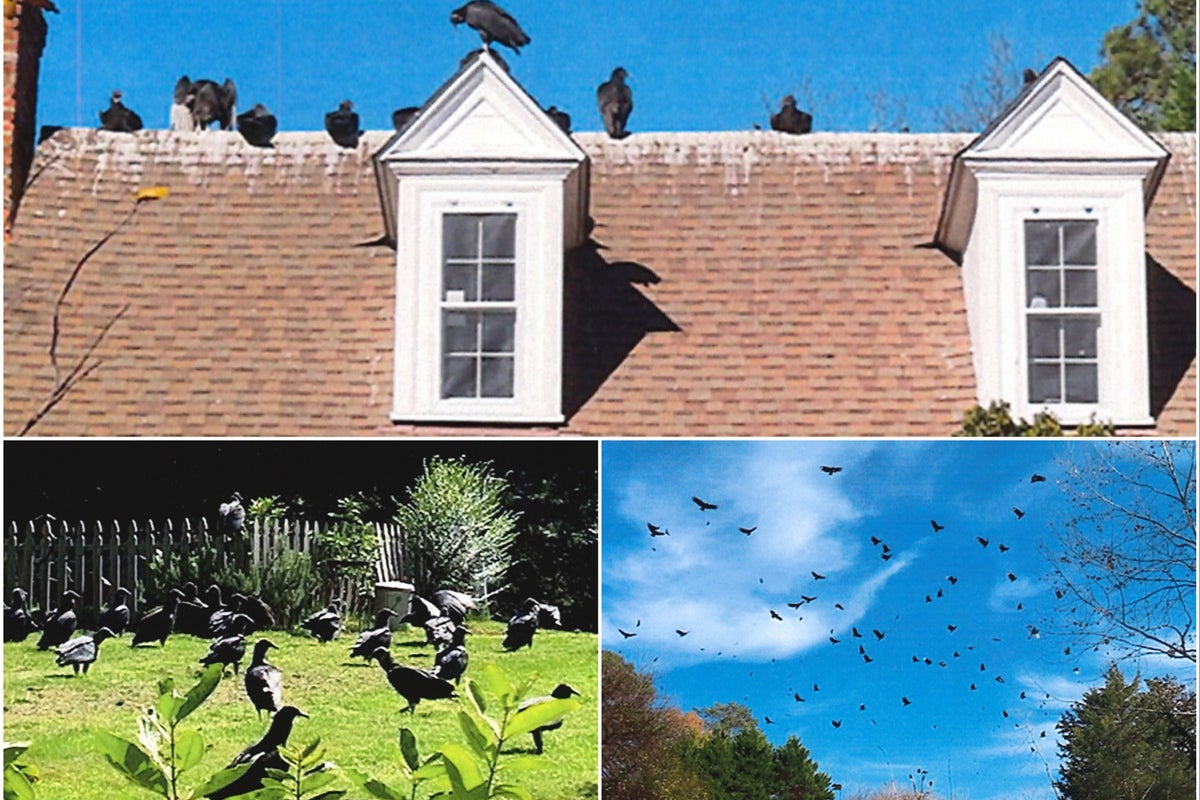
Vultures are circling a quiet neighborhood in Bunn, North Carolina, and the neighbors are absolutely fed up. This isn't some Hitchcock movie. It's a real-life nightmare for the residents of the pined-filled suburbs who find themselves under a literal cloud of black wings. Most people think of vultures as nature’s cleaning crew, picking away at roadkill in the distance. But when dozens of them decide your roof is their new favorite hangout, the reality gets messy, smelly, and incredibly expensive.
In this specific North Carolina case, the community points the finger at one couple. Why? Because they’ve been feeding the birds. What started as a misguided attempt to be kind to nature turned into a local crisis. If you’ve never seen a hundred vultures congregate in one spot, count yourself lucky. They don't just sit there. They destroy property, leave behind corrosive waste, and create an atmosphere of dread that tanks property values in a heartbeat.
The Cost of Feeding Federal Protected Birds
Feeding wildlife sounds harmless until you realize you're inviting a swarm of federally protected scavengers to a buffet they’ll never want to leave. In Bunn, the sheer volume of birds is staggering. We aren't talking about a few strays. We’re talking about a massive roost that has claimed the neighborhood as its own.
The problem is that vultures are highly social. Once a few find a reliable food source—provided by humans—they signal to the rest of the kettle. Before you know it, your neighbor's "kindness" has turned your backyard into a scene from a gothic horror novel.
Here is the kicker. You can't just go out and shoot them. Both Black Vultures and Turkey Vultures are protected under the Migratory Bird Treaty Act of 1918. Killing one without a federal permit can land you in serious legal trouble, including heavy fines and even jail time. This leaves neighbors in a bind. They’re trapped between a couple who won't stop feeding the birds and a federal law that prevents them from taking direct action.
Why Vultures Choose Your Roof Over the Woods
Vultures aren't just looking for food. They're looking for heat and height. Most North Carolina homes have dark asphalt shingles. These shingles soak up the sun, creating a warm platform for vultures to spread their wings and regulate their body temperature. This is called the "spread-wing" posture, and while it looks cool in a National Geographic special, it’s devastating to a house.
Vultures have sharp talons and even sharper beaks. They’re notorious for tearing up:
- Rubber seals around vent pipes
- Vinyl siding and window caulking
- Pool covers and outdoor furniture cushions
- Windshield wipers on parked cars
The damage isn't just structural. Vultures have a unique and disgusting defense mechanism. When they feel threatened or even just "full," they can project-vomit a highly acidic, putrid mess. Add to that their droppings—which are also highly acidic—and you have a recipe for ruined paint and dissolved roofing materials. The stench in the North Carolina heat is exactly as bad as you're imagining. Maybe worse.
The Legal Battle Over Bird Feeding
In the Bunn case, the neighbors have tried the polite route. They’ve asked the couple to stop. They’ve complained to the HOA. But when someone believes they’re doing a "good deed" by feeding "hungry animals," logic usually goes out the window.
Local law enforcement and wildlife officials are often hamstrung. Unless there’s a specific local ordinance against feeding wildlife, it’s hard to cite someone just for being a bird lover. However, when that feeding leads to a public health nuisance or significant property damage, the legal landscape shifts. Neighbors in these situations often have to resort to civil lawsuits for "private nuisance." This isn't a quick fix. It’s a long, expensive slog through the court system while the birds continue to poop on your porch.
How to Get Rid of Vultures Without Breaking the Law
If you find yourself in a similar situation, you need to act fast. Vultures are creatures of habit. Once they’ve established a roost, it’s much harder to kick them out. You have to make your property as unwelcoming as possible.
Non-Lethal Deterrents That Actually Work
You don't need a gun; you need to be annoying. Vultures hate being disturbed.
Pyrotechnics and Noise Makers
Wildlife experts often recommend "bird bangers" or "screamers." These are specialized pyrotechnics that make a loud noise without harming the bird. The goal is to break their sense of security. If every time they land on your roof, a loud bang goes off, they’ll eventually find a quieter spot.
Effigies and Decoys
This sounds weird, but it works. Hanging a realistic-looking vulture effigy (basically a fake dead bird) upside down is a powerful signal to other vultures. It tells them the area is unsafe. The USDA even uses this method. Just make sure it looks convincing. A plastic owl from the hardware store won't cut it—vultures aren't afraid of owls.
Motion-Activated Sprinklers
Vultures don't like being blasted with water. High-pressure, motion-activated sprinklers can keep them off lawns and lower structures. It’s a low-cost way to defend your perimeter 24/7.
Lasers
Strangely enough, green lasers are incredibly effective at night or during twilight. Shining a laser near the birds (not directly in their eyes) freaks them out. It looks like a physical object coming toward them.
The Health Risks Nobody Mentions
While vultures don't typically attack humans or pets, they aren't clean guests. Their droppings can carry diseases like histoplasmosis, a fungal infection that affects the lungs. When the droppings dry out and become a powder, the spores can be inhaled. This is a legitimate concern for families with children or elderly residents in the North Carolina neighborhood.
There's also the water quality issue. If vultures are roosting on your roof, every time it rains, the runoff from your gutters is contaminated with their waste. If you have a rain barrel or if that water pools near your foundation, you're looking at a biohazard.
Managing the Neighbor Conflict
The North Carolina couple being blamed for the infestation likely thinks they’re helping. To solve this, the community has to move beyond shouting matches. If you’re dealing with a "wildlife feeder" in your area, documentation is your best friend.
Keep a log. Take photos. Record the dates and times the feeding happens and the number of birds that show up. This evidence is crucial if you ever need to involve the health department or a lawyer. It’s not about being a "snitch"—it’s about protecting your home, which is likely your biggest financial asset.
What to Do if Vultures Land on Your Property
Stop the problem before it scales. If you see two vultures on your roof today, you’ll see ten tomorrow.
- Remove the attractant. If you're feeding outdoor cats or leaving trash bags out, stop. Vultures have an incredible sense of smell.
- Use physical barriers. Install "bird spikes" or "bird wire" on the ridges of your roof. This makes it physically impossible for them to land comfortably.
- Contact Wildlife Services. The USDA has a specialized branch for Nuisance Wildlife. They can provide professional guidance and, in extreme cases, help coordinate the removal of a roost.
- Talk to your neighbors. One person feeding the birds can ruin the entire street. Peer pressure is sometimes more effective than a legal threat.
The situation in North Carolina is a cautionary tale. It shows how quickly a local ecosystem can be thrown out of balance by human interference. Vultures belong in the woods and the sky, not on the shingles of a split-level ranch. If you want to help nature, let it stay wild. Don't turn your cul-de-sac into a dumping ground for carrion and hope for the best.