The air in Port-au-Prince doesn’t just sit; it pulses. It carries the scent of charcoal smoke, exhaust, and the salt of the Caribbean, but on a Tuesday in early October, the air turned heavy with a different kind of stillness. It was the weight of a collective intake of breath. When a government declares national mourning, it is an attempt to formalize a grief that has already spilled over the curbs and into the dusty alleyways. Twenty-five people. That is the number now etched into the official record, though a number can never capture the frantic rhythm of a crowd that has lost its way.
A stampede is not a singular event. It is a terrifying fluid dynamic where human beings, driven by a cocktail of celebration and sudden, sharp fear, begin to move like water. But water doesn't have bones that snap. Water doesn't have lungs that need space to expand. You might also find this related coverage insightful: The Real Reason Beijing is Bypassing Taipei (And How to Fix It).
Consider a man we will call Jean-Pierre. He isn't a statistic; he is a tailor who lived three blocks from where the pressure began to build. He went out because, in a city where life is often a grueling marathon of survival, the promise of a public gathering—a festival, a rally, a moment of shared noise—is a rare oxygen. He wore his best shirt. He likely felt the vibration of the music in his chest before he felt the crush of his neighbors.
The tragedy unfolded during a period that should have been marked by the raucous, beautiful chaos of Haitian life. Instead, a sudden panic turned a gathering into a trap. Witnesses described the sound first. Not screams, initially, but a low, guttural moan of a thousand people realizing simultaneously that there was nowhere left to step. Then came the surge. In the physics of a crowd collapse, the individual loses all agency. You do not fall; you are submerged. As extensively documented in detailed articles by TIME, the implications are significant.
Twenty-five lives ended in that press of limbs. Mothers. Students. Workers who had survived years of political instability and natural disasters only to be undone by the simple, cruel gravity of too many people in too small a space.
The Silence After the Scream
The Haitian government responded by draping the nation in the visual language of loss. Three days of national mourning. Flags lowered to half-mast. Radio stations swapping upbeat compas beats for the somber, haunting melodies of traditional hymns. It is a necessary ritual, a way for a state to say, "We see you," even when the state struggled to prevent the catastrophe in the first place.
But mourning in Haiti is never just about the dead. It is about the exhaustion of the living.
To understand why this stampede resonates so deeply, you have to look at the ground beneath the feet of the survivors. This is a country that has been vibrated by earthquakes, lashed by hurricanes, and choked by blockades. When twenty-five people die in a crowd, it feels like a betrayal of the one thing people have left: each other. In Port-au-Prince, the street is the living room. It is where business is conducted, where news is traded, and where joy is amplified. When the street becomes a place of lethal pressure, the sanctuary is gone.
The official reports will talk about "crowd control measures" and "logistical failures." They will use words that sound like they belong in a sterile office in a different hemisphere. They will analyze the entry and exit points of the venue. They will perhaps find a scapegoat—a gate that wasn't opened or a guard who walked away.
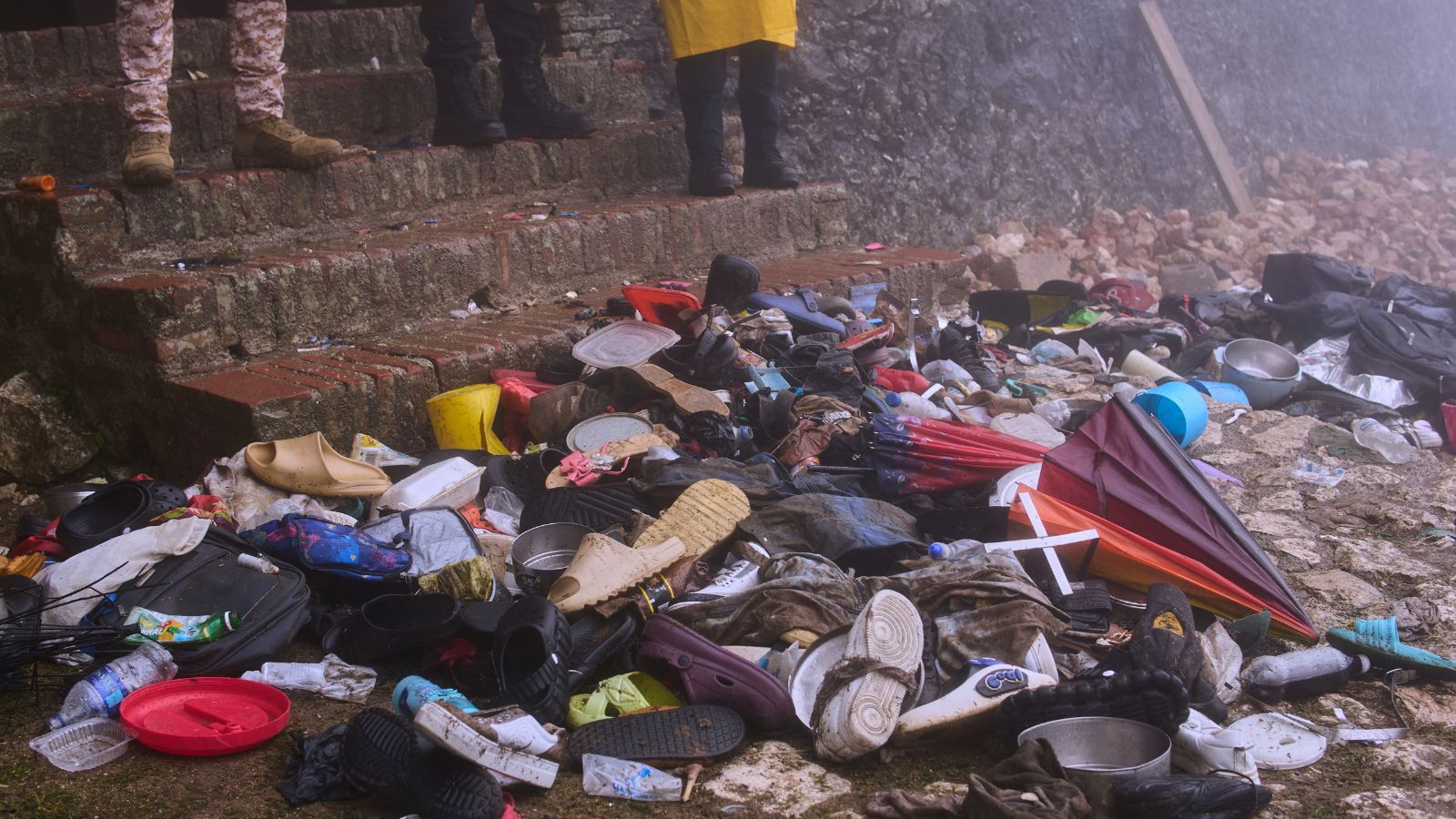
But the real story is in the shoes left behind.
After a stampede, the ground is littered with single shoes. A lonely sandal. A scuffed sneaker. Each one represents a person who was literally walked out of their own clothing. It is a haunting, silent inventory of a moment when the world turned upside down. For the families of those twenty-five, those shoes are the artifacts of a Tuesday that never ended.
The Invisible Stakes of a Gathering
Why do we gather?
In a digital age, it’s easy to forget that physical presence is a form of power. For the people of Haiti, showing up is an act of defiance. It is a way of saying that despite the headlines of gang violence and institutional collapse, there is still a "we." This is the invisible stake of every public event in the country. If you stop gathering, you stop being a society. You become a collection of individuals hiding behind locked doors.
When a stampede happens, it strikes at the heart of that social contract. It plants a seed of hesitation. Is it safe to celebrate? Is it safe to stand next to my brother?
The three days of mourning are intended to heal that rift, but the healing is slow. In the neighborhoods of Delmas and Carrefour, the mourning isn't just a government decree; it’s a tangible shift in the economy of the spirit. The street vendors move a little slower. The tap-tap drivers speak in lower tones. There is a profound sense of "too muchness."
The human body is remarkably resilient, but it is also fragile. It requires about five centimeters of space to breathe properly. In a crowd collapse, that space vanishes. It is a death by degrees, a quiet subtraction of air. To think of twenty-five people experiencing that simultaneously is to understand why the nation stopped. It wasn't just a tragedy; it was a physical manifestation of the pressures the entire country feels every day.
Pressure from the outside. Pressure from within. Pressure to survive.
The Anatomy of a National Grief
We often treat national mourning as a bureaucratic checkbox. A leader signs a paper, a decree is read on the news, and the world moves on. But in the wake of this stampede, the mourning served as a mirror.
Haiti is a land of incredible, almost terrifyingly beautiful light, but its history is written in the shadows of loss. From the revolution that birthed the nation to the 2010 earthquake that reshaped its geography, the Haitian people are experts in the art of the wake. They know how to sit with death. They know the songs that bridge the gap between the world of the seen and the unseen.
Yet, this event felt different. It wasn't an act of God. It wasn't a tectonic shift or a swirling storm from the Atlantic. It was a failure of the human environment.
The victims were mostly young. They were the ones with the most energy to give to a crowd, the ones most eager to be part of something larger than themselves. Their absence creates a hole in the future that no amount of flag-lowering can fill. When you lose twenty-five young people in a moment of panic, you lose the teachers, the mechanics, and the poets of twenty years from now.
Consider the families who spent those three days not just in mourning, but in the grueling bureaucracy of death. In a city like Port-au-Prince, even burying the dead is a feat of endurance. The morgues are full, the costs are high, and the logistics are a nightmare. The government's declaration included a promise of assistance, a recognition that the burden of this tragedy shouldn't fall solely on the shoulders of those who have already lost everything.
The Echo in the Streets
The three days have passed now. The flags have been raised back to the top of their poles. The music has returned to the radio, though perhaps a few decibels quieter than before.
But if you walk down the streets near the site of the crush, you can still feel the echo. You see it in the way people navigate a tight corner. You see it in the way a mother grips her child’s hand a little tighter when the crowd begins to thicken around a market stall.
We talk about stampedes as "accidents," but that word is too small. They are failures of design and failures of care. They are reminders that when we bring people together, we hold their lives in our hands. Every fence, every gate, and every exit is a moral choice.
The twenty-five who died in Port-au-Prince didn't just leave behind mourning families; they left behind a question for the rest of us. How much space do we owe each other? How much care do we owe the person standing next to us in the heat and the noise?
The mourning is over, but the weight remains. It is the weight of knowing that in the blink of an eye, a celebration can turn into a struggle for air. It is the weight of a city that continues to move, continues to gather, and continues to breathe, even when the air feels like it might run out.
The sun sets over the harbor, casting long, purple shadows across the hills. The city hums. Somewhere, a tailor named Jean-Pierre—or someone very much like him—is sewing a black armband onto a sleeve. He works by the light of a single bulb, his needle moving in and out of the dark fabric. He isn't thinking about government decrees or crowd dynamics. He is thinking about the silence of a house that used to be full of noise. He is thinking about the simple, devastating fact that twenty-five seats are now empty at twenty-five tables.
The flags are up, but the hearts are still heavy.
The street remains, and so does the memory of the crush.