The ocean does not keep secrets; it only delays their discovery. Off the sun-drenched coast of Sri Lanka, where the Indian Ocean meets the Laccadive Sea, the water is usually a canvas of turquoise and deep indigo. It is a place of transit, a highway for the world’s energy, and a silent witness to the friction of empires. But recently, that silence was shattered by a report that ripples far beyond the immediate spray of the waves.
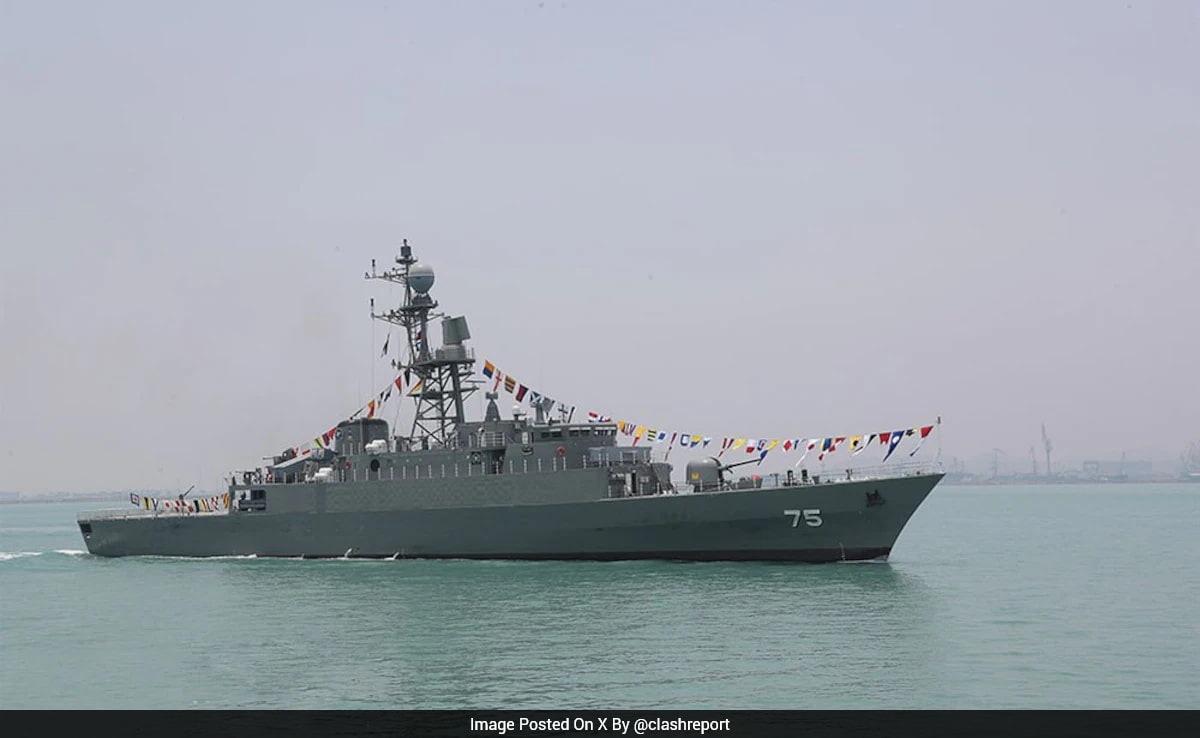
A specialized Iranian vessel, part of a fleet that often blurs the line between commerce and combat, found itself in the crosshairs of American precision. This wasn't a cinematic exchange of broadsides or a chaotic dogfight in the clouds. It was something colder. More clinical.
The Ghost in the Machine
To understand why a ship sitting thousands of miles from the Persian Gulf matters, you have to look past the steel hull. Modern naval warfare is less about the weight of the shell and more about the speed of the data. The vessel in question, often identified as a "spy ship" or an intelligence-gathering platform, serves as a floating nerve center.
Think of it as a massive, seafaring antenna. It listens to the digital heartbeat of the region—intercepting radio frequencies, tracking merchant traffic, and perhaps most crucially, providing a "sight" for others who operate in the shadows. When drones or missiles are launched from distant shores, they often need a mid-course correction, a digital hand to guide them to their target. These ships are that hand.
The reported U.S. strike was not an act of random aggression. It was a surgical removal of a sensory organ. By neutralizing the ship’s ability to "see" and "hear," the strike effectively blinded a network that has been harassing global shipping lanes for months.
The Human Cost of High-Stakes Chess
Imagine a merchant sailor on a bulk carrier, perhaps carrying grain to East Africa or electronics to Europe. For them, the Indian Ocean is a workplace. They are not combatants. They are parents, siblings, and children trying to earn a living on a vast, indifferent expanse.
When an intelligence vessel provides targeting data to hostile actors, those merchant sailors become unintended pawns. The fear in the galley when a radar warning goes off is real. The frantic calls home to families in Mumbai or Manila are real. The U.S. intervention, while framed in the cold language of "kinetic strikes" and "strategic assets," is ultimately about the safety of those individuals.
The strike off the Sri Lankan coast was a message: the invisible infrastructure of disruption has a physical footprint. And that footprint can be erased.
The Geometry of Power
Geography is a stubborn thing. Sri Lanka sits like a teardrop at the southern tip of India, occupying one of the most strategic patches of water on the planet. Almost all trade between the Atlantic and the Pacific must pass through these waters. If the Strait of Hormuz is the throat of the global energy market, the waters around Sri Lanka are its primary artery.
The presence of an Iranian warship so far from its home port signifies an expansion of intent. It suggests a desire to project influence into the deep blue, far beyond the coastal waters of the Middle East.
Critics often argue about the "proportionality" of such strikes. They ask if a missile is a fair response to a radar dish. But in the modern era, a radar dish can be more lethal than a battery of cannons. A cannon can miss. A guided missile, fed with real-time data from a dedicated intelligence ship, rarely does.
The Invisible Shield
We live in an age where the most significant battles are fought in the electromagnetic spectrum. It is a war of bits and bytes, of jamming and spoofing, of seeing the enemy before they even know they are being watched.
When the U.S. military decides to engage a target like this, the decision-making process is a labyrinth of legal, political, and tactical hurdles. They are weighing the risk of escalation against the certainty of continued attacks on civilian shipping. They are calculating the atmospheric conditions, the proximity of neutral vessels, and the diplomatic fallout with regional powers.
Sri Lanka, for its part, walks a delicate tightrope. It needs the investment and trade that comes from being an open maritime hub, but it has no desire to become a playground for the world’s superpowers. The strike happened in international waters, yet the proximity to their shores brings the reality of global conflict uncomfortably close to home.
A New Kind of Friction
The traditional image of war—two lines of soldiers facing off on a muddy field—is dead. Today, war is a series of interconnected events that pulse through the global supply chain. You might feel the "strike" when the price of your morning coffee ticks up by fifty cents because insurance premiums for cargo ships have spiked. You might feel it when a shipment of semiconductors is delayed, pushing back the release of a new car or smartphone.
This is the "human element" that often gets lost in the headlines. We are all connected to that ship off the coast of Sri Lanka by a thousand invisible threads of commerce and communication.
The strike was a disruption of a disruptor.
It was an attempt to restore a semblance of order to a maritime commons that has become increasingly lawless. By targeting the eyes and ears of the opposition, the U.S. is betting that it can lower the temperature of the conflict without sparking a full-scale conflagration. It is a high-stakes gamble played out in the salt air.
The Ripple Effect
As the smoke clears and the technical analysts pore over satellite imagery to confirm the damage, the broader implications begin to settle. Other nations are watching. They are observing the reach of American intelligence and the willingness to use force in "non-traditional" combat zones.
The Iranian vessel was a symbol of a reach that exceeded its grasp. The strike was a reminder of the limits of that reach.
But the ocean is vast. For every ship that is neutralized, another may be commissioned. The game of cat and mouse in the Indian Ocean is far from over. It is merely moving into a deeper, darker phase.
The waves will continue to crash against the shores of Galle and Colombo. The fishermen will still cast their nets in the pre-dawn light, hoping for a haul that will sustain their families for another week. They look out at the horizon, where the great steel beasts of the world's navies pass by like silent ghosts.
They know better than anyone that the sea is never truly empty. It is filled with the ambitions of men, the weight of gold, and the sudden, violent flashes of a world that refuses to stay at peace.
The sun sets over the Laccadive Sea, casting long, golden shadows across the water. Somewhere beneath those waves, the remnants of a high-tech game of chess are sinking into the silt, joining the wrecks of centuries past. The technology changes, the flags change, but the struggle for the horizon remains the same.
The ocean remains, deep and indifferent, waiting for the next secret to be told.
Would you like me to research the specific technical capabilities of the Iranian vessels currently operating in the Indian Ocean to better understand the threat they pose to civilian shipping?