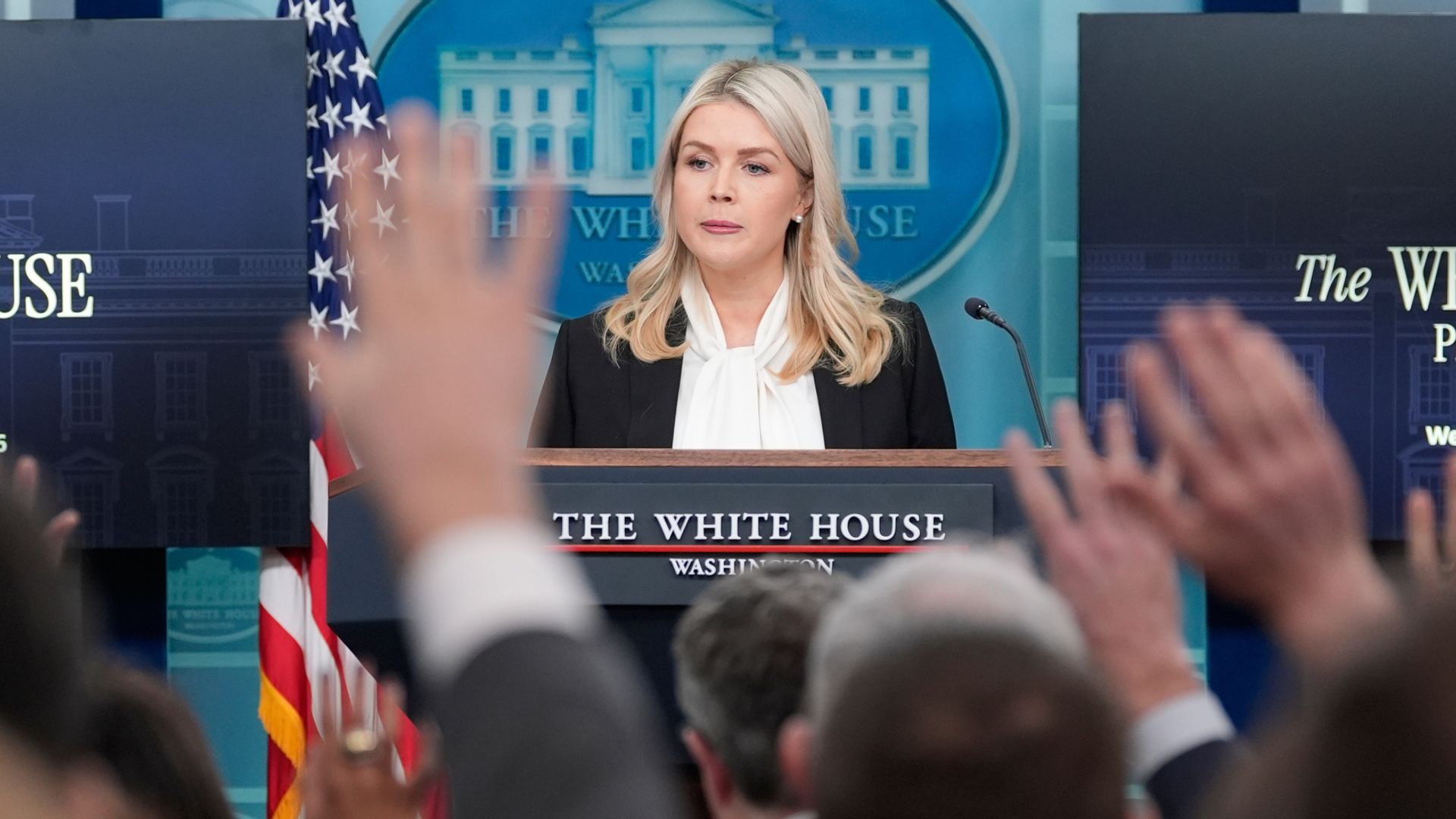
The Biden-era caution that once defined American policy toward Tehran has been incinerated, replaced by the smoke rising over the Iranian capital. As the joint U.S.-Israeli military campaign, Operation Epic Fury, enters its second week, the official word from the White House briefing room is focused almost exclusively on tactical success. We hear about the "knocked out" radar arrays, the dismantled drone factories, and the elimination of the Supreme Leader’s inner circle. What we do not hear—and what is becoming a glaring strategic liability—is any concrete plan for the 88 million people who will wake up tomorrow in a country without a government.
The administration’s silence on the "day after" in Iran is not merely a rhetorical omission. It is a calculated, if dangerous, gamble. By focusing on the destruction of the Islamic Republic’s military apparatus while remaining vague on the political successor, the White House is effectively outsourcing the future of the Iranian state to the whims of the street and the shadows of the internal security services.
The Myth of the Spontaneous Democracy
There is a romanticized notion in some corners of Washington that once the head of the clerical snake is removed, a secular, Western-leaning democracy will bloom in the desert of the Middle East. History suggests otherwise. When a centralized, repressive regime collapses under external pressure, the resulting vacuum is rarely filled by the most moderate voices. It is filled by the most organized ones.
In the current Iranian context, the most organized force remaining is the Islamic Revolutionary Guard Corps (IRGC). While their senior leadership has been thinned by precision strikes, the mid-level commanders—the ones who control the local black markets, the provincial barracks, and the internal intelligence networks—remain largely intact. Without a clear U.S. policy that identifies and supports a credible civilian alternative, we are not witnessing the birth of a democracy. We are witnessing the transition from a theocratic autocracy to a Praetorian military state.
Critics within the intelligence community have already begun to warn of "IRGCistan." This is a scenario where the Guard Corps discards the mullahs as a PR liability and takes direct control, potentially presenting a "reformer" face to the West to secure sanctions relief while maintaining the same underlying hostility toward U.S. interests. By refusing to discuss the political future of Iran during press briefings, the White House avoids being tied to any specific outcome, but it also leaves the door wide open for the most ruthless actors on the ground to seize the moment.
The Opposition Fragmentation Problem
The Iranian diaspora and domestic opposition are more energized than they have been in decades, yet they remain a mosaic of competing interests. From the monarchists following Reza Pahlavi to the leftist MEK and the various ethnic minority factions in Sistan-Baluchestan and Kurdistan, there is no unified "shadow government" ready to step into the West Wing's good graces.
Washington’s refusal to pick a winner is a double-edged sword. On one hand, it avoids the "puppet" label that would instantly delegitimize any leader seen as a creature of the State Department. On the other hand, the lack of a clear American preference creates a paralyzing uncertainty among Iranian bureaucrats and military defectors who might otherwise be willing to abandon the sinking ship of the regime. If you are an Iranian colonel considering a coup, you need to know if the United States will recognize your transition council or if you will be treated as just another target in the next wave of sorties.
Economic Ruin and the Humanitarian Blind Spot
While the White House touts the degradation of Iran’s nuclear program, the humanitarian reality on the ground is deteriorating with every passing hour. The rial has effectively ceased to function as a currency. Supply chains for medicine and basic foodstuffs, already strained by years of maximum pressure, are snapping under the weight of the air campaign.
The administration has offered a hypothetical "joint civilian nuclear program" as an olive branch, but this feels like an academic exercise when the lights are going out in Tehran. A hard-hitting strategy requires more than just knowing what to blow up. It requires a massive, ready-to-deploy plan for economic stabilization. If the "freedom" promised by the White House arrives alongside famine and a total collapse of public services, the Iranian public’s initial relief will turn to a bitter resentment that no amount of democratic rhetoric can fix.
The absence of this discussion in the daily briefings suggests that the administration is still operating on a "strike first, figure it out later" methodology. This was the exact failure of the 2003 Iraq invasion. We are seeing the same focus on "shock and awe" with the same conspicuous lack of detail regarding the civilian administration that must follow.
The Risk of Regional Contagion
The silence also extends to the neighbors. While the Gulf monarchies are quietly cheering the clipping of Iran's wings, they are terrified of the fallout. A fragmented Iran could export millions of refugees, or worse, see its proxy networks in Lebanon, Iraq, and Yemen go rogue as their central funding disappears.
The White House needs to move beyond the body counts and the target maps. Authentic leadership in this crisis means articulating a vision for a post-clerical Iran that includes regional security guarantees and a clear path for the reintegration of the Iranian people into the global economy.
If the administration continues to treat the political future of Iran as a footnote to the military campaign, they will find that winning the war was the easy part. The real challenge is preventing the peace from becoming a new, more chaotic disaster.
Would you like me to analyze the specific economic impact of the recent rial collapse on the proposed U.S. stabilization funds?