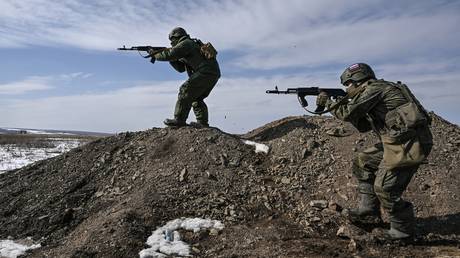
War is a resource hog. If you've been watching the front lines in Donetsk or the skies over Kyiv, you know the Ukrainian military is essentially running on a global credit card backed by Western industrial capacity. But that capacity has a limit. When a second major fire starts in the Middle East, the world doesn't just get more dangerous. It gets smaller. The oxygen for Ukraine's survival starts getting sucked out of the room.
We often talk about these conflicts as if they're on different planets. They aren't. They're connected by the same shipping lanes, the same shell factories, and the same dwindling stockpiles of interceptor missiles. If a full-scale war involving Iran kicks off, the ripple effects won't just be felt at the gas pump. They’ll be felt in the trenches of the Donbas where soldiers are already counting their bullets.
The Brutal Reality of Shared Ammo Cans
The most immediate problem is hardware. Most people don't realize that Ukraine and Israel often rely on the exact same bucket of toys. When the US sends 155mm artillery shells to Ukraine, they’re often pulling from "War Reserve Stocks" that were historically positioned in Israel. In 2023, the Pentagon already diverted hundreds of thousands of these shells from those Israeli depots to help Kyiv.
If Iran enters a direct, high-intensity conflict, those shells stay put. Or worse, they start flowing back. Israel has a massive domestic defense industry, but a sustained war against a state actor like Iran, rather than a non-state group like Hamas, requires a volume of fire that even they can't sustain alone. You can't manufacture 155mm rounds fast enough to satisfy two meat-grinder wars at once.
It’s not just the "dumb" bombs either. Look at the Patriot missile system. It’s the gold standard for keeping Ukrainian cities from being turned into rubble. But guess who else needs every interceptor they can get their hands on when Iranian ballistic missiles start flying? Everyone in the Middle East with a US security guarantee. We're looking at a zero-sum game. Every PAC-3 missile sent to defend Haifa is one that isn't heading to Kharkiv.
Russia and Iran are Trading More Than Just Handshakes
Moscow and Tehran used to be partners of convenience. Now, they're essentially a joint venture. This is the part people miss when they focus only on the map. Russia has become the primary customer for Iranian drone technology. The Shahed drones that plague Ukrainian energy grids are the direct result of this "Axis of Evasion."
In a vacuum, an Iran war might seem like it would distract Tehran from helping Russia. It won't. It’ll likely accelerate the trade. Russia has things Iran desperately needs for a big fight: advanced Su-35 fighter jets, S-400 air defense systems, and electronic warfare expertise. If Iran feels backed into a corner, they'll trade every drone in their warehouse for Russian hardware that can stop a Western-led air campaign.
This creates a terrifying feedback loop. Russia gets the cheap, swarm-capable tech it needs to exhaust Ukrainian air defenses, and Iran gets the high-end Russian tech that makes any Western intervention in the Middle East twice as bloody. Ukraine ends up as the secondary theater in a primary struggle for regional dominance.
The Price of Oil is a Weapon of War
Putin’s war chest is built on energy. It’s that simple. Whenever the Middle East gets twitchy, oil prices spike. It’s a reflex. A war involving Iran—specifically one that threatens the Strait of Hormuz—could send Brent crude into the triple digits.
For the Kremlin, this is a literal godsend. Higher oil prices mean more rubles for the Russian military-industrial complex. It offsets the impact of Western sanctions and allows Moscow to outspend Kyiv in a war of attrition. While the West struggles with inflation and high energy costs at home, Putin’s bank account grows.
There's also the political fallout. High gas prices make voters in the US and Europe grumpy. Grumpy voters tend to look inward. They start asking why billions are going to a war in Eastern Europe when they can’t afford to fill their tanks. That’s the exact moment political will for Ukraine starts to crumble.
Washington Only Has So Much Bandwidth
The Pentagon is a massive bureaucracy, but the "brain" at the top—the Joint Chiefs, the National Security Council, the President—only has so many hours in the day. A war with Iran is a Category 5 hurricane. It demands every ounce of diplomatic and military attention.
When the White House is in "Middle East Crisis Mode," Ukraine becomes a background task. Intelligence assets like satellites and high-altitude drones get repositioned. Diplomatic capital that should be used to squeeze neutral countries into sanctioning Russia gets spent instead on building a coalition against Iran.
You've probably seen it already. The news cycle shifts. The front pages move from the ruins of Bakhmut to the shores of the Persian Gulf. In a world of short attention spans, being the "second most important war" is a death sentence for foreign aid.
Breaking the Logistics Chain
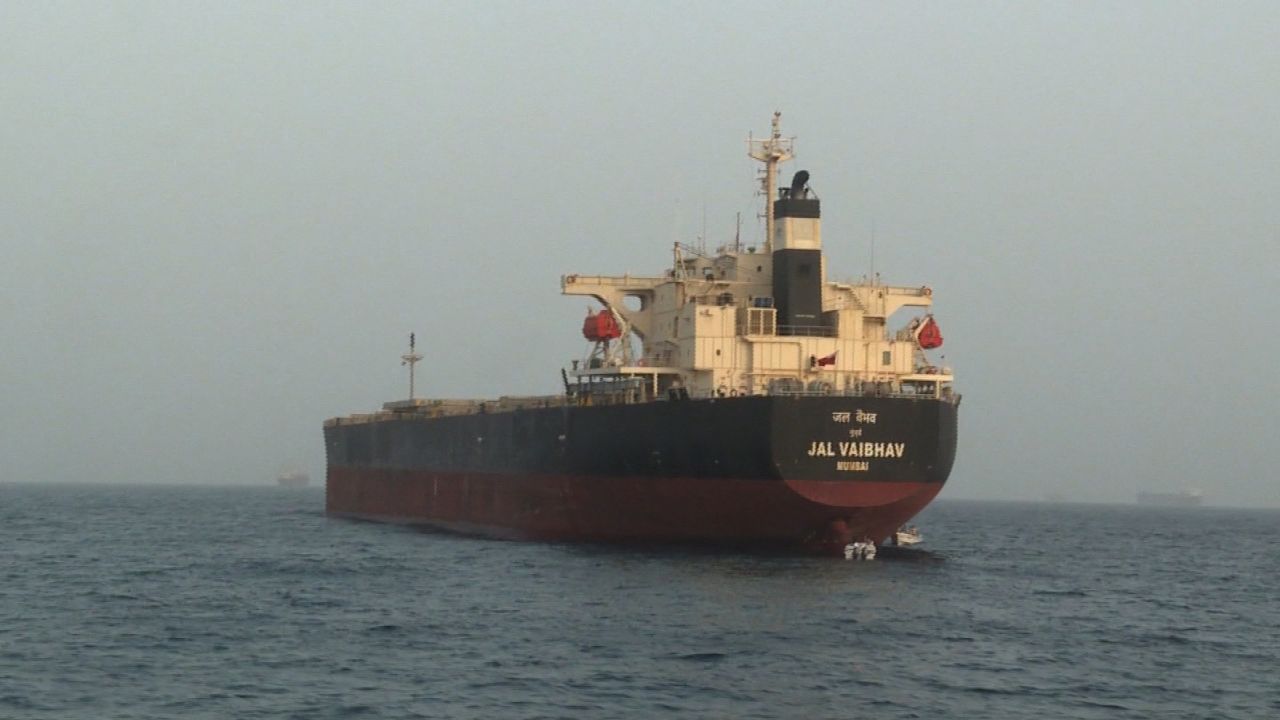
Look at the Red Sea. Houthi rebels, backed by Iran, have already turned one of the world’s most important shipping lanes into a shooting gallery. This doesn't just affect your Amazon delivery. It affects the global flow of components needed to build the very weapons Ukraine relies on.
Modern missiles and tanks require a complex web of microchips, specialized metals, and chemicals. Many of these pass through the Suez Canal. If the Middle East descends into chaos, shipping costs skyrocket and lead times for defense contracts stretch from months to years.
Ukraine doesn't have years. They need gear yesterday. A war that destabilizes global trade routes effectively puts a chokehold on the Ukrainian supply line without Russia having to fire a single shot at a NATO convoy.
What Actually Happens on the Ground
If you're a Ukrainian commander, you're looking at a future where your "allowance" of shells is cut in half. You're looking at air defense windows that stay open longer because you're told to "conserve" missiles for high-value targets only.
Meanwhile, Russia sees the opening. They know the West is distracted. They know the ammo piles are thinning. This is when they push. They don't need to win a decisive Napoleonic battle; they just need to outlast the West’s interest.
The reality is that Ukraine's fate is no longer just being decided on the banks of the Dnipro. It’s being decided in the halls of Tehran and the waters of the Gulf.
Move Past the Headlines
The best thing you can do right now is stop looking at these conflicts as isolated events. They are two fronts in a much larger global reshuffle.
Check the daily theater reports from the Institute for the Study of War (ISW) to see if Russian drone usage spikes alongside Middle Eastern escalations. Follow the shipping data through the Red Sea. If those numbers drop, expect Ukrainian ammunition shortages to follow in three to six months.
Don't wait for the mainstream news to connect the dots for you. They usually wait until the crisis is already unfixable. Watch the defense procurement cycles and the "Emergency Supplemental" bills in Congress. That’s where the real war is being won or lost. If the money starts shifting toward "Regional Stability" in the Middle East, you know the clock is ticking faster for Kyiv. Keep your eyes on the 155mm production numbers. That’s the only metric that truly matters for survival on the Eastern Front.