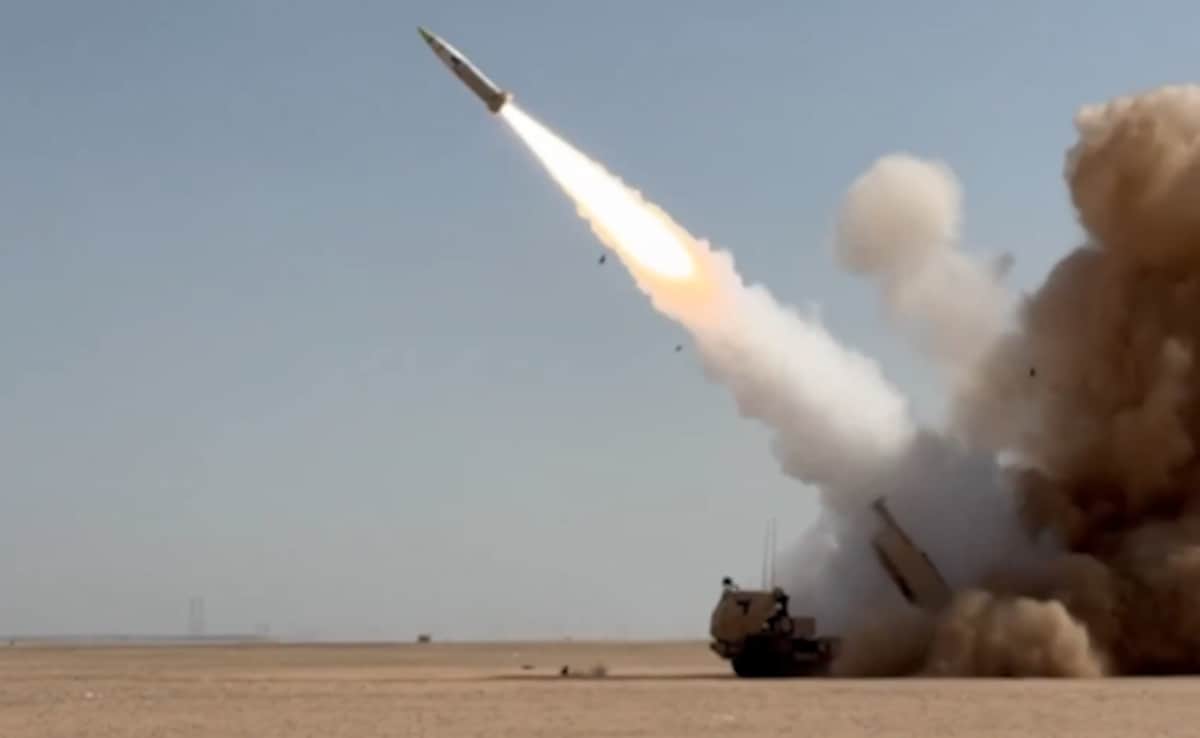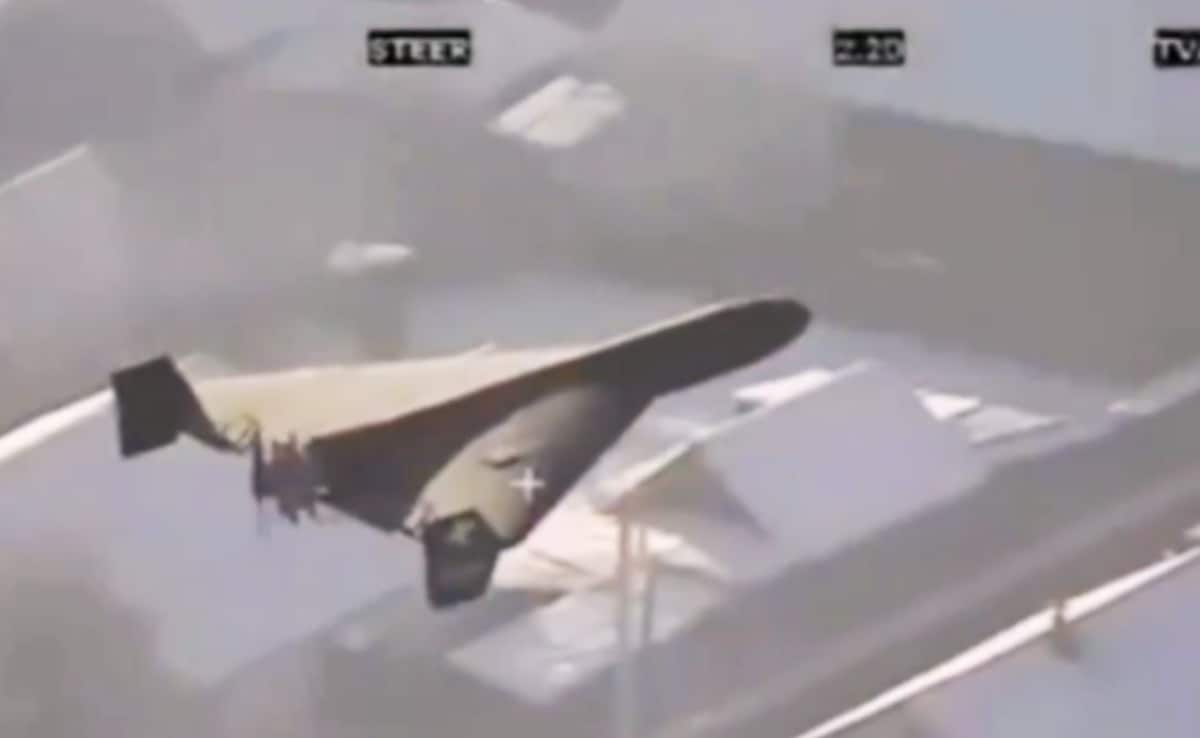
Military analysts are obsessed with the math of the "losing trade." They look at a $20,000 Shahed-136 kamikaze drone being intercepted by a $4 million Patriot PAC-3 missile and declare the dawn of a new era. They call it "asymmetric dominance." They claim the West is being bled dry by lawnmower engines and plywood wings.
They are dead wrong.
This surface-level math is the biggest intellectual trap in modern defense circles. It ignores the fundamental physics of air defense and the cold, hard reality of industrial capacity. We aren't losing because the interceptors are expensive; we are winning because the cost of failure is infinite.
The False Equivalence of Unit Price
If you think a $4 million missile is too expensive to shoot down a $20,000 drone, you don't understand risk management. You are comparing the price of a lock to the price of a skeleton key.
A Shahed-136 carries a 40kg warhead. If that drone hits a $500 million power substation or a $2 billion gas terminal, the $4 million spent on the interceptor is the best return on investment in the history of warfare. The "cost-exchange ratio" is a vanity metric used by pundits who have never had to manage a national energy grid under fire.
I have seen defense contractors pitch "cheap" solutions for years. The reality? Cheap is often synonymous with "unreliable." When you are defending a city of five million people, "90% reliability" is a death sentence. You pay $4 million for the Patriot because it has a Pk (Probability of Kill) that approaches 1.0. You are buying certainty in an uncertain environment.
The Swarm is a Logistics Nightmare Not a Tactical Miracle
The "swarm" narrative is mostly fiction. What we are seeing in Ukraine and the Middle East isn't a coordinated, intelligent cloud of drones communicating via mesh networks. It’s just a mass launch. It is a brute-force attempt to saturate sensors.
The "swarm" proponents argue that thousands of these drones will eventually bankrupt the West. This ignores the logistics of the attacker. Launching 100 drones requires 100 launch rails, 100 sets of flight controllers, 100 crates of fuel, and a massive footprint that is easily spotted by satellite imagery.
The bottleneck isn't the cost of the interceptor. The bottleneck is the rate of fire and the reload time. We don't need cheaper missiles; we need more barrels and faster magazines.
The Kinetic Misunderstanding
Critics often ask: "Why can't we just use guns?"
They point to the Flakpanzer Gepard or the Centurion C-RAM as the "holy grail" of low-cost defense. While these systems are effective, they have a massive flaw: Range.
A Gepard’s 35mm rounds have an effective ceiling of about 3,500 meters. A Shahed can be programmed to fly at 4,000 meters until it reaches its target, then dive. If you rely solely on guns, you need a Gepard on every single street corner to cover the same area that one Patriot battery covers from 60 miles away.
$$Area = \pi r^2$$
The math of area denial favors the long-range missile every single time. When you increase the radius $r$ of your defense, the area you protect grows exponentially. To cover the same ground with short-range "cheap" guns, the personnel costs and logistical tail would actually exceed the cost of the $4 million missile.
The Electronic Warfare Cop-Out
"Just jam them," says the armchair general.
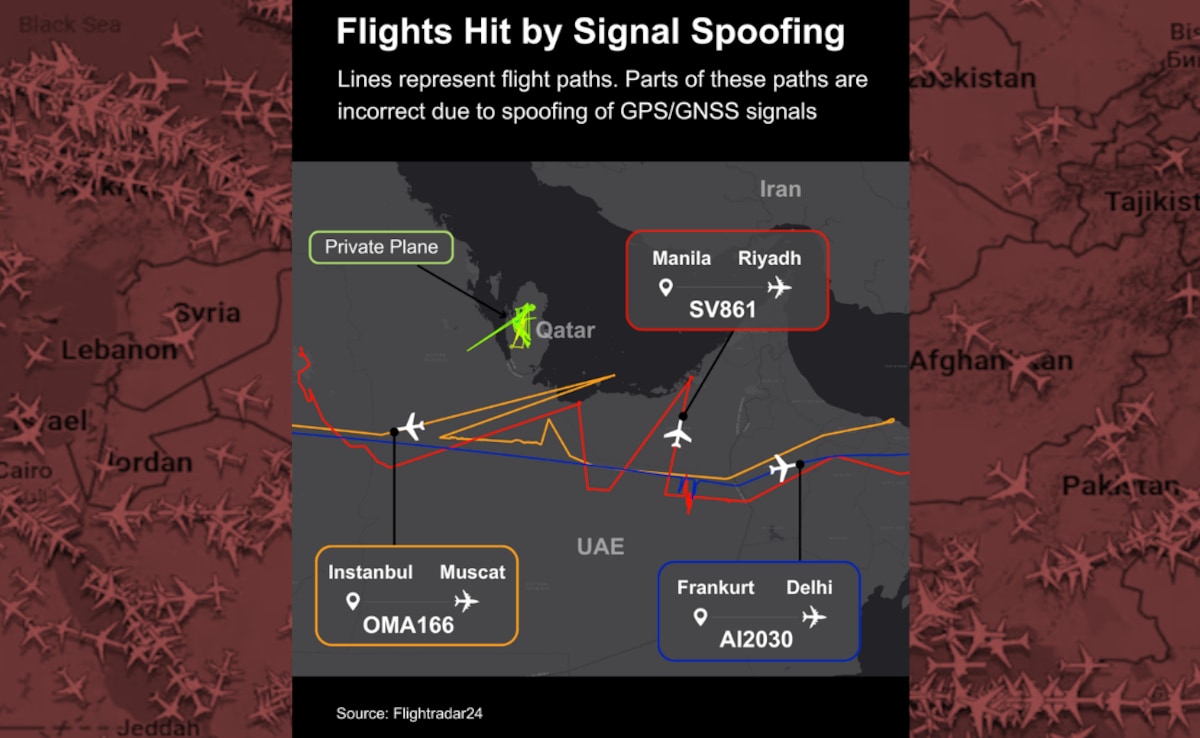
This is the second great misconception. Most modern loitering munitions, including the upgraded variants of the Shahed, no longer rely solely on civilian GPS. They use inertial navigation systems (INS) and even basic optical terrain mapping.
You cannot "jam" a gyroscope. You cannot "spoof" a camera that is looking at a physical landmark to verify its position. Electronic warfare (EW) is a cat-and-mouse game where the cat is currently losing. Relying on EW as a primary defense is like relying on a firewall to stop a physical break-in. It might slow them down, but it won't stop a determined intruder.
The Industrialization of Interception
The real crisis isn't the price tag; it's the production line.
The United States produces roughly 500 Patriot missiles a year. In a high-intensity conflict, that is a week's supply. We have optimized our defense industry for "Exquisite Quality" over "Mass Quantity." This was a choice made during the Global War on Terror when we had total air superiority.
We are now in a peer-competitor environment where we need both.
We don't need to make the $4 million missile cheaper. We need to make 10,000 of them. The "contrarian" take here isn't that the drone is a game-changer; it's that our industrial base is sclerotic. We have forgotten how to build at scale.
Stop Asking the Wrong Question
People also ask: "How can we make a $20,000 interceptor?"
This is the wrong question. A $20,000 interceptor that misses 30% of the time is more expensive than a $4 million interceptor that never misses.
The right question is: "How do we shorten the kill chain?"
The delay between detection and engagement is where the drone wins. If it takes 10 minutes for a command center to authorize a launch, the drone has already moved 20 miles. We need automated, edge-computing-driven fire control that removes the human from the loop of the "boring" stuff—like tracking a lawnmower in the sky.
The Hard Truth About Attrition
War is not an accounting exercise. It is a test of will and industrial stamina.
The Iranians and Russians are betting that the West's "loss aversion" will make us quit because the math looks bad on a spreadsheet. They want us to focus on the $4 million versus $20,000 comparison because it makes us feel foolish.
It is a psychological operation as much as a kinetic one.
If you want to beat the drone, stop trying to build a cheaper drone. Start building a more resilient society. If a drone hits a power plant, have the spare parts and the engineering teams ready to fix it in four hours. If you remove the impact of the drone, you remove the value of the drone.
The most cost-effective air defense isn't a missile or a laser. It's redundancy.
Build two of everything. Store a year's worth of transformers. Decentralize the grid. When the $20,000 drone hits a target that doesn't matter, the enemy has just wasted $20,000. That is how you flip the script on asymmetry.
Stop looking at the price of the interceptor. Start looking at the value of what you are protecting. If you can't afford the $4 million missile, you can't afford the civilization it's guarding.
Pick up the bill and double the order.