The operational reality of European defense has decoupled from historical political rhetoric. As 3,000 elite personnel from the United States, the United Kingdom, and 22 partner nations initiate Trojan Footprint 2026—the premier Special Operations Forces exercise in the European theater—the underlying strategic calculus is undergoing a fundamental structural shift. While conventional reporting framing this exercise centers on routine collective readiness, a rigorous analysis reveals a deeper structural friction: Europe is forced to maximize its tactical integration precisely as the United States alters the terms of its strategic guarantees.
This friction creates a clear paradox. On one hand, elite units are practicing high-end, multi-domain interoperability across the land and maritime sectors of Eastern Europe and the Black Sea region. On the other hand, the financial and logistical dependencies that underpin these capabilities are shifting under a domestic US political agenda focused on reducing the burden of external alliance commitments. Analyzing this dynamic requires looking past the political noise to map the structural dependencies, operational mechanisms, and strategic vulnerabilities of NATO’s evolving deterrence model. You might also find this similar story insightful: Why Banning Vintage Military Air Shows Is a Dangerous Mistake.
The Strategic Dependency Function
The core vulnerability of European collective defense lies in a highly asymmetric dependency function. For over seven decades, NATO’s deterrence posture has relied on a foundational architecture where the United States provides the high-cost, high-mass strategic enablers, while European allies supply localized regional forces.
This architecture can be disaggregated into three primary pillars of dependency: As highlighted in detailed reports by Reuters, the results are widespread.
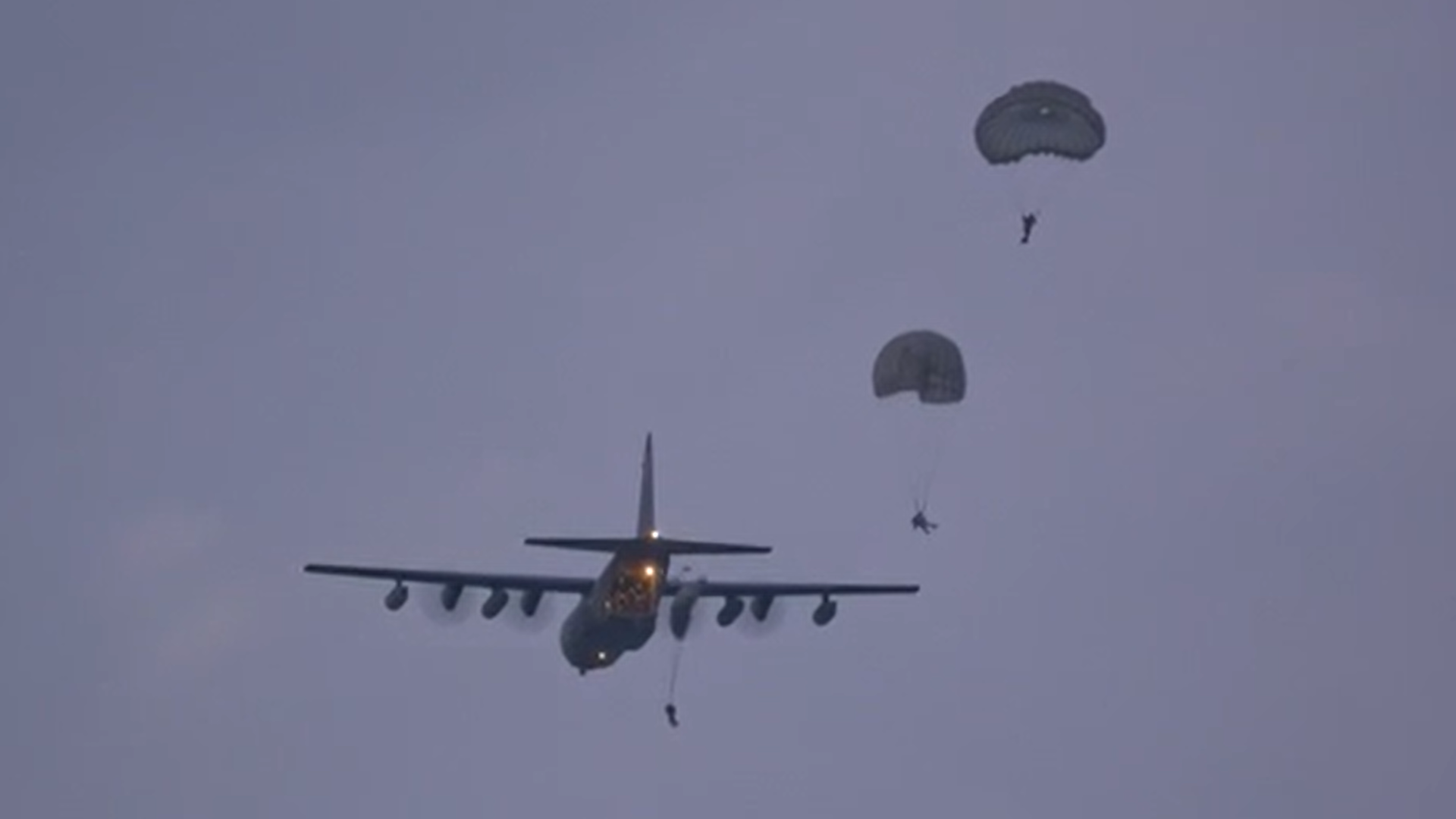
- Strategic Enablers and Logistical Baselines: European defense networks lack independent, deep-theater capabilities in key structural areas. These include satellite-based intelligence, surveillance, and reconnaissance (ISR), heavy strategic airlift, and specialized multi-domain integration assets like the MC-130J Commando II. Without these American assets, the mobility and operational range of European forces degrade significantly.
- The Nuclear and Extended Deterrence Umbrella: The ultimate backstop of NATO's Article 5 guarantee is the strategic nuclear capability of the United States. This structural reality removes the immediate necessity for European states to develop independent strategic deterrents, but it introduces a severe vulnerability if the credibility of that US commitment wavers.
- Industrial and Defense-Production Capacity: Decades of defense underinvestment across major European economies have left fragmented industrial bases incapable of rapid production scaling. Consequently, Europe remains deeply dependent on US defense contractors for complex weapon systems, precision-guided munitions, and long-term sustainment pipelines.
When the political leadership of the United States actively signals a desire to scale back conventional defense commitments or tie them strictly to transaction-based metrics, the stability of this three-pillar framework degrades. The current execution of Trojan Footprint 2026 serves as a real-time stress test of how regional forces function when forced to assume greater localized responsibility.
The Asymmetry of Special Operations Integration
Special Operations Forces (SOF) occupy a unique position within this shifting paradigm. Because SOF units are small, agile, and possess high individual utility, they are frequently utilized as a low-cost mechanism to signal strategic resolve and maintain military-to-military cohesion when large-scale conventional deployments become politically unviable.
+-------------------------------------------------------+
|                U.S. Strategic Enablers                |
|      (Satellite ISR, MC-130J Airlift, Global C2)       |
+-------------------------------------------------------+
                           |
                           v  [Interoperability Gap]
+-------------------------------------------------------+
|             European Regional SOF Units              |
|        (Tactical Execution, Localized Domain)         |
+-------------------------------------------------------+
During Trojan Footprint 2026, the inclusion of roughly 1,000 U.S. SOF personnel alongside 2,000 Allied and partner forces highlights a distinct operational boundary. U.S. forces primarily act as the connective tissue, providing the advanced command-and-control (C2) architectures and specialized penetration platforms that allow disparate European units to function as a unified, joint-combined force.
The operational limitation of this model is clear. If U.S. participation is drawn down or conditional, the remaining 2,000 European troops face an immediate command-and-control bottleneck. Regional forces can execute high-end tactical actions—such as the land and maritime maneuvers conducted under the Black Sea Gateway 2026 framework in Georgia—but they struggle to synchronize these actions at a theater-wide scale without American structural support. This creates a critical vulnerability: tactical excellence masking a strategic deficit in standalone operational management.
The Black Sea Friction and Hybrid Contestation
The geographic distribution of Trojan Footprint 2026 exposes the direct confrontation between NATO’s forward posture and revisionist regional powers. By conducting synchronous operations across Eastern Europe and centering key maritime components in Georgia, the exercise deliberately operates within zones characterized by persistent hybrid friction.
Adversarial strategy in these regions does not rely on sudden, large-scale conventional invasions that would trigger a clear, unambiguous Article 5 response. Instead, it utilizes a sophisticated mix of sub-threshold activities:
- Critical Infrastructure Sabotage: Undersea cables, energy pipelines, and transit links are targeted through anonymous or plausible-deniable disruptions to pressure European domestic politics.
- Electronic and Cyber Interference: Persistent GPS jamming and localized cyberattacks on civil and military logistics hubs degrade operational readiness and test the resilience of communication networks.
- Border Instrumentalization and Disinformation: Creating artificial border pressures and executing targeted information operations serves to exploit internal political divisions within European nations.
To counter these sub-threshold tactics, deterrence by denial becomes the necessary operational framework. This methodology requires persuading an adversary that a gray-zone or hybrid attack will fail to achieve its political or military objectives due to the resilience and rapid response capacity of the target nation.
SOF units are highly optimized for this specific environment. They provide the rapid attribution capabilities, counter-reconnaissance, and localized irregular warfare skills required to stabilize a theater before it escalates into conventional conflict. However, the effectiveness of deterrence by denial is structurally tied to the perceived certainty of reinforcement. If the primary source of that reinforcement—the United States—is viewed as politically hesitant or structurally disengaging, the deterrent effect of exercises like Trojan Footprint drops significantly, regardless of how well the troops perform on the ground.
Quantifying the European Defense Deficit
To transition from tactical integration to true strategic autonomy, Europe must address a quantifiable capability deficit. The widespread failure of many European nations to meet or sustain the baseline NATO requirement of spending 2% of Gross Domestic Product (GDP) on defense has created an accumulated readiness debt.
| Capability Domain | Current Status / Vulnerability | Required Capital Realignment |
|---|---|---|
| Integrated Air & Missile Defense (IAMD) | Severe fragmentation; high reliance on US Patriot architectures and command networks. | High investment in pan-European systems like the European Sky Shield Initiative; integration of localized radar networks. |
| Deep-Theater Intelligence & ISR | Limited independent satellite constellations; heavy reliance on US national intelligence assets. | Accelerated procurement of sovereign military satellite infrastructure and long-range unmanned aerial systems (UAS). |
| Strategic Airlift & Logistics | Bottlenecks in heavy lift capacity; dependency on US transport wings for rapid intra-theater deployment. | Expanded procurement of heavy transport airframes and cross-border rail/road logistics synchronization. |
| Munitions Production & Stockpiles | Industrial base optimized for peacetime output; unable to sustain prolonged high-intensity conflict. | Transition from bespoke, small-batch defense manufacturing to long-term, standardized industrial mass production. |
Resolving these imbalances requires more than just meeting nominal spending targets. The fundamental challenge is structural efficiency. Historically, European defense spending has been highly fragmented, with individual nations maintaining duplicative administrative structures, distinct procurement standards, and non-interoperable hardware configurations. This fragmentation dilutes the purchasing power of European defense budgets, ensuring that a Euro spent collectively yields a fraction of the capability achieved by a Dollar spent within the centralized US defense architecture.
The Operational Limits of Strategic Autonomy
A realistic assessment of Europe’s defense trajectory shows that achieving complete, standalone strategic autonomy is an unrealistic objective in the short to medium term. The structural inertia of defense procurement ensures that building sovereign alternatives to US strategic enablers requires decades of sustained capital deployment and political consensus.
This reality exposes the core limitation of current European strategy. Nations face a difficult choice between two competing paths:
- The Sovereign EU Integration Path: Attempting to build deep defense integration via European Union mechanisms and European-exclusive industrial projects. The risk is that this path takes too long to mature and can alienate the United States by explicitly cutting out American defense contractors.
- The Europeanized NATO Path: Boosting spending and capability ownership within the existing NATO framework. This path preserves the vital operational link to the US military machine while transforming Europe into an equal partner capable of managing its conventional defense independently.
The second option represents the only viable defensive posture given current timelines. It acknowledges that while the US expects Europe to assume the primary burden of conventional deterrence on the continent, the existing NATO command structures remain the most efficient mechanism to coordinate multi-national forces.
The Strategic Path Forward
The clear takeaway from Trojan Footprint 2026 is that tactical excellence can no longer substitute for structural independence. To prevent the erosion of transatlantic trust from turning into an operational collapse, European policymakers must transition from treating military exercises as symbolic displays of unity to using them as hard baselines for independent capability.
The immediate strategic priority must focus on regional security standardization. This requires the Nordic, Baltic, and Black Sea partner states to create a localized command architecture capable of operating independently of US European Command (EUCOM) infrastructure if required. European allies must transition from passive consumers of security enablers to active, joint owners of the high-end logistics, ISR, and strategic lift platforms currently provided by the United States.
True security requires a fundamental shift in capital allocation and political will. European states must aggressively internalize their defense functions, standardize their industrial outputs, and assume total ownership of their conventional deterrence posture. The security of the continent can no longer depend on the outcome of domestic political debates in Washington.