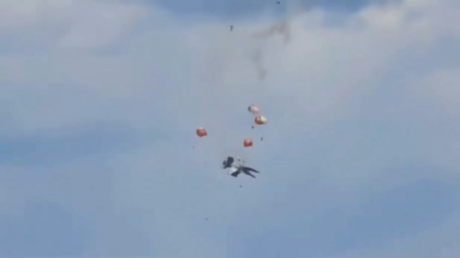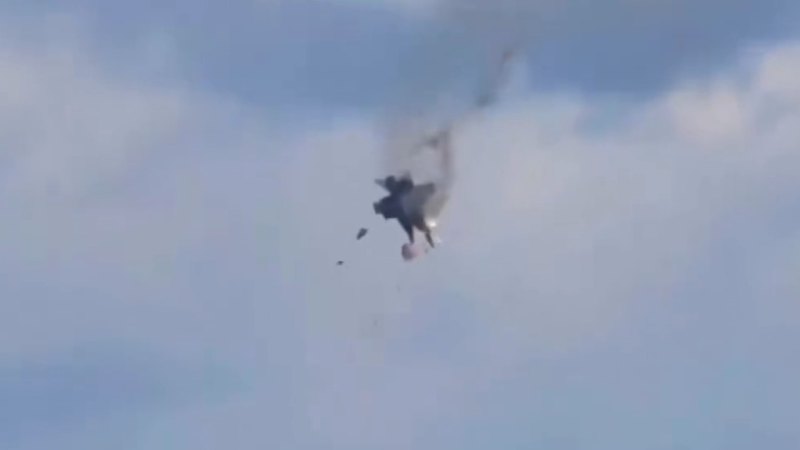
The immediate reaction to any midair collision at an aviation event follows a predictable, lazy script. Mainstream media outlets rush to churn out copy-pasted headlines about the inherent dangers of flying historic military aircraft. Pundits call for immediate groundings. Politicians demand sweeping investigations into why we still allow decades-old hardware to fly over civilian soil.
This knee-jerk hysteria misses the entire point of tactical aviation preservation.
When two historic aircraft collide during a demonstration, the public is told that the tragedy is proof of systemic obsolescence or regulatory failure. That narrative is fundamentally flawed. The reality is far more nuanced, uncomfortable, and vital to understand. Air shows are not merely vintage spectacles or nostalgia trips; they are active, living laboratories of high-skill energy management and spatial awareness. Threatening to relegate these aircraft to static museum basements does not make the public safer. It actively degrades the collective operational knowledge of aviation history and engineering physics.
The Flawed Premise of Mechanical Failure
The most common misconception surrounding vintage military aviation accidents is that old metal simply tired out. The public looks at a World War II-era fighter or an early Cold War jet and assumes the airframe collapsed under stress because it belonged in a history book.
This assumption betrays a complete ignorance of how airworthiness certification actually functions.
Aircraft operating under experimental exhibition categories do not fly on a wing and a prayer. They are subject to rigorous, uncompromising maintenance schedules. In many cases, the teardown inspections, non-destructive testing (NDT), and X-ray analysis performed on vintage warbirds are tighter than the standards applied to regional commercial turboprops. A spar failure on a P-51 Mustang or a B-17 is incredibly rare precisely because the operators are acutely aware of the historical and financial value of the asset.
When a mishap occurs, it is almost never because a component failed due to old age. It is almost always an issue of closure rates, blind spots, and formation geometry.
Imagine a scenario where a fast-moving fighter approaches a larger, slower bomber from the aft quarter. The closure rate can exceed 100 knots in a matter of seconds. If the overtaking pilot loses visual contact for even a fraction of a breath, the geometry of the intercept degrades instantly. This is an aerodynamic reality, not a mechanical one. A brand-new F-35 tracking a slow-moving refueling tanker faces the exact same physics of closure and blind-spot management. Blaming the age of the machine is a convenient distraction from the harsh reality of human-machine interaction at high speeds.
The Blind Spot Problem in Dissimilar Formations
To truly understand why incidents happen at air demonstrations, you have to look at the mechanics of dissimilar formation flight. The mainstream press covers these events as if the pilots are merely driving cars in an open field. They do not comprehend the brutal physics involved.
- Disparate Turn Radii: A fighter aircraft designed for high-speed interception has a completely different turning radius and optimal corner velocity than a heavy, multi-engine bomber.
- Asymmetric Energy Management: Slower aircraft require high power settings to maintain stability during tight turns, while faster aircraft must constantly modulate throttles or use aerodynamic braking to avoid overrunning the lead plane.
- Cockpit Visibility Constraints: Vintage warbirds feature canopy designs that prioritize forward visibility for combat, often creating massive blind sectors below and behind the fuselage.
I have spent decades analyzing flight dynamics and reviewing incident reports where millions of dollars of machinery vanished in a split second because a pilot misjudged a relative vector by less than three feet. When you mix aircraft of vastly different eras and performance envelopes, the margin for error shrinks to zero.
The Federal Aviation Administration (FAA) and international regulators already enforce strict energy management rules, but you cannot legislate away the laws of motion. If a trailing pilot enters the blind spot of a lead aircraft while established on an inside turn, the lead pilot cannot see them, and the trailing pilot cannot react fast enough if the lead modulates speed. That is not a failure of regulation. It is the absolute limit of human reaction time.
Static Displays Are the True Threat to Preservation
The contrarian truth that the aviation industry refuses to voice publicly is that grounding these fleets does more damage to safety culture than keeping them airborne.
When you transition an operational historic aircraft into a static museum display, you do not preserve it. You kill the institutional knowledge required to understand it. The engineers who know how to rig the cable flight controls of a 1940s bomber are a dying breed. The pilots who understand the unique torque and P-factor characteristics of a 2,000-horsepower piston engine cannot pass down their skills through a placard on a museum floor.
By keeping these aircraft operational, the industry maintains a continuous chain of knowledge regarding metallurgy, analog telemetry, and basic stick-and-rudder aerodynamics. This expertise directly informs modern safety practices. The data gathered from maintaining vintage airframes under operational stress provides invaluable insights into long-term structural fatigue insights that modern computer modeling can only guess at.
The Cost of the Risk-Averse Paradox
Let us be completely transparent about the downside of this perspective. Maintaining an active flight status for historic military hardware means accepting a non-zero element of risk. It means acknowledging that despite flawless maintenance, perfect weather, and elite pilot credentials, gravity and momentum remain undefeated.
But trying to build a zero-risk world creates a paradox. If we eliminate every activity where human error can intersect with high kinetic energy, we eliminate the very mechanism that drives technical competence. The pilots who command these vintage aircraft are typically retired military aviators, commercial captains, and highly decorated flight instructors. They are not reckless amateurs. They fly these profiles because the preservation of operational history is worth the managed risk.
The public demands absolute safety but forgets that safety is a polished edge produced by friction. The moment you eliminate the friction by banning complex flight demonstrations, the edge dulls. We lose the proficiency, we lose the engineering lineage, and we lose the raw, unvarnished understanding of what it took to operate those machines under pressure.
Stop looking at midair collisions as proof that the planes are too old to fly. Start looking at them as a sobering reminder that flying in close proximity demands absolute precision, where the price of a single second of lost situational awareness is absolute. The answer is more training, stricter formation certification, and deeper respect for the physics of flight—not a coward's retreat to static displays.