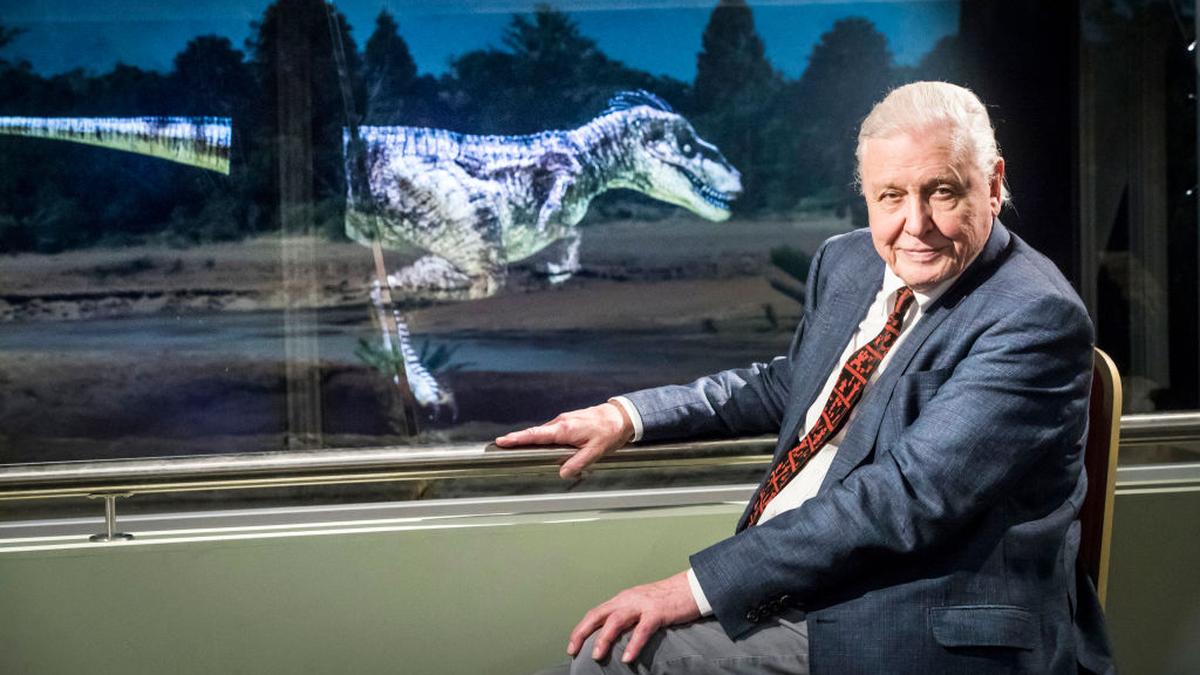
The modern natural history documentary operates on a deficit of historical context that functions as a structural necessity for its aesthetic success. By stripping the "wilderness" of its human history, producers create a product that satisfies a Western appetite for untouched edenics while systematically erasing the colonial mechanisms that enabled the filming of these locations. This erasure is not an accidental byproduct of cinematography but a core component of the genre’s value proposition.
The Dual-Aesthetic Framework: Wilderness vs. Sovereignty
The "Blue Chip" documentary style—pioneered and perfected by the BBC Natural History Unit—relies on a specific visual grammar. To understand how this hides colonial harm, we must categorize the production strategy into two distinct pillars: The Myth of the Virgin Landscape and The Technical Supremacy of the Lens.
1. The Myth of the Virgin Landscape
Natural history filmmaking frequently utilizes a "wide-angle vacuum." This technique frames out any evidence of human habitation, infrastructure, or indigenous land management. The logic dictates that "Nature" only exists in the absence of "Man." This creates a logical fallacy where the presence of indigenous populations is treated as an ontological contamination rather than a biological reality.
The cost of this framing is the delegitimization of indigenous land rights. When a global audience views a vast expanse of the Serengeti or the Amazon as "empty," it reinforces the terra nullius (nobody's land) doctrine—a legal fiction used to justify colonial land seizures. The documentary serves as a high-definition verification of emptiness, providing the intellectual cover for conservation models that forcibly displace local communities in the name of "protected areas."
2. The Technical Supremacy of the Lens
The emphasis on "first-ever" footage—attained through thermal imaging, drone swarms, and ultra-high-speed cameras—shifts the narrative authority from local knowledge to Western technological prowess. The narrator, often a patriarchal figure of scientific reliability like David Attenborough, becomes the sole arbiter of truth.
This creates a knowledge monopoly. Local trackers, guides, and indigenous experts who make the filming possible are rarely credited as intellectual contributors. They are relegated to the status of logistical laborers, hidden behind the camera, while the Western presenter is positioned as the discoverer of "new" biological behaviors.
The Extraction of the "Common Heritage"
The economic engine of natural history media is built on the principle of the Global Commons, yet the profit flows are strictly unidirectional. We can quantify this through the Asymmetry of Resource Utilization:
- Input: Access to biodiversity-rich landscapes, often located in the Global South, secured through historical colonial agreements or lopsided modern permits.
- Processing: High-capital Western production houses transform raw ecological data and imagery into intellectual property.
- Output: Multi-billion dollar streaming and broadcast rights sold back to global markets.
- Leakage: Minimal reinvestment into the local communities whose land stewardship maintained the biodiversity in the first place.
This process mirrors the extraction of raw materials during the height of the British Empire. In this model, "Nature" is the raw material, and "Awe" is the refined product. The "lush imagery" acts as a form of sensory distraction, preventing the viewer from questioning the property rights of the footage or the ethical provenance of the access.
The Fortress Conservation Bottleneck
The narrative arc of the traditional documentary often concludes with a plea for conservation. However, the specific type of conservation advocated is frequently "Fortress Conservation"—a model that views human presence as inherently destructive to biodiversity.
This model creates a feedback loop of displacement.
- The Visualization Phase: A documentary highlights a "pristine" area under threat.
- The Funding Phase: International NGOs raise capital based on these images.
- The Exclusion Phase: Governments, pressured by NGOs and the desire for tourism revenue, militarize the borders of these parks.
- The Erasure Phase: Indigenous inhabitants are evicted, often violently, to ensure the landscape remains as "empty" as it appeared on screen.
The documentary is not merely observing this process; it is the primary marketing tool for it. By failing to mention that the "threatened" forest has been managed by humans for millennia, the film justifies the removal of those humans as a biological necessity.
The Cognitive Dissonance of the "Attenborough Effect"
While the "Attenborough Effect" is credited with increasing public awareness of plastic pollution and climate change, it simultaneously reinforces a colonial hierarchy of concern. The focus is placed on the symptoms of ecological collapse (melting ice, starving polar bears) rather than the drivers of that collapse (industrial extraction and the legacy of colonial land use).
The failure to address the "why" of environmental degradation is a strategic omission. To analyze the root causes would require examining the very institutions—corporations, colonial-era land laws, and Western consumption patterns—that fund and distribute natural history content.
The Three Pillars of Narrative Control
To maintain its market position, the genre utilizes three specific control mechanisms:
- Temporal Displacement: Presenting landscapes as if they exist in a timeless, pre-industrial vacuum. This removes the "Natural" world from the timeline of human history, specifically the history of empire.
- The Anthropomorphic Pivot: Assigning human dramas to animals (the "struggling mother," the "ambitious rival") to create emotional resonance, which replaces the need for actual human political or social context.
- Scientific De-politicization: Using the language of biology and ecology to mask political choices. If a species is "dwindling," it is presented as a neutral biological fact rather than a result of specific policy failures or land-grabs.
Quantitative Absence: The Data of Erasure
If we were to perform a metadata analysis of the most successful natural history series of the last 20 years, the results would reveal a stark disparity between ecological representation and human representation.
- Screen Time Ratio: In many "Blue Chip" series, the ratio of animal screen time to indigenous human screen time is approximately 500:1.
- Verbal Attribution: Narrators attribute discoveries to "science" or "researchers" significantly more often than to "local knowledge" or "indigenous observation," despite the latter being the primary source for finding the animals in the first place.
- Geographic Focus: There is a heavy bias toward former colonial territories (East Africa, India, Southeast Asia), where the infrastructure for Western "expeditions" was established during the 19th century.
This data suggests that the natural history documentary is less a window into the world and more a curated gallery of colonial nostalgia, where the "wild" is a playground for Western observation, free from the complications of modern sovereignty.
Reconstructing the Value Chain
Elevating the genre beyond its colonial foundations requires a radical restructuring of the production pipeline. This is not a matter of "better representation" in front of the camera, but a transfer of agency behind it.
Strategic Transition to Co-Sovereign Production
The industry must move toward a model where land-right holders are not subjects of the film, but equity partners in the production. This involves:
- Intellectual Property Sharing: Local communities should hold a percentage of the copyright for footage filmed on their ancestral lands, ensuring a perpetual revenue stream independent of one-time "location fees."
- Narrative Integration: Replacing the "God-voice" narration with a multi-vocal approach that acknowledges the human history of the landscape.
- The Transparency Protocol: Every documentary should be required to disclose the historical and political status of the land being filmed. If a "National Park" was created by displacing people in 1960, that fact is as relevant to the "nature" of the place as the migration patterns of the wildebeest.
The current model is a legacy system built on the assumption that the world belongs to those with the best cameras. As global awareness of climate justice and indigenous rights increases, this model faces an existential threat. The "lush imagery" that once captivated audiences is increasingly viewed as a symptom of a deeper blindness.
Production houses that fail to integrate historical rigor and indigenous agency into their core strategy will find their content increasingly marginalized by a market that demands more than just aesthetic beauty. The future of natural history media lies not in the "discovery" of the unknown, but in the honest acknowledgment of what has been known—and suppressed—for centuries.
To mitigate the risk of brand obsolescence, stakeholders must immediately audit their production archives for historical omissions and pivot toward a "Land-First" narrative framework. This requires a shift from viewing nature as a gallery to viewing nature as a contested, lived-in, and historically dense geography. Failure to do so will result in the "Blue Chip" format becoming a relic of a colonial past rather than a tool for a sustainable future.