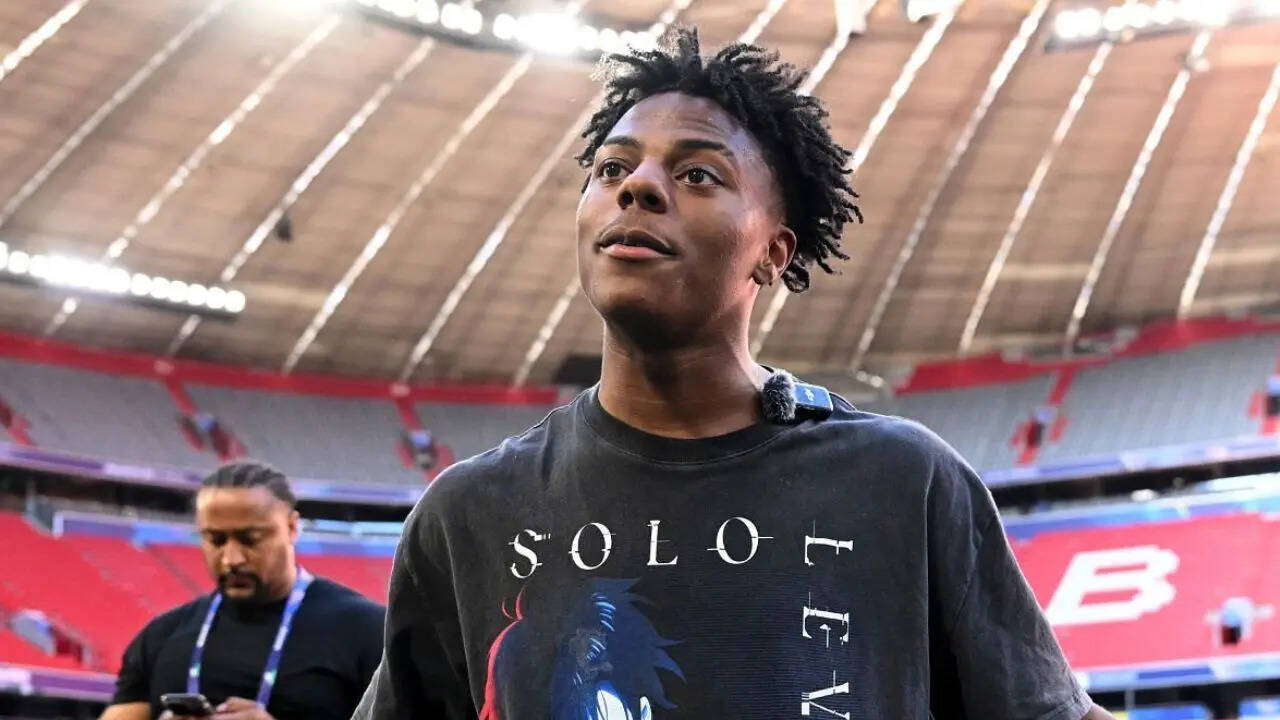
The convergence of high-density physical fan interaction and real-time digital broadcast creates a unique security deficit where the streamer functions as both the asset and the vulnerability. When IShowSpeed (Darren Watkins Jr.) was forcibly kissed during a livestream in Norway, the event was not merely a "chaotic moment" but a predictable outcome of a breakdown in the Triad of Streamer Security: perimeter integrity, audience psychological priming, and rapid extraction protocols. This incident serves as a primary case study in how the decentralized nature of IRL (In Real Life) streaming incentivizes physical boundary dissolution for the sake of digital engagement metrics.
The Geometry of the Breach: Anatomy of a Security Failure
Analyzing the footage reveals a systematic collapse of the protective envelope required for a high-profile individual in a public space. The incident can be deconstructed into three distinct failure phases:
- The Saturation Phase: As the crowd density increased, the ratio of security personnel to spectators reached a tipping point where physical intervention became impossible without the use of escalatory force.
- The Psychological Desensitization Phase: The parasocial relationship between a streamer and their audience creates a false sense of intimacy. Spectators no longer view the creator as a stranger, but as a digital object that can be touched, grabbed, or kissed without consent.
- The Boundary Rupture: The specific moment of the non-consensual kiss occurred because the "hot zone"—the immediate 360-degree radius around the talent—was compromised by a lack of physical barriers.
The "horror" expressed by Watkins was a physiological response to the loss of bodily autonomy in a high-adrenaline environment. For a creator whose brand is built on unpredictable, high-energy outbursts, the transition from being the aggressor of chaos to the victim of it represents a critical shift in the power dynamic of the stream.
The Economic Incentive of Chaos vs. Liability
IRL streaming operates on a Chaos ROI (Return on Investment). The more unpredictable and dangerous a stream becomes, the higher the concurrent viewership (CCV) and the broader the reach on secondary platforms like X and TikTok.
- Positive Feedback Loop: High-risk behavior attracts viewers -> Viewers share clips of the risk -> Streamer gains followers -> Streamer is incentivized to increase risk.
- The Liability Trap: While chaos drives revenue, it simultaneously increases the cost of physical protection. Most creators fail to scale their security spend in proportion to their "threat profile," which rises exponentially with their subscriber count.
The incident in Norway highlights the Security Paradox of Viral Fame: the very visibility that generates wealth for IShowSpeed is the same variable that makes his physical safety unmanageable in public settings. When a creator reaches the "S-Tier" of global visibility (averaging over 100,000 live viewers), they can no longer utilize standard public infrastructure without specialized private security details that mimic heads-of-state protocols.
Parasocial Encroachment: Why the "Kiss" is a Technical Risk
The act of a fan kissing a streamer against their will is the physical manifestation of Extreme Parasocial Encroachment. This occurs when the digital boundary between the screen and the viewer is so thin that the viewer believes they have "earned" a level of physical access.
In the case of Watkins, his "Speed" persona is hyper-accessible. He engages in high-intensity shouting, direct camera eye contact, and frequent interaction with chat. This creates a low-barrier entry for fans' emotions. The "shock" reported by media outlets ignores the structural cause: the streamer’s own content strategy removes the social friction that usually prevents strangers from touching one another.
Structural Vulnerabilities in IRL Streaming
- GPS Latency and Sniping: "Stream sniping" occurs when fans use the live broadcast to triangulate the creator's location. The delay between the live event and the broadcast is often less than five seconds, providing near-perfect tactical data to anyone in the vicinity.
- Mob Mentality and the Bystander Effect: In a crowd of thousands, the individual fan feels anonymous. This anonymity lowers the inhibition to commit battery (which, legally, a non-consensual kiss constitutes).
- Security Fatigue: During a multi-hour broadcast, security personnel experience a decline in situational awareness, particularly when the streamer is constantly moving through varying urban terrains.
Evaluating the Platform Response and Content Moderation
Platforms like YouTube and Twitch face a categorization dilemma when a streamer is assaulted live on air. If the streamer remains on air, the platform is technically hosting a broadcast of a crime. However, shutting down the stream immediately can deprive the creator of their only means of real-time documentation and potential rescue signaling.
The viral explosion of the clip across social media platforms exemplifies the Secondary Trauma Market. Platforms profit from the "horror" of the moment via engagement, while the creator is left to manage the psychological fallout. There is currently no industry-standard protocol for "Emergency Stream Termination" that protects the creator without penalizing their reach.
The Cost Function of Global IRL Tours
Planning a tour through high-density European cities without a military-grade logistics plan is a failure of management. To quantify the risk, one must look at the Density-to-Escape Ratio (DER). In narrow European streets, the DER is extremely low; there are few exit routes and high points of friction.
A professionalized IRL operation requires:
- Advance Teams: Scouting locations 24 hours in advance to identify choke points.
- Decoy Protocols: Using multiple vehicles to split the crowd's attention.
- Signal Jamming or Delay: Intentionally adding a 5–10 minute delay to the broadcast to prevent real-time location tracking (sniping).
Watkins’ team frequently neglects these protocols in favor of "organic" chaos. While this produces "authentic" content, it also produces the high-stress, high-danger environments that led to the Norway incident. The "chaos" is not a bug; it is the product. But when the product results in physical assault, the business model becomes unsustainable due to insurance unsuitability and legal liability.
Strategic Pivot: The Hardened Streamer Model
To mitigate future risks while maintaining the high-energy brand, a transition to the Hardened Streamer Model is required. This involves moving away from open-access public appearances and toward "Controlled Chaos" events.
- Geofenced Fan Zones: Utilizing ticketed or pre-vetted areas for fan interaction.
- Active Extraction Drills: Security teams must be trained specifically for "snatch and grab" extractions rather than just standing in a perimeter.
- Legal Precedent Setting: Pursuing legal action against individuals who violate physical boundaries on stream to serve as a deterrent to the broader audience.
The "kiss" incident was a warning shot for the entire IRL streaming industry. As digital stars gain the fame of traditional celebrities without the traditional infrastructure of protection, the frequency of these violations will increase. The strategic recommendation for high-profile creators is a total audit of their "Public Friction" metrics. If a creator cannot move from Point A to Point B without a 50% chance of a security breach, the current logistics model is broken. Immediate investment in high-tier executive protection and the implementation of broadcast delays is the only path toward long-term physical and brand viability. The alternative is a catastrophic event that will force platform-wide bans on IRL streaming in public spaces entirely.