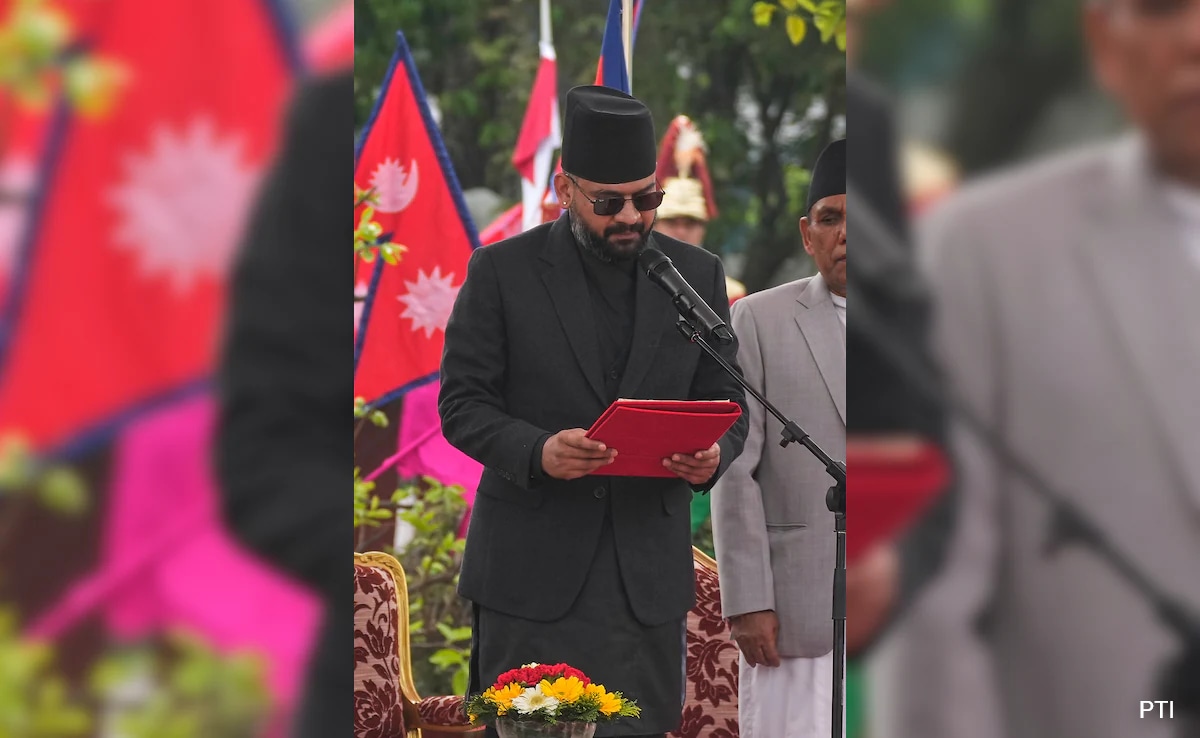
The international media is currently obsessed with a fairy tale. It’s a clean, Hollywood-ready script: A rapper-engineer from Gen Z takes the helm of Kathmandu, fixes the garbage problem, and then—through sheer force of personality—vaults into the Prime Minister’s office. It’s the kind of story that sells clicks to a global audience desperate for a "disruptor" who doesn't look like a career politician.
But if you look at the actual mechanics of Nepali governance, the narrative of Balen Shah as a "Man of Many Firsts" isn't just hyperbolic. It’s dangerous.
We are watching the birth of a technocratic populist. History shows that when a nation trades institutional progress for the cult of a "fixer," the fallout is usually measured in decades of stagnation. The "Balen Effect" is less about structural reform and more about the aesthetic of efficiency. It’s time to stop looking at his sunglasses and start looking at the spreadsheets.
The Engineer Fallacy: Why Logic Fails in a Cabinet
The most repeated praise for Balen Shah is his background as a structural engineer. The assumption is that a country is just a bridge that needs building—a series of load-bearing calculations and stress tests.
This is the "Technocrat’s Trap."
In engineering, $F = ma$. In politics, $F$ equals a mess of conflicting ethnic interests, geopolitical pressures from India and China, and a bloated bureaucracy designed specifically to resist change. An engineer views a "blockage" as something to be cleared. A politician knows that "blockage" is often a human being with a voting bloc.
When Shah moved from the Mayor’s office to the Prime Minister’s seat, he stopped managing trash collection and started managing a nuclear-adjacent economy. You cannot "optimize" a coalition government. The moment you try to apply rigid engineering logic to a fluid parliamentary system, the system snaps.
I’ve seen this before in the tech world. A brilliant CTO gets promoted to CEO and tries to run the sales team like a codebase. They ship "features" (policies) that nobody asked for and ignore the "technical debt" (political favors) that eventually bankrupts the company. Shah is currently running Nepal like a startup in its Series A phase—high burn rate, massive PR, and zero path to long-term profitability.
The Aesthetics of Governance vs. The Reality of Policy
Kathmandu looks cleaner. There is no denying that. Shah’s use of social media to document his "war on encroachment" is a masterclass in modern branding. He records the bulldozers. He posts the results. The crowd roars.
But look closer at what is being destroyed.
The "encroachments" Shah targets are often the only economic lifelines for the city’s most vulnerable. By prioritizing the look of a modern city over the economy of a functional one, he is practicing what I call "Instagram Urbanism."
- The Displaced Micro-Economy: Removing street vendors might make a sidewalk walkable, but it deletes thousands of micro-transactions that keep the local currency circulating.
- The Enforcement Gap: Bullying a small shop owner is easy. Moving a government building that violates the same code is nearly impossible. Shah’s brand of justice is highly visible but fundamentally asymmetric.
- The Sustainability Question: Who maintains the "clean" streets once the cameras stop rolling?
True institutional reform is boring. It involves rewriting tax codes, digitizing land records (without the fanfare), and restructuring civil service exams. Shah prefers the bulldozer because the bulldozer gets likes. A Prime Minister who governs via viral clips is not a leader; he’s an influencer with a budget.
The Myth of the Independent
The "independent" label is Shah’s greatest asset and his biggest liability. The competitor narrative suggests he is "beating the system" by standing outside of it.
The math says otherwise.
Nepal’s parliamentary system is built on parties. To pass a budget, to appoint a cabinet, to ratify a treaty—you need a majority. An "independent" Prime Minister is a king without an army. He is forced into backroom deals with the very "dinosaurs" he spent his campaign mocking.
Imagine a scenario where Shah wants to pass a radical transparency bill. The major parties, who control the committees, simply sit on it. What does he do? He goes to Facebook. He rants. The youth protest. But the bill stays dead.
Eventually, the "Independent" has to become a "Broker." He has to trade a hydro-power contract for a vote on an education bill. At that point, the "Gen Z Icon" is just another suit in a different font. The tragedy is that his supporters won't see the compromise; they’ll only see the edited highlights.
Data Over Drama: The Economic Blindspot
While the media fawns over his "rapper" persona, Nepal’s economy is screaming for help. We are talking about a nation where remittance from migrant workers accounts for nearly 25% of the GDP.
What is the Shah plan for the manufacturing vacuum? What is the strategy for the 1500+ young people leaving Tribhuvan International Airport every single day to work in the Gulf?
- Rapper Shah speaks to their frustration.
- Engineer Shah understands the infrastructure deficit.
- Prime Minister Shah is currently silent on the structural reforms needed to make staying in Nepal a viable financial decision.
The "New Nepal" shouldn't be defined by whether the PM can drop a beat. It should be defined by whether the PM can drop the unemployment rate. We are confusing charisma for competence.
I’ve sat in boardrooms where "visionary" founders talked about changing the world while their actual product was hemorrhaging cash. Shah is the ultimate visionary founder. He has the vision, he has the pitch deck (his social media), and he has a loyal "user base" (the voters). But the "product"—the actual governance of Nepal—is still in beta, and the bugs are starting to crash the system.
The Cult of Personality is a Dead End
The most dangerous thing about the Balen Shah phenomenon is that it makes people stop looking for better systems and start looking for "better men."
If Shah fails—which, statistically, most "outsider" populists do—the disillusionment will be catastrophic. The youth will decide that if even he couldn't fix it, the system is truly beyond hope. This leads to brain drain, political apathy, and eventually, the return of the hardline autocrats who promise "order" above all else.
We need to stop asking "Is Balen Shah the savior of Nepal?" and start asking "Why is our system so broken that we think one man can be a savior?"
The Brutal Truth for the Youth
To the Gen Z voters who see themselves in him: You are being sold a shortcut.
Real change doesn't happen when one guy gets the top job. It happens when thousands of young people enter the middle management of the country. It happens when you take over the local wards, the school boards, and the planning commissions.
Relying on a single icon to fix a broken state is the most "boomer" thing you can do. It’s the same old story of waiting for a Great Man to arrive and save the day. You’ve just traded a guy in a Daura Suruwal for a guy in a black hoodie.
Stop cheering for the bulldozer. Start asking for the blueprints.
Would you like me to analyze the specific fiscal policies proposed in the latest Nepal budget to see if they match this "technocratic" trend?