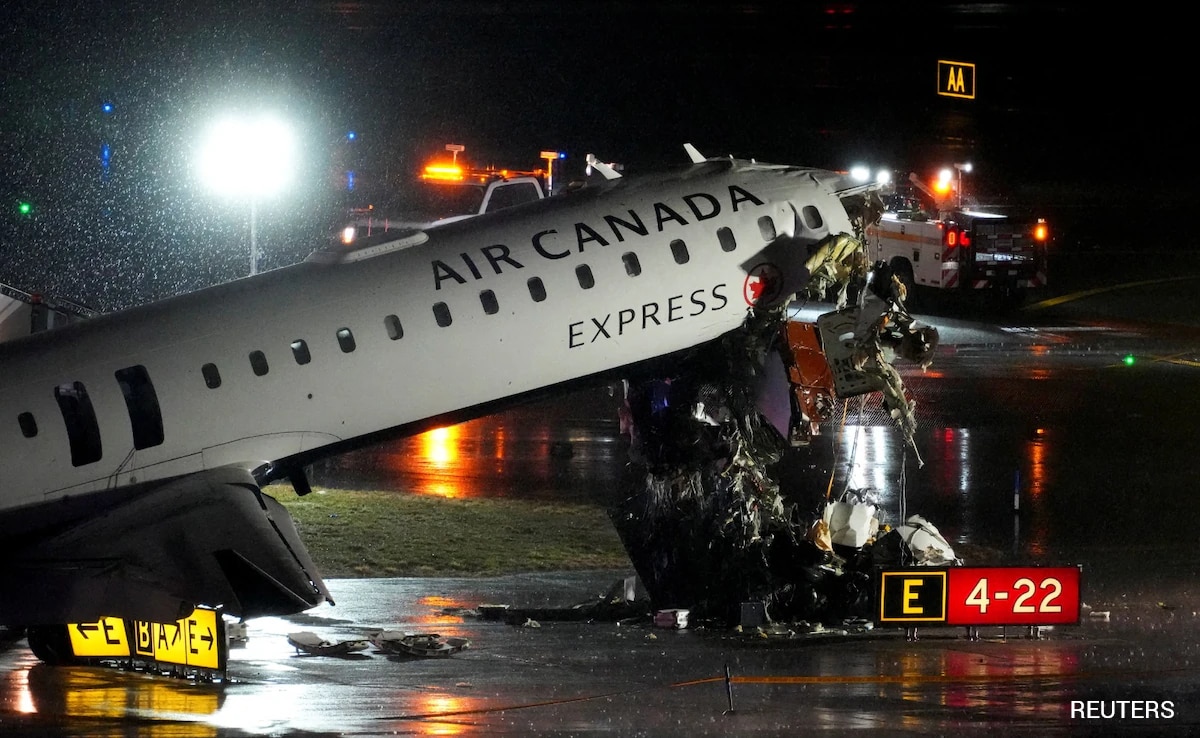
Laguardia Airport resumed full operations this morning after a 48-hour shutdown triggered by a fatal runway collision that claimed the lives of two veteran pilots. While the Port Authority of New York and New Jersey frames the reopening as a return to normalcy, the wreckage has been cleared far faster than the questions surrounding the airport’s physical limitations. This was not a mechanical failure or a weather-induced tragedy. It was a failure of space and timing on one of the most congested pieces of pavement in the aviation world.
The incident occurred during a peak-hour transition when a departing private charter clipped a taxiing regional jet. The impact was precise and devastating. By the time emergency crews reached the tarmac, the structural integrity of the smaller craft had been compromised beyond survival. To understand how two aircraft ended up occupying the same few square feet of New York real estate, one must look past the "human error" label that investigators are already preparing to slap on the file.
A Concrete Straitjacket
LaGuardia is a relic of an era that never envisioned the sheer volume of modern regional jet traffic. It is effectively a postage stamp floating in the East River. Unlike the sprawling acreage of Dulles or Denver, LaGuardia operates on a footprint that forces high-stakes choreography every single minute of the day.
When you pack 1,100 flights a day into two intersecting 7,000-foot runways, the margin for error disappears. Most major international hubs utilize "safety buffers"—vast swaths of grass or concrete that allow for minor navigational drift. At LaGuardia, a ten-degree mistake puts a wingtip into a terminal, a fuel truck, or another cockpit. This specific crash happened at the intersection of Runway 4-22 and Taxiway Romeo, a notorious bottleneck where pilots are often forced to perform a delicate "stop-and-go" dance while juggling rapid-fire instructions from a tower under immense pressure to keep the line moving.
The Myth of Modernization
The recent $8 billion overhaul of LaGuardia focused heavily on the passenger experience. We have gleaming terminals, high-end dining, and art installations. However, the one thing money cannot buy in Queens is more land. The "New LGA" is still operating on the same cramped airfield layout that has existed for decades.
While the interiors look like the future, the tarmac remains a high-pressure relic. Aviation safety experts have long warned that the "jewelry box" design of the airport—putting a beautiful facade over a strained foundation—does nothing to mitigate ground incursions. Ground incursions are precisely what killed these two pilots. The industry refers to these as "close calls" until the day the metal actually touches. On Tuesday, the luck simply ran out.
The Invisible Pressure of the Slot System
To find the "why" behind this tragedy, you have to follow the clock. LaGuardia is a "slot-controlled" airport. This means every takeoff and landing is a pre-purchased, highly valuable commodity. If a pilot misses their window due to a slow taxi or a misunderstanding of a clearance, the ripple effect can cost an airline tens of thousands of dollars in delays and missed connections.
This creates an environment of invisible haste.
Pilots are professionals, but they are also human beings operating within a system that penalizes hesitation. Investigative data from previous ground incidents suggests a recurring theme: pilots "anticipating" a clearance to save three seconds. In the cockpit of a heavy jet, three seconds is the difference between a safe hold short and a fatal overlap. The National Transportation Safety Board (NTSB) will spend months analyzing the black boxes to see if the crew was rushed, but the industry already knows the answer. The schedule is the master at LaGuardia.
Beyond the Cockpit Voice Recorder
Early reports suggest the air traffic control (ATC) frequency was "cluttered" at the time of the collision. This is a polite way of saying the airwaves were a mess. At any given moment, a LaGuardia controller is managing a dozen moving pieces on a board where the pieces are moving at 20 knots and weigh 50 tons.
The technological solution—Airport Surface Detection Equipment (ASDE-X)—is supposed to alert controllers to potential collisions on the ground. It uses a combination of radar and satellite data to "see" the tarmac. On the day of the crash, the system reportedly functioned, but the warning came too late for the pilots to react. This reveals a terrifying truth about aviation safety: even with "eye in the sky" technology, the physics of a moving airplane cannot be reversed in the heartbeat required to prevent a low-speed collision in tight quarters.
The Regional Jet Problem
The aircraft involved in the fatal strike was a regional workhorse. These planes are the backbone of domestic travel, but they also complicate the ground game. Because they are smaller and sit lower to the ground than a Boeing 777 or an Airbus A350, their visibility profiles are different.
A pilot in a high-sitting cockpit might have a blind spot that perfectly obscures the tail of a smaller jet during a sharp turn. This "geometry of the strike" is a known hazard in ground operations. When you combine poor visibility from the flight deck with the narrow taxiways of an airport built for propeller planes, you create a trap. The pilots who died were not rookies. They had thousands of hours in type. Their expertise was neutralized by a physical environment that demanded a level of precision that humans—and even modern sensors—cannot always guarantee under stress.
Reopening Without Redesign
The runway is open. The flights are departing. The charred remains of the aircraft are tucked away in a hangar for analysis. But the fundamental reality of LaGuardia has not changed.
If we continue to funnel record-breaking passenger numbers through a dual-runway system that hasn't expanded its footprint since the mid-20th century, we are simply waiting for the next intersection to fail. The industry likes to talk about "redundancy" and "safety layers," but there is no redundancy for a lack of asphalt.
The NTSB will eventually release a report citing "loss of situational awareness" and "communication breakdown." These are comfortable terms. They blame individuals while sparing the infrastructure. The harder truth is that these pilots were operating in an unforgiving theater where a single missed word or a misunderstood gesture has a terminal outcome.
We should stop asking when the airport will be "back to normal." This is the normal for LaGuardia. It is a high-wire act performed over a concrete floor, and for two pilots this week, the wire snapped.
Demand a full audit of the Ground Movement Safety System (GMSS) protocols specifically for the 4-22 intersection before you book your next flight through Queens.