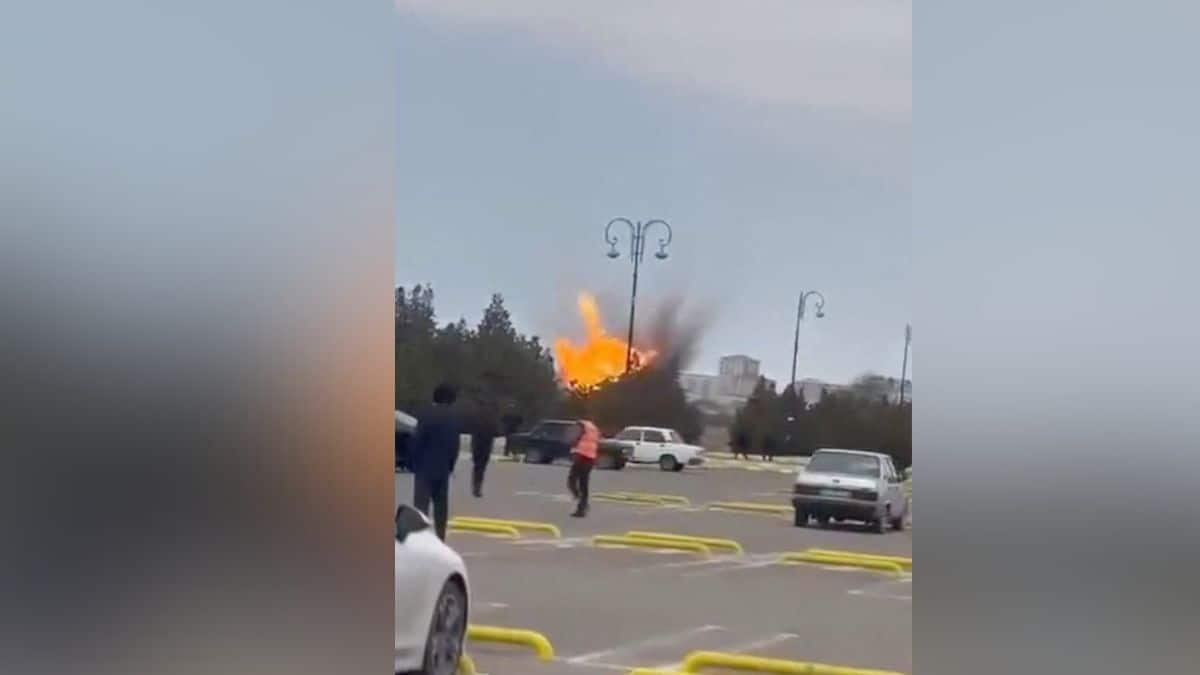
The global arms trade has shifted from the air-conditioned boardrooms of Arlington to the mud-caked trenches of the Donbas. For decades, the United States and its Middle Eastern allies relied on a top-down procurement model—billion-dollar platforms developed over twenty years to fight wars that no longer exist. Ukraine changed that. While formal peace negotiations remain frozen, a frantic, subterranean race for drone supremacy has accelerated. Western military attaches and Gulf defense contractors are no longer just sending aid; they are extracting data, scavenging hardware, and bidding for the intellectual property of Ukrainian startups that have turned $500 racing drones into the most feared weapons on the modern front.
The demand is driven by a terrifying realization. Traditional electronic warfare and million-dollar interceptors are failing against cheap, decentralized swarms. Ukraine has become the only place on earth where these theories are tested at a scale that breaks traditional military logic. This isn't a theoretical exchange of ideas. It is a desperate grab for "blood equity"—the hard-won technical knowledge that only comes from seeing a drone flight-control system fail under Russian jamming and fixing the code in a basement while the shells land nearby.
The Death of the Exquisite Platform
The Pentagon has spent the last half-century obsessed with what insiders call "exquisite" systems. These are the F-35s and Global Hawks—magnificent machines that cost a fortune and take a decade to repair if a single proprietary chip fries. Ukraine proved these are liabilities in a high-intensity conflict against a peer adversary.
Ukrainian engineers, out of necessity, embraced the "attritable" model. If a drone costs $400, it doesn't matter if the enemy shoots it down with a $2 million missile. In fact, that is a mathematical victory for the drone operator. This inversion of the cost-exchange ratio has sent shockwaves through the U.S. Defense Department. Analysts are now swarming Kyiv to understand how small, fragmented teams are out-pacing the research and development cycles of giants like Lockheed Martin and Northrop Grumman.
The technical secret lies in software-defined warfare. While Western contractors are tethered to rigid hardware specifications, Ukrainian teams are pushing daily firmware updates to bypass Russian electronic countermeasures (ECM). If the Russians jam a specific frequency in the morning, the Ukrainians have a workaround by lunch. This agility is what the U.S. and Middle Eastern powers are desperate to bottle and bring home.
The Middle East Moves Beyond the Checkbook
In Riyadh and Abu Dhabi, the interest in Ukrainian drone expertise isn't just about regional defense. It is about industrial survival. For years, the Gulf states were the world’s biggest customers, buying prestige and protection through massive arms deals. But the Houthi attacks on Aramco facilities and the rising threat of Iranian loitering munitions showed that expensive radar arrays can be bypassed by low-flying, slow-moving plastic.
These nations are now pivoting from being customers to being incubators. They are looking to Ukraine to bypass the slow, bureaucratic export controls of the United States. By partnering directly with Ukrainian drone manufacturers, Middle Eastern defense hubs can fast-track the development of their own domestic industries. They provide the capital and the high-end manufacturing facilities; Ukraine provides the battle-tested algorithms and the battle-hardened telemetry data.
It is a symbiotic, if cynical, arrangement. The Gulf gets a shortcut to becoming a drone superpower, and Ukrainian firms get the funding they need to keep their assembly lines moving while their own government’s coffers are strained by the costs of a prolonged war.
The Jamming Paradox
Everyone wants to talk about the drones, but the real war is being fought in the invisible spectrum. Russia’s electronic warfare capabilities are among the most sophisticated in the world. They have created "dead zones" where GPS signals vanish and radio links snap like dry twigs.
This environment has forced Ukrainian developers to innovate in ways that Western laboratories simply cannot replicate in a controlled testing range. They are experimenting with optical navigation—drones that don't rely on GPS but instead "see" the ground and compare it to pre-loaded satellite maps to find their way.
AI at the Edge
Another critical development being exported is "edge AI." Because the link between the pilot and the drone is often severed by jamming in the final kilometers of a flight, the drone must be smart enough to recognize a tank and hit it without human intervention.
- Terminal Guidance: The drone's onboard processor takes over when the signal is lost.
- Object Recognition: Algorithms trained on thousands of hours of actual combat footage identify silhouettes through smoke and camouflage.
- Autonomous Commitment: The machine makes the final decision to dive.
This is the "Black Box" that every major military power wants to open. The ethics of autonomous killing machines are often debated in the hallowed halls of the UN, but in the trenches of eastern Ukraine, those debates were settled by the reality of survival months ago.
The Commercial-to-Combat Pipeline
Perhaps the most jarring aspect of this tech transfer is how much of it relies on the "prosumer" market. The drones currently sinking ships in the Black Sea or taking out T-90 tanks often started as hobbyist equipment or agricultural monitors.
Ukrainian expertise has mastered the art of "militarizing the mundane." They have developed specialized drop mechanisms, 3D-printed stabilizers, and encrypted mesh networks using off-the-shelf components. The U.S. Special Operations Command is particularly interested in this "MacGyver" approach to warfare. In a future conflict where supply lines are cut and high-tech sensors are disabled, the ability to build a lethal force out of what is available at a local hardware store becomes a strategic necessity.
The Geopolitical Price of the Knowledge Exchange
The rush for Ukrainian expertise carries significant risks. There is the obvious concern of proliferation. As these technologies are shared with various actors in the Middle East, the barrier to entry for non-state actors and proxy groups drops precipitously. What works for a Ukrainian defender today could be used by an insurgent group tomorrow.
Furthermore, this focus on drone tech has created a strange vacuum in the diplomatic sphere. As long as the battlefield remains a live laboratory for the world’s arms dealers, there is a perverse incentive for certain stakeholders to keep the "experiment" running. The data being gathered is too valuable, and the lessons being learned are too transformative to walk away from.
The talk of peace may be on ice, but the business of refining the next generation of slaughter is operating at a fever pitch. Washington and its partners aren't just watching the war; they are downloading it.
The Next Phase of Defense Procurement
Military leaders are already drafting new manuals based on the Ukrainian experience. The old way of buying weapons is dying. The new way is fast, cheap, and disposable. We are moving toward a world where the most valuable asset isn't a stealth fighter, but a library of code that can be flashed onto a thousand plastic drones in a shipping container.
Countries that fail to adapt to this "Ukrainian Standard" will find themselves holding very expensive, very shiny relics in a conflict that is won by the side with the best software and the most resilient supply of cheap sensors. The era of the exquisite platform is over. The age of the intelligent swarm has arrived, and its birthplace is a country currently being pulverized into the dirt.
Investors and defense ministers should stop looking for the next "game-changing" missile. They should be looking at the 22-year-old coder in a Kyiv basement who just figured out how to make a $50 flight controller ignore a million-dollar Russian jammer. That is where the power has shifted.
Ensure your procurement teams are embedded with the rapid-response units in Kyiv now, or prepare to be obsolete by the time your next five-year budget is approved.