The air in the Situation Room is famously still, but it is never empty. It is heavy with the weight of maps, the low hum of cooling fans, and the unspoken realization that a single sentence uttered from a podium can move carrier strike groups across an ocean. This week, that stillness shattered.
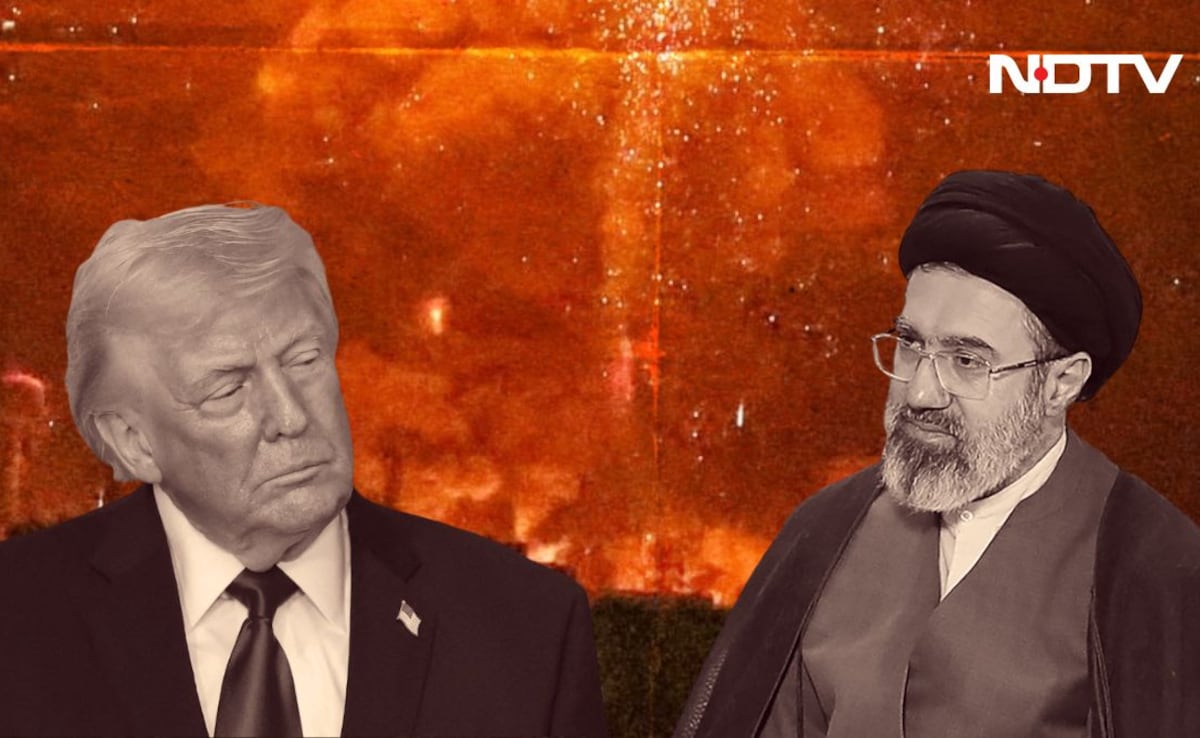
Donald Trump has never been a man of hushed tones. While diplomacy usually lives in the gray shadows of "deep concern" and "proportional response," the former president prefers the clarity of a thunderclap. His latest warning to Tehran—promising to hit them "very hard" in the coming days—isn't just a headline. It is a fundamental shift in the atmospheric pressure of global politics. Expanding on this topic, you can find more in: Why the Green Party Victory in Manchester is a Disaster for Keir Starmer.
Consider a shopkeeper in Isfahan. Let’s call him Hamid. Hamid doesn't spend his mornings reading geopolitical white papers or analyzing the trajectory of ballistic missiles. He spends them dusting glass jars of saffron and checking the exchange rate of the rial. For Hamid, "hitting hard" isn't a soundbite. It is the sound of a door locking. It is the sudden, sharp spike in the price of bread. It is the invisible vibration of a predator drone three miles above the clouds, a sound you can't actually hear but one you feel in the marrow of your bones.
The rhetoric coming out of the campaign trail isn't just about the next election. It is about the next decade. Analysts at The New York Times have shared their thoughts on this trend.
The Anatomy of a Threat
When a leader promises a "hard hit," they are playing a game of psychological chess where the pieces are made of high-grade steel and enriched uranium. The facts are stark. Iran has spent years weaving a "Ring of Fire" around its borders, utilizing proxies to exert influence from the Mediterranean to the Gulf of Aden. The West has responded with a suffocating blanket of sanctions, hoping to starve the engine of its fuel.
But sanctions are a slow poison. They take years to work. A "hard hit" is different. It is surgical. It is violent. It is the kinetic reality of a missile meeting a concrete bunker.
The logic behind the warning is simple: deterrence. In the theater of international relations, if your opponent doesn't believe you will pull the trigger, the gun is just a heavy piece of metal. By signaling a massive escalation, the intent is to freeze the opponent's hand. It is the high-stakes equivalent of a stare-down in a darkened alley. If the other guy blinks, you win. If he doesn't, the alley becomes a graveyard.
The Invisible Stakes of the Strait
To understand why this matters to someone sitting in a coffee shop in Des Moines or a flat in London, you have to look at the water. Specifically, the Strait of Hormuz.
Imagine a straw. Now imagine that twenty percent of the world’s petroleum flows through that straw every single day. If Iran feels backed into a corner by a "hard hit," their most effective move isn't necessarily to fire back at a military base. It is to pinch the straw.
When the straw is pinched, the world economy gasps for air. Gas prices don't just go up; they leap. Supply chains that were already brittle begin to snap. The cost of shipping a plastic toy from Shanghai or a crate of oranges from Morocco doubles overnight. This is the human element of "hard" power. It starts with a speech in a gymnasium and ends with a mother wondering if she can afford the commute to work.
The Ghost of 2020
We have seen this script before, though the ink was a different color. In January 2020, the world held its breath after the drone strike that took out Qasem Soleimani. For forty-eight hours, the internet hummed with the terrifying, meme-driven anxiety of "World War III." People stayed glued to their screens, watching for the first sign of a retaliatory swarm.
It didn't happen—not in the way people feared.
There is a strange, paradoxical stability in extreme tension. When both sides know that the next step leads off a cliff, they tend to stand very still. Trump’s "very hard" warning leans into this paradox. It assumes that the threat of total destruction is the only thing that ensures total restraint. It is a gamble on the rationality of an adversary that many claim is irrational.
The Human Cost of the Waiting Room
War is often described in the media as a series of movements—troops deployed, ships docked, targets neutralized. We rarely talk about the waiting.
The waiting is what consumes the families of service members. It is the silence in a home in North Carolina where a husband is "somewhere in the Central Command area of responsibility." Every time a notification pings on a phone, there is a micro-second of pure, unadulterated terror. Is this the moment the "hard hit" begins? Is this the moment the "fresh warning" becomes a casualty list?
We often treat these political announcements like sports scores. We check the "win" or "loss" for a particular candidate or party. But the reality is a messy, blood-stained ledger.
The Iranian people are not a monolith. Within those borders are students who want to see the world, doctors who want to cure cancer, and artists who want to paint something other than murals of martyrs. When the rhetoric escalates, their world shrinks. The internet gets cut. The "morality police" tighten their grip. The threat of external force often gives the internal regime the perfect excuse to crush dissent.
The Strategy of the Unpredictable
There is a school of thought in political science called the "Madman Theory." It suggests that it is beneficial for your enemies to think you are volatile, even slightly unhinged. If they think you are capable of anything, they will risk nothing.
The "fresh warning" issued this week is the Madman Theory in its purest form. It bypasses the State Department’s carefully vetted memos and goes straight for the jugular of the adversary’s psyche. It says: I am not following the rules you expected.
But the problem with the Madman Theory is that it requires a constant increase in the volume of the threats. If you promised a "hit" last month and nothing happened, you have to promise a "harder hit" this month. Eventually, you run out of adjectives. Eventually, the only thing left to do is act.
The Weight of the Next Seven Days
Next week.
That is the timeline provided. In the world of 24-hour news, seven days is an eternity. In the world of military planning, it is the blink of an eye.
As the sun sets over the Persian Gulf tonight, the sailors on those gray ships are checking their equipment. In Tehran, the generals are huddled in rooms that smell of stale tea and high-tension anxiety. And back home, the rest of us watch the ticker tape move across the bottom of our screens, trying to decipher the difference between a campaign promise and a declaration of intent.
We live in a world where words have weight again. For a long time, we thought we could outgrow the era of "big man" politics, where the whims of a single leader could alter the map of the world. We were wrong. We are back in the age of the ultimatum.
The shopkeeper, Hamid, closes his shutters for the evening. He turns the heavy iron key and listens to the click. He doesn't know what will happen next week. Neither do the generals. Neither, perhaps, does the man who issued the warning.
We are all just standing in the stillness of the Situation Room now, waiting to see if the air finally catches fire.
The silence that follows a threat is always louder than the threat itself.
Would you like me to look into the specific military assets currently positioned in the Gulf to see how they align with this timeline?