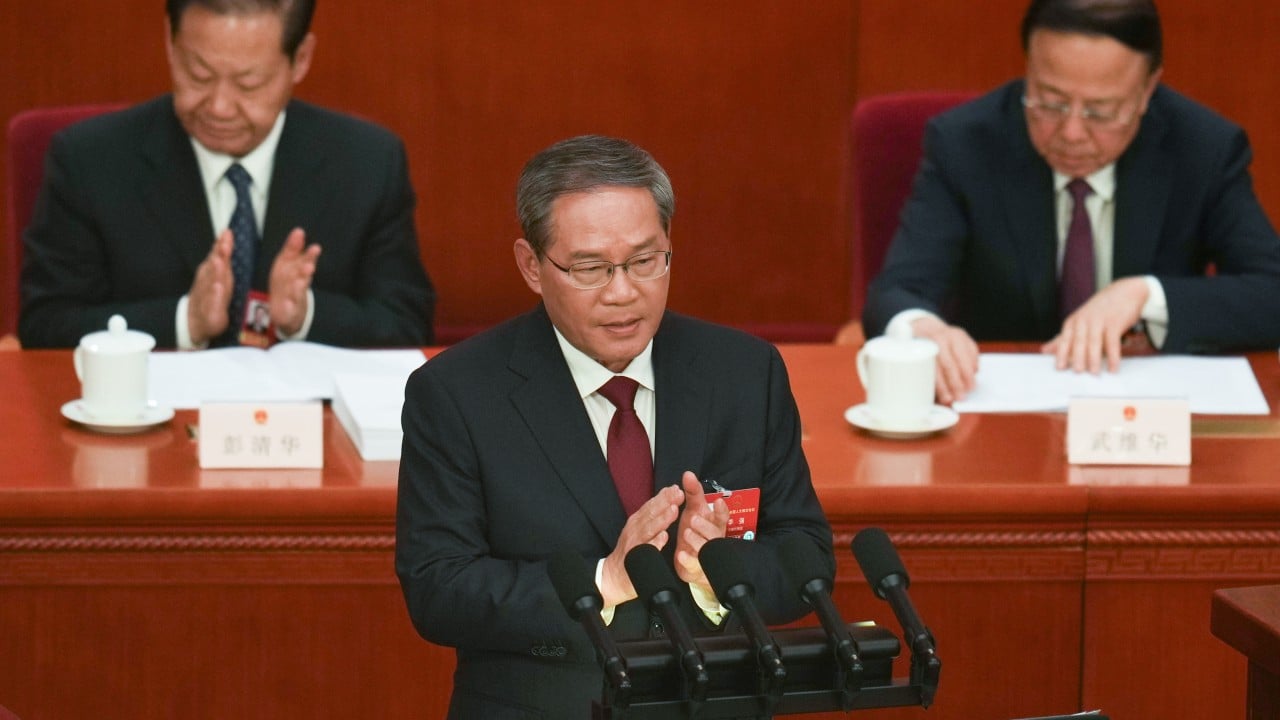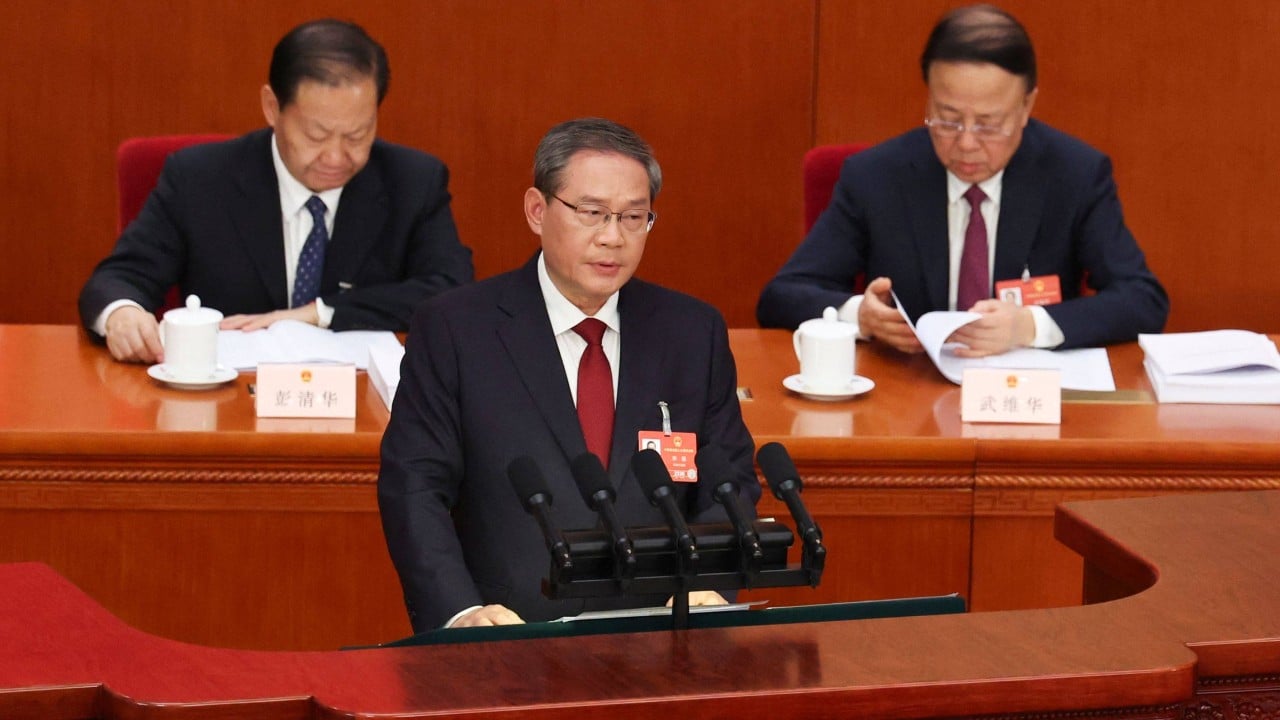
The draft report surfacing from Beijing this week isn't just a collection of growth targets; it is a confession of systemic friction. While the official narrative frames 2026 as the year of "High-Quality Expansion," the underlying data suggests a desperate scramble to outrun a structural slowdown that has been decades in the making. The headline GDP target remains anchored near 4.5%, but the mechanism for reaching it has fundamentally shifted from physical infrastructure to a risky bet on "New Productive Forces." This shift is the most aggressive gamble in the history of modern state capitalism.
For years, the world watched as China built its way out of every slump. When demand faltered, the state poured concrete. That era is dead. Today, the debt-to-GDP ratio has climbed to levels that make traditional stimulus a mathematical impossibility. Instead, the 2026 strategy relies on dominating the global supply chains for green technology, advanced semiconductors, and artificial intelligence. It is a transition that requires the economy to function like a precision instrument rather than a blunt force object.
The Debt Wall and the End of the Concrete Era
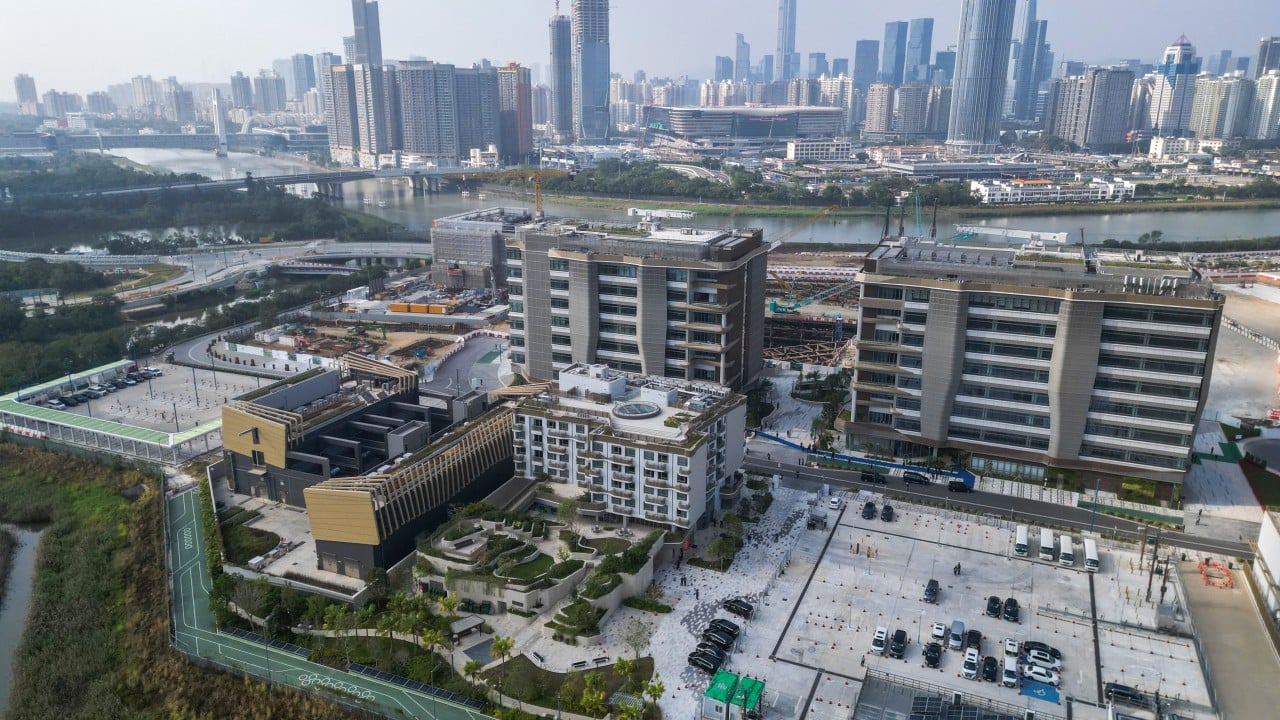
To understand why the 2026 report is so focused on technology, you have to look at the wreckage of the property sector. Real estate once accounted for roughly 25% of Chinese economic activity. Now, it is a drag. Local governments, which historically relied on land sales to fund their budgets, are effectively insolvent in several provinces. They are no longer the engines of growth; they are the anchors.
The draft report signals a pivot away from bailing out these local entities. Instead, Beijing is centralizing fiscal power. The goal is to redirect capital toward "Little Giant" enterprises—specialized firms in niche tech sectors that the state believes will provide the next wave of export dominance. This is not a market-driven recovery. It is a state-directed industrial overhaul. The risk is that by starving the traditional sectors to feed the new, the government may trigger a consumption crisis that no amount of high-tech exports can solve.
The Consumption Gap That Nobody Wants to Fix
There is a glaring omission in the 2026 draft that veteran analysts find deeply troubling: a lack of meaningful support for household income. The Chinese economy remains heavily skewed toward production rather than consumption. For the 4.5% growth target to be sustainable, the Chinese consumer needs to start spending. But they aren't.
High youth unemployment and a lack of a robust social safety net have turned the Chinese middle class into world-class savers. They are hoarding cash because they are afraid of the future. The report mentions "enhancing domestic demand," but it offers no concrete mechanisms like direct transfers or significant healthcare reform to encourage spending. Without a pivot toward the consumer, China’s factories will continue to produce more than its people can buy, leading to a surplus that must be dumped on global markets.
The Global Collision Course
This surplus is the fuse for a looming trade war that will make the 2018 tariffs look like a skirmish. As China doubles down on its "New Three" industries—electric vehicles, lithium-ion batteries, and solar products—it is running headlong into a wall of protectionism. Europe and the United States have made it clear they will not allow their own industrial bases to be hollowed out by Chinese overcapacity.
The 2026 report assumes a level of global cooperation that no longer exists. It relies on the idea that the world will continue to absorb Chinese goods even as geopolitical tensions rise. This is a massive blind spot. If the "High-Quality Expansion" relies on exports that the rest of the world refuses to buy, the entire 2026 economic plan collapses. We are seeing the beginning of a fragmented global economy where "efficiency" is being replaced by "resilience" and "friend-shoring."
The Semiconductor Sovereignty Race
Inside the report, the section on "Scientific Self-Reliance" is where the real money is moving. Beijing has realized that its biggest vulnerability is its dependence on foreign silicon. The 2026 draft allocates unprecedented capital to domestic lithography and materials science. This is a wartime mobilization of resources.
The goal is to reach 70% self-sufficiency in core chips by 2027. They are currently behind schedule. To catch up, the state is bypassing traditional ROI (return on investment) metrics, essentially telling state-owned banks to fund any firm that can produce a domestic alternative to Western tech. This leads to incredible waste. For every success story like Huawei’s resurgence, there are a dozen "zombie" tech firms that exist only to consume subsidies. The 2026 report ignores this inefficiency, treating the sheer volume of investment as a proxy for progress.
Demographic Decay is the Silent Killer
No amount of AI or automation can fully offset the reality of a shrinking workforce. The 2026 draft makes a passing nod to "optimizing population services," but it fails to address the math. China’s population has peaked. The working-age population is contracting by millions every year. This creates a dual problem: a shrinking tax base and a soaring healthcare bill for the elderly.
Automation is the state's only answer. The report envisions a "roboticized manufacturing core" that maintains output with fewer humans. But robots don't buy apartments. Robots don't pay for movie tickets. Robots don't contribute to the consumer economy that Beijing supposedly wants to build. The demographic crisis is not a future problem; it is currently eating into the productivity gains that the tech sector is working so hard to generate.
The Strategy of Controlled Pressure
Beijing is betting that it can manage this transition through "controlled pressure." They are squeezing the old economy—property, shadow banking, and low-end manufacturing—to force capital into the new economy. It is a high-stakes experiment in economic engineering. If they squeeze too hard, they risk a systemic financial collapse. If they don't squeeze hard enough, they remain trapped in a debt-fueled stagnation.
The 2026 draft report is an attempt to project confidence while the floor is shifting. It paints a picture of a nation moving toward a cleaner, smarter future. But between the lines, you can see the fear of a middle-income trap. The "why" behind this report isn't growth for growth’s sake; it is survival. The leadership knows that if the transition to "New Productive Forces" fails, the social contract that has underpinned Chinese society for forty years—economic growth in exchange for political stability—will be tested.
Western observers often mistake Chinese state planning for a monolith. In reality, the 2026 report reveals deep internal debates. There are factions pushing for more consumer support and factions demanding more military-industrial investment. The current draft favors the latter. It is a blueprint for a fortress economy, designed to withstand external shocks and internal rot.
The global markets have yet to fully price in the implications of this shift. We are looking at a China that is no longer interested in being the world's cheap assembly line. It wants to be the world's laboratory and its bank. But the cost of that ambition is a domestic economy that feels increasingly brittle. The 2026 development report is a map of a minefield, and Beijing is trying to convince the world it knows exactly where it’s stepping.
Watch the credit spreads on local government financing vehicles over the next six months. If those start to blow out despite the "High-Quality Expansion" rhetoric, you’ll know the 2026 plan is hitting reality sooner than expected.