Premier Li Qiang just handed the world a 5% GDP growth target wrapped in the usual bureaucratic ribbon. Most analysts are busy squinting at the fine print, debating whether Beijing will "hit the mark" or "fall short." They are asking the wrong question. In the machinery of a command economy, "hitting the target" is a matter of administrative will, not economic vitality. The real story isn't the number; it’s the increasingly desperate cost of maintaining the illusion of stability while the foundation of the Chinese growth engine—the property sector—disintegrates.
The Growth Trap Nobody Wants to Admit
Mainstream financial reporting treats China’s GDP target as an organic forecast of health. It isn't. It’s a production quota. When a provincial governor is told the province must grow by 5%, they don't look for innovative startups; they order another bridge to nowhere or subsidize a factory that produces goods no one asked for.
Economists like Michael Pettis have argued for years that China’s GDP is a measure of input, not output. If you spend $1 billion building a city that remains empty, your GDP goes up by $1 billion. In a market economy, that investment would be written off as a loss, dragging down future growth. In China’s accounting system, the debt is kicked down the road, and the "growth" is booked today.
The "lazy consensus" says China needs more stimulus. That is a recipe for a debt explosion. China’s debt-to-GDP ratio is already pushing 300%. Adding more "productive" debt to pay off "unproductive" debt is the financial equivalent of a Ponzi scheme. The 5% target isn't a sign of strength; it’s a straitjacket that prevents the necessary, painful deleveraging the country actually needs.
New Quality Productive Forces is a Buzzword for Overcapacity
Li Qiang’s report leaned heavily on "New Quality Productive Forces." Strip away the propaganda, and you find a singular focus on high-tech manufacturing: EVs, lithium batteries, and solar panels. On paper, this sounds like a smart pivot away from real estate. In reality, it’s an invitation for a global trade war.
The world cannot absorb China's excess industrial capacity. When you prioritize production over domestic consumption, you have to dump your goods somewhere.
- The EV Delusion: China is building enough EV factories to supply the entire planet twice over.
- The Battery Glut: Prices are crashing, not because of "innovation," but because Chinese manufacturers are being subsidized to out-produce the competition until everyone else goes bankrupt.
Brussels and Washington aren't going to sit back and watch their domestic industries be gutted by Chinese state-backed overcapacity. The "new" growth engine is driving straight into a brick wall of protectionism. If China doesn't fix its internal demand—meaning, if it doesn't give its citizens more money to spend—this 5% target will be funded by products that have nowhere to go.
The Real Estate Crisis is Terminal
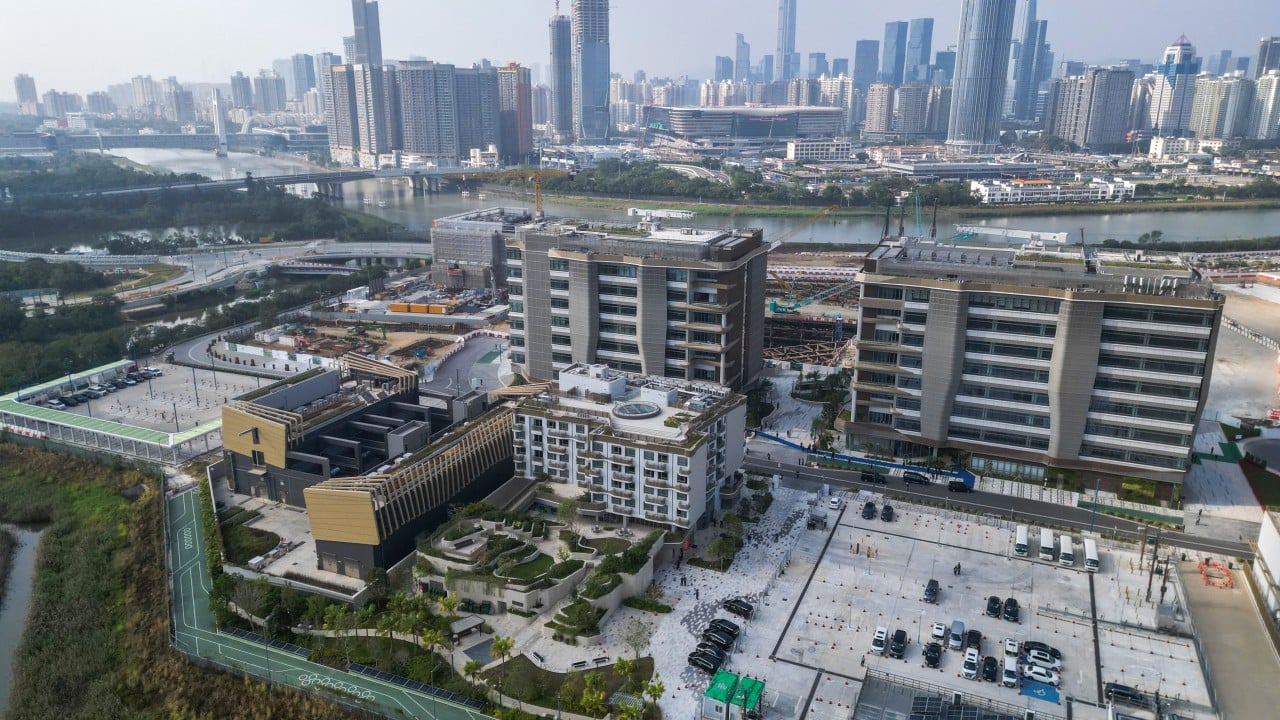
The competitor’s report mentioned "resolving risks in the property sector." This is a euphemism for "managing a slow-motion collapse." For twenty years, property accounted for 25% of China's GDP. It was the primary vehicle for household wealth and the main revenue source for local governments.
That model is dead.
Evergrande and Country Garden aren't outliers; they are the systemic logical conclusion of a debt-fueled building binge. The 5% growth target is a signal that Beijing is refusing to let the property market find a floor. Instead, they are trying to "smooth" the decline. In doing so, they are creating a "lost decade" Japan-style malaise, but with a much lower per-capita income and a demographic pyramid that is upside down.
If you are an investor looking at China’s real estate "stabilization" efforts, you are looking at a zombie sector. The government isn't fixing the problem; it’s nationalizing the losses. Every dollar spent propping up a failing developer is a dollar taken away from the high-tech transition the CCP claims to value.
Why Five Percent is Actually Negative Growth
Let’s look at the math. GDP is a crude measure. If your economy grows by 5%, but your total debt grows by 10%, you are technically getting poorer. You are borrowing from the future to pay for the present.
The real "underlying" growth—growth that isn't dependent on malinvestment or state-mandated construction—is likely closer to 1% or 2%. The gap between that and the official 5% target is the "fudge factor" provided by the state. This is why foreign direct investment (FDI) turned negative for the first time in decades. Global capital isn't stupid; it sees the difference between a target and reality.
The Consumer is the Ghost in the Machine
The government work report pays lip service to "boosting domestic consumption." Yet, there is no plan to build a real social safety net. Chinese citizens save at record levels because they have to. They are hedging against old age, illness, and a lack of pensions.
Without a massive transfer of wealth from the state to the household sector—something the CCP is ideologically resistant to—consumption will never replace investment as the primary driver of growth. You can’t tell a population to "spend more" while their primary asset (their apartment) is losing value and their wages are stagnant.
The Brutal Reality of the 5% Target
Stop asking how China will hit 5%. Start asking what they will sacrifice to get there.
- Sacrifice 1: The Banking System. Forcing state-owned banks to lend to unprofitable "high-tech" sectors to meet growth quotas.
- Sacrifice 2: Local Government Stability. Municipalities are drowning in debt and can’t even pay teachers or civil servants, let alone invest in the future.
- Sacrifice 3: Global Relations. Flooding world markets with subsidized goods to compensate for weak domestic demand.
The 5% target is a political survival mechanism, not an economic strategy. It’s the sound of a government whistling past the graveyard of its own credit-driven model. The "smart money" isn't cheering for the target; it’s quietly moving to markets where growth is a result of productivity, not a decree from the center.
China’s economic miracle was built on real urbanization and real industrialization. That phase is over. Everything now is just high-stakes accounting. If you believe the 5% number, you’re not an analyst; you’re an audience member at a magic show. The rabbit isn't real, and the hat is full of debt.
Sell the bounce. Trust the demographics. Watch the debt.