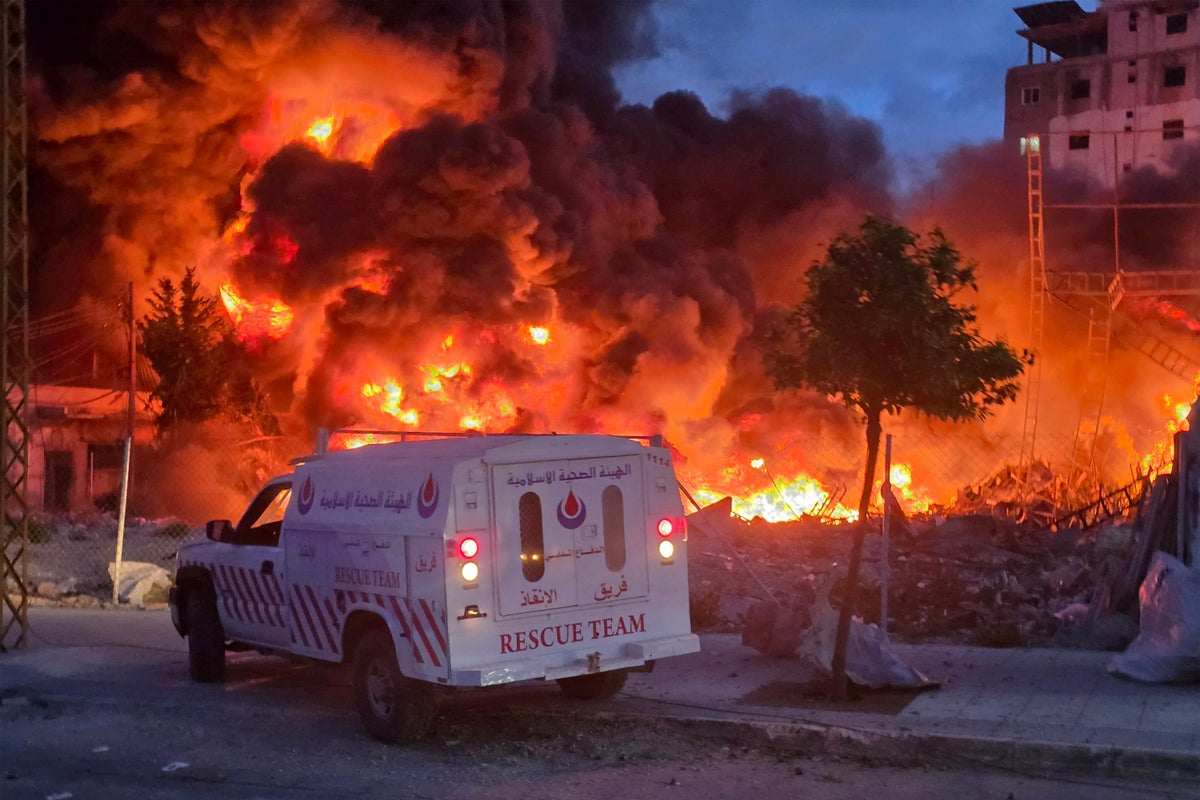
The transition from indirect gray-zone provocation to direct kinetic lethality marks a critical inflection point in the current Iran-US confrontation. When the Pentagon identifies the final two soldiers among six total fatalities, it is not merely updating a record; it is signaling the exhaustion of "proportional response" frameworks. For analysts, the focus shifts from the tragic individual loss to the systemic implications of the Attrition-to-Escalation Gradient. This framework measures how specific casualty thresholds force a shift from tactical containment to strategic theater-wide realignment.
The current conflict is defined by three interlocking operational vectors that dictate the speed and severity of escalation.
The Triad of Kinetic Friction
The logic of this conflict is governed by how friction manifests across geography, technology, and political will.
1. The Geographic Concentration of Risk
Casualties are rarely distributed evenly. They cluster around fixed logistical nodes—outposts, supply routes, and forward operating bases—that possess high symbolic value but limited defensive depth. These "sinkhole" geographies allow an adversary to achieve outsized political effects with minimal expenditure of ordnance. Each fatality within these zones increases the pressure to either harden the site beyond its functional utility or withdraw, creating a binary choice for command structures that favors escalation to protect the remaining force.
2. The Precision-Saturation Paradox
As defensive systems like C-RAM (Counter Rocket, Artillery, and Mortar) and electronic warfare suites become more advanced, the adversary's response is not to retreat, but to saturate. This creates a paradox where higher technology on the defensive side induces a higher volume of fire from the offensive side. The six deaths recorded thus far indicate a failure point where saturation overcame intercept capacity. This suggests that the cost of defending static positions may soon exceed the strategic value of the positions themselves.
3. The Domestic Threshold of Tolerance
In a non-declared conflict, the political "blood-price" is calculated differently than in total war. The loss of six personnel functions as a psychological trigger for legislative oversight and public demand for a definitive "end state." This pressure often forces a military to choose between a "Surge" (escalation) or a "Salami-Slicing" withdrawal (strategic retreat), both of which have profound long-term consequences for regional hegemony.
The Mechanics of Asymmetric Casualty Generation
To understand why the Pentagon is releasing specific names now, one must look at the mechanics of the attacks. We can categorize the lethality of the Iranian-aligned operations through a Force Projection Matrix.
- One-Way Attack (OWA) Munitions: These drones provide high-precision guidance with low radar cross-sections. Their success is not measured in the damage they do to hardware, but in their ability to exploit the "human-in-the-loop" delays in alert systems.
- Indirect Fire (IDF) Variance: Rocket and mortar fire remains a primary cause of attrition due to its volume. The unpredictability of these strikes creates a constant state of physiological and psychological stress, degrading the readiness of the force over time even when fatalities are not immediate.
- Integrated Attack Profiles: The most lethal scenarios involve "stacked" attacks where electronic jamming precedes a kinetic strike. This prevents the transmission of early warning data, ensuring that personnel are caught in the open.
The death of the final two soldiers identified by the Pentagon suggests an evolution in these profiles. If the fatalities occurred within hardened structures, it indicates a shift toward larger payloads or more sophisticated penetrating warheads. If they occurred during transit, it signals a breakdown in the "Security-in-Motion" protocol.
Structural Bottlenecks in Deterrence Theory
Deterrence fails when the cost of inaction for the adversary becomes higher than the cost of the strike. In the Iran conflict, the US faces a Deterrence Deficit caused by three structural bottlenecks:
The Response Lag
Every kinetic strike by an Iranian-aligned group requires a US response that is legally and politically vetted. This latency—often 24 to 72 hours—allows the attacking cell to displace, re-arm, and celebrate a propaganda victory before the counter-strike occurs. The "Cost of the Strike" for the adversary is delayed, which reduces its psychological impact.
Target Asymmetry
The US strikes high-value infrastructure or command personnel. The adversary strikes "mass"—general personnel and logistics. There is a fundamental mismatch in what each side values. The adversary is often willing to trade 50 low-level militants for one US casualty because the political impact of the latter is exponentially higher in a democratic society.
The Proxy Buffer
Iran utilizes the "Nth-Party" strategy to insulate itself from direct retaliation. By using local militias, they ensure that US counter-strikes hit local nationals rather than Iranian assets. This creates a "Kinetic Heat Sink" where US anger is dissipated on secondary targets while the primary architect remains untouched.
Quantifying the Attrition Curve
While the number of dead stands at six, the "Near-Miss" ratio is a more accurate predictor of future risk. Historical data suggests that for every one fatality in such environments, there are typically 10 to 15 personnel wounded or suffering from Traumatic Brain Injury (TBI) due to overpressure from explosions.
The Tactical Attrition Coefficient can be expressed as:
$$A_c = \frac{K + (W \times \mu)}{P}$$
Where:
- $K$ = Killed in Action
- $W$ = Wounded/Injured
- $\mu$ = The "Political Weighting" of the injury (higher for high-visibility incidents)
- $P$ = Total Personnel at the specific site
When $A_c$ exceeds a certain threshold, the unit is effectively combat-ineffective, regardless of its remaining headcount. The identification of the final two soldiers suggests that the Pentagon is now dealing with units that have reached this tipping point.
Strategic Realignment Requirements
The current trajectory is unsustainable. To mitigate further loss and regain strategic initiative, a shift from Reactive Defense to Proactive Disruption is mandatory. This involves:
- Abolishing the Proportionality Constraint: Moving from "tit-for-tat" strikes to "Asymmetric Disruption." If an adversary strikes a base, the response should not be to strike the launch site, but to eliminate the logistical node that supplied the launcher three weeks prior.
- Autonomous Intercept Expansion: Removing the "human-in-the-loop" for defensive fire. The speed of OWA drones requires AI-driven identification and engagement to close the gap between detection and neutralization.
- Hardened Hub-and-Spoke Logistics: Reducing the number of small, vulnerable "spoke" outposts and consolidating forces into "hubs" with integrated, multi-layered air defense systems.
The transition from six deaths to a larger-scale conflict depends entirely on whether the US continues to treat these incidents as isolated tragedies or as data points in a systematic campaign of attrition. The naming of the final two soldiers closes a chapter of notification, but it opens a window of extreme vulnerability as the adversary tests the threshold for the seventh, eighth, and ninth casualty.
Commanders must now pivot to an Anticipatory Defense Posture. This means treating every "near-miss" as a successful strike for the purpose of intelligence gathering and counter-battery fire. Failure to adjust the "Rules of Engagement" to account for the speed of modern drone warfare will result in a linear increase in the casualty count, eventually forcing a chaotic withdrawal that mirrors past failures in the region. The strategic play now is to force the adversary into a "Cost-Prohibitive" environment by targeting the financial and technical infrastructure that enables drone production, rather than the low-level operators who launch them.