The doorbell didn't ring with the usual mechanical indifference. Instead, it was followed by a heavy, rhythmic rap on the wood—the kind of knock that carries the weight of authority.
On the other side of that door in Lyndhurst, New Jersey, a hungry resident was likely expecting a brown paper bag and a muffled "Enjoy your meal" from a person already halfway back to their car. They were expecting the transaction of the modern age: a digital ping, a silent porch drop, and a lukewarm dinner.
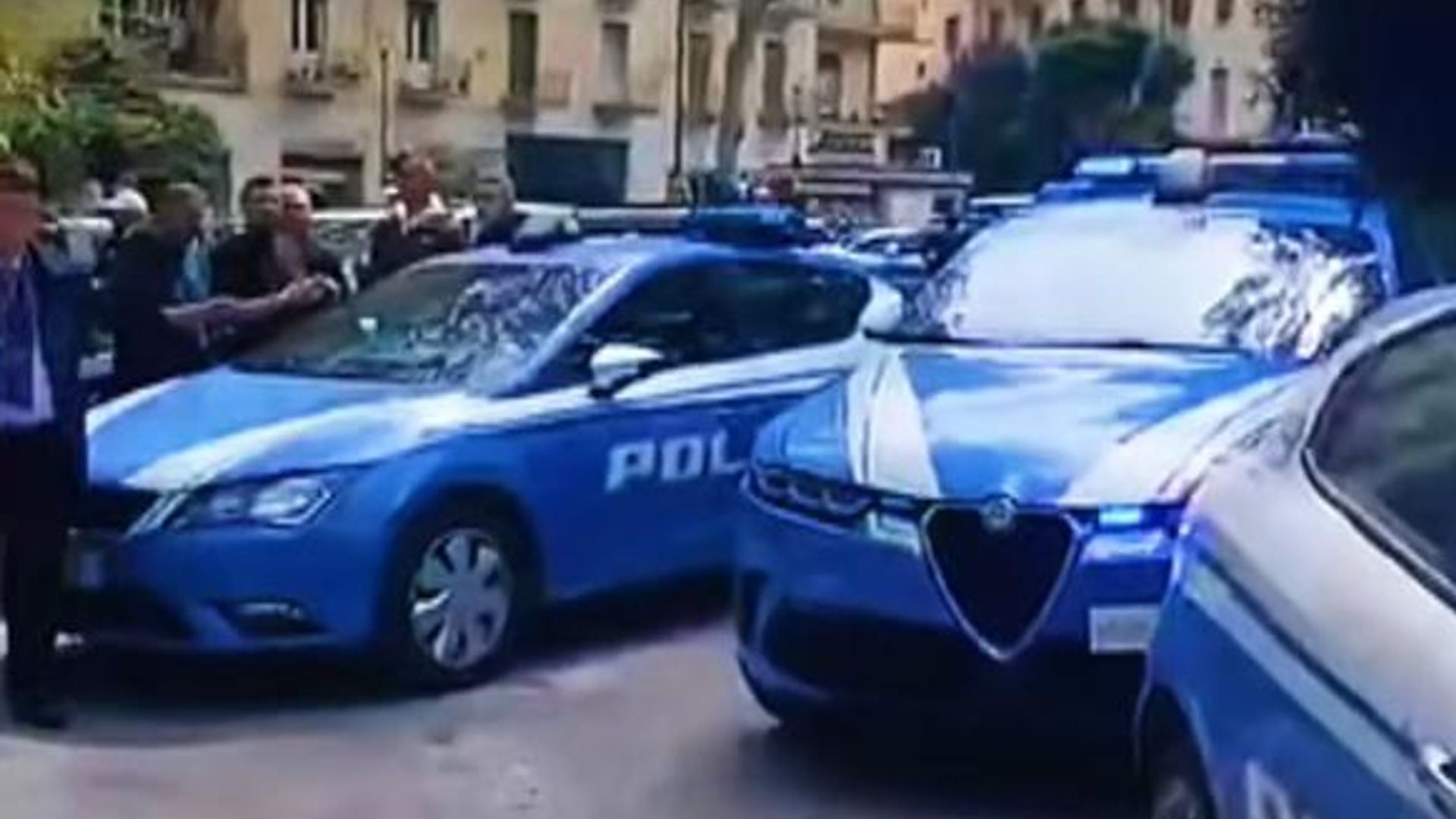
They weren't expecting the blue uniform of the Lyndhurst Police Department.
Most news cycles treated this moment as a quirky footnote. A local driver gets pulled over. He has an outstanding warrant. He goes to jail. The police, in an act of neighborly whimsy, finish the delivery. It makes for a nice thirty-second "and finally" segment on the local news. But look closer. Look at the moment the officer picks up the bag of food from the passenger seat of a car that is about to be towed.
There is a strange, messy collision of two Americas in that gesture.
One America is the frictionless world of the "gig." It’s a world where we tap a piece of glass and a stranger navigates traffic to bring us a burger. We don't know their name. We don't know their story. We barely see their face. The other America is the world of the law, where outstanding warrants and flashing red-and-blue lights represent a hard stop to that friction-free fantasy.
The driver in this story, whose name isn't the point as much as his predicament, found himself at the intersection of these two worlds. He was working. He was in the middle of a shift, chasing the surge pricing, navigating the maze of suburban New Jersey streets. Then, a patrol car’s lights flickered in his rearview mirror.
Maybe it was a broken taillight. Maybe it was a rolling stop. Whatever the reason for the initial pull-over, the computer in the patrol car did what computers do: it flagged a history. It turned a delivery driver into a prisoner.
Imagine the interior of that car for a second. The smell of fast food—grease and salt—mixing with the sterile, sharp scent of police-issue upholstery. The radio in the police cruiser is crackling with dispatch codes, while the driver’s phone, still clipped to the dashboard, is likely vibrating with a notification from the DoorDash app.
Your customer is waiting. Where are you?
The delivery is late.
The algorithm doesn't care about the Fourth Amendment or local warrants. The algorithm only cares about the arrival time.
This is where the story shifts from a standard arrest to something more human. The officers involved could have left the food in the car. They could have let it sit in the impound lot, slowly cooling until the lettuce turned to slime and the bun became a rock. That’s the protocol. That’s the "not my job" response.
But they didn't.
They looked at the bag. They looked at the address on the app. They saw a person on the other end of that transaction who had no idea their dinner was currently a piece of evidence in a criminal proceeding.
There is a specific kind of vulnerability in being the person who orders delivery. You are often at home, perhaps tired after a long day, perhaps unable to leave because of kids or work or health. You are waiting for a stranger to fulfill a basic need. When that stranger doesn't show up, the frustration is usually directed at the "service," a vague cloud of digital incompetence.
When the Lyndhurst officers decided to finish the job, they weren't just delivering a meal. They were bridging the gap between the cold efficiency of the law and the warm reality of a neighborhood.
Consider the moment the homeowner opened the door. You expect a person in a t-shirt and sneakers. You see a badge. You see the gun belt. Your heart skips. You think, What happened? Who is hurt? Then, the officer holds up the bag.
"Your driver got delayed," they might have said. "We didn't want your food to get cold."
It’s a bizarrely tender moment in an otherwise rigid system. It’s the kind of story that makes us feel good because it suggests that even within the machinery of the state, there is room for common sense and a bit of grace.
But we should also talk about the invisible stakes. Why was the driver working with an outstanding warrant? In the gig economy, the barrier to entry is famously low, but the safety net is nonexistent. For many, driving is the last line of defense against total financial collapse. You drive because you have to. You drive even when things in your life are messy—especially then.
The "convenience" we enjoy as consumers is built on a foundation of people who are often one "check engine" light or one minor legal infraction away from disaster. The driver went to the station. The car went to the lot. The customer got their fries.
The fries were probably still cold.
Service. That’s a word we use for both police work and the food industry. We say "Thank you for your service" to the officer, and we leave a "Service tip" for the driver. In this one New Jersey town, those two meanings of the word tangled together for twenty minutes.
It’s easy to mock the situation. It’s easy to make a joke about the "long arm of the law" delivering a "long-awaited lunch." But there is a quiet, persistent tragedy in the fact that a man’s attempt to earn a living ended in a jail cell, while the system he served was so efficient that his replacement was a cop.
We live in a world that is increasingly segmented. We have apps for things we used to do ourselves. We have professionals for things we used to ask neighbors for. We have created a society of silos. Every now and then, something breaks—a car, a law, a life—and those silos crack open.
When they do, we are forced to look at each other.
The officer looked at the driver not just as a "subject," but as someone with a job to finish. The customer looked at the officer not just as a "first responder," but as a person doing an unexpected favor. And the driver? We don't know what he was looking at. Probably the floor of a precinct.
There is a persistent myth that our modern world is becoming more connected. We have more data, more "pings," and more notifications. But connection isn't a digital signal. Connection is the choice to do something that isn't in the manual.
It’s the choice to take a bag of food that doesn't belong to you and carry it to a door because it’s the right thing to do for a neighbor you haven't met.
The Lyndhurst Police Department didn't have to deliver that food. There is no line in the New Jersey police code that mandates the transport of spicy chicken sandwiches. They did it because, for a brief moment, the human element overrode the procedural one.
We often talk about the "thin blue line." Usually, we mean it as the barrier between order and chaos. In this case, that line was a bit more blurred. It was the line between a ruined night and a story to tell at the dinner table.
As the patrol car drove away from that house, the officer was likely back on the clock, looking for the next call, the next infraction, the next stop. The customer was likely sitting down to eat, perhaps a bit shaken, perhaps laughing at the absurdity of it all.
And somewhere in a holding cell, a man was waiting.
He was no longer a "Delivery Partner." He was a number in a system. His phone was likely silenced in a plastic property bag, the screen still dark, the app still waiting for him to click "Complete Delivery."
He never got to click it.
But the delivery was completed anyway.
The world kept moving. The algorithm adjusted. The next driver in the area saw a "Hotspot" pop up on their map. The demand for convenience didn't pause for the arrest. It never does. We want what we want, and we want it now, regardless of the cost to the person bringing it.
The only thing that changed that day in New Jersey was that, for a few minutes, the person bringing the food had a badge.
It’s a story about fries. It’s a story about a warrant. But mostly, it’s a story about how we see each other when the app stops working and the real world takes over. It reminds us that behind every digital transaction is a human being, and behind every uniform is another one, both of them caught in a landscape where sometimes the only thing you can do is finish the job for someone who can't.
The knock on the door wasn't just for a delivery. It was a reminder that we are all much closer to each other’s lives than we like to admit, connected by nothing more than a brown paper bag and the strange, unpredictable currents of a Tuesday afternoon.