Geopolitics is often reduced to a game of Risk by people who haven’t touched a map since 1991. The current obsession with "Is Cuba next?" following the escalation of the Iran conflict isn't just lazy journalism—it’s a fundamental misunderstanding of how the modern axis of resistance actually functions. The armchair generals at the major networks want you to believe that if Tehran falls or flinches, Havana collapses into a heap of rusted Ladas and empty sugar cane fields.
They are wrong. They are looking at a 20th-century map while the world has moved on to a decentralized, multi-polar ledger.
The Myth of the Single Thread
The "lazy consensus" argues that Cuba is a client state, a parasite attached to the Iranian and Russian host. The logic follows that when the host gets into a shooting war, the parasite starves. This view misses the point that Cuba has spent sixty years becoming the world's most resilient "black box" economy.
While the West treats sanctions like a surgical strike, Havana treats them like the weather. You don't "fix" the weather; you build a house that doesn't blow down.
Iran’s current entanglement doesn't weaken Cuba. It validates Cuba’s entire existence. For the Cuban leadership, every missile fired in the Middle East is a distraction that pulls the American gaze away from the Caribbean. If you think Washington has the appetite for a regime-change operation ninety miles off the coast of Florida while the Strait of Hormuz is a localized hellscape, you haven't been paying attention to the Pentagon’s logistical nightmares.
Why the "Cuba is Next" Crowd Fails at Math
The primary argument for Cuba’s impending doom rests on the idea of Petro-diplomacy. The theory goes: Iran provides the oil, or the credit for the oil, and without it, the lights go out in Havana.
Let's dismantle that.
- Diversification of Desperation: Cuba stopped relying on a single patron decades ago. Since the "Special Period" following the Soviet collapse, they have mastered the art of playing China, Russia, and the EU against each other.
- The Liquidity of Shadows: Havana doesn't trade in dollars; they trade in sovereign survival. They’ve perfected the "Doctor Export" model—sending medical personnel abroad in exchange for hard currency and fuel. It’s a labor-for-energy swap that exists entirely outside the SWIFT system.
- The China Factor: Beijing isn't going to let a strategic outpost in the Western Hemisphere go dark because of a regional war in the Levant. If anything, a weakened Iran makes Cuba more valuable to China as a pressure point against the United States.
I’ve sat in rooms with policy analysts who swear the Cuban economy is on the brink of a 10% contraction that will spark a revolution. I’ve heard that every year for fifteen years. They calculate GDP based on formal markets and official exchange rates. They completely ignore the massive, informal, crypto-integrated grey market that actually keeps the island breathing.
The Failed Logic of "People Also Ask"
If you search for Cuba’s stability, you’ll find questions like "Will the Iran war cause a coup in Cuba?" or "Is Cuba running out of food?"
These questions are built on a flawed premise. They assume that material deprivation leads to political upheaval. If that were true, North Korea would have been a democracy in 1996.
In reality, external pressure often acts as a bonding agent for the ruling elite. When the "enemy" (the U.S.) is perceived as the cause of the shortage, the internal security apparatus doesn't fracture—it tightens. The Iran war provides the perfect narrative cover for the Cuban government to implement even harsher austerity measures while blaming "Yankee aggression" in the Middle East for the global supply chain breakdown.
The Contrarian Truth: Cuba Is the Hedge
Smart money isn't betting on a Cuban collapse; it’s looking at how Cuba is positioning itself as the ultimate neutral ground for the "Non-Aligned 2.0" movement.
While the world's eyes are on Tehran, Havana is quietly rewriting its investment laws. They aren't looking for American tourists anymore. They are looking for Russian oligarchs and Chinese state-owned enterprises who need a place to park assets that is shielded from Western seizure.
Consider the $E=mc^2$ of geopolitical survival:
$$S = \frac{R \cdot D}{P}$$
Where S is State Stability, R is Repression capability, D is Diversification of patrons, and P is Public expectation.
The West keeps trying to lower D (Diversification) by sanctioning Iran. But Havana is simultaneously lowering P (Public expectation) by normalizing scarcity. As long as R (Repression) remains funded—and it is, largely through military-controlled tourism and remittances—the equation stays positive for the regime.
Stop Looking for a Revolution; Look for the Pivot
The real story isn't about Cuba being "next" for a downfall. It’s about Cuba being the next hub for a parallel global economy.
We see this in the way Havana handles its debt. They don't pay it; they restructure it until the creditor gives up or accepts a long-term lease on a port. This isn't a sign of a failing state; it's the strategy of a state that knows it is "too annoying to fail."
I have seen investors lose their shirts betting on a "New Cuba" that looks like a Caribbean Miami. They wait for the "transition" that never comes. The transition already happened. Cuba transitioned from a Soviet satellite to a nimble, sovereign entity that thrives on the friction of the world’s superpowers.
The Cost of Being Right
There is a downside to this perspective. It’s cynical. It doesn't offer the warm, fuzzy feeling of "liberation is coming." If you’re looking for a moral victory, go read the competitor’s article about how democracy is just one Iranian defeat away.
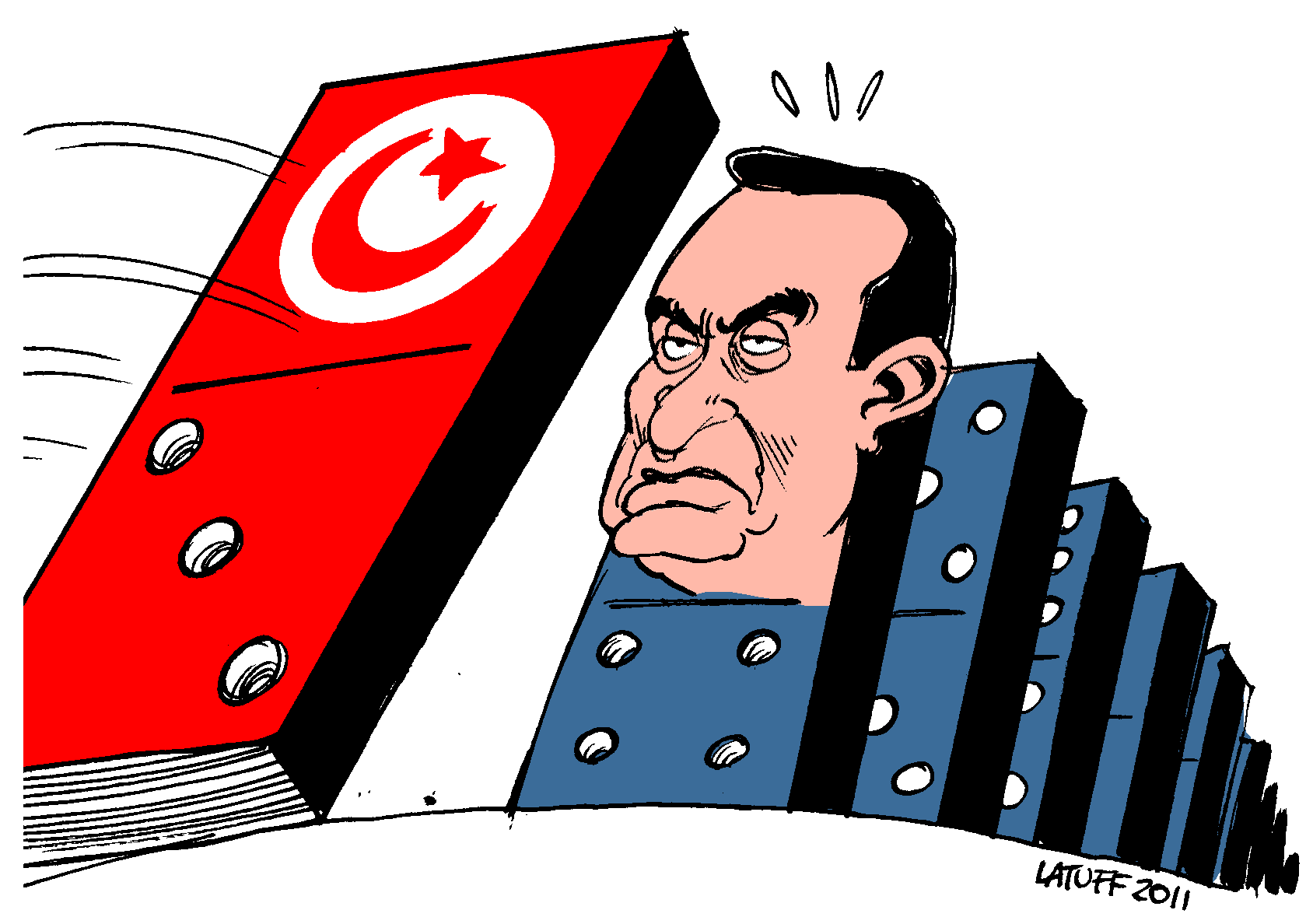
But if you want to understand the mechanics of power, you have to accept that Cuba is not a domino. It’s the floor. It doesn't fall; it just sits there while everyone else trips over it.
The Iran war doesn't end the Cuban regime. It buys them another decade of relevance by proving that the American "Rules-Based Order" is too busy elsewhere to notice a small island doing exactly what it has done since 1959: surviving out of spite.
The next time some pundit tells you Havana is on the verge of a "tipping point," ask them to define the point. They can't. Because in Havana, the point is always moving, and they’re the ones holding the map.
Buy the tobacco. Ignore the headlines. The regime isn't going anywhere.
Would you like me to analyze the specific trade volume shifts between Havana and Moscow since the Iran escalation began?