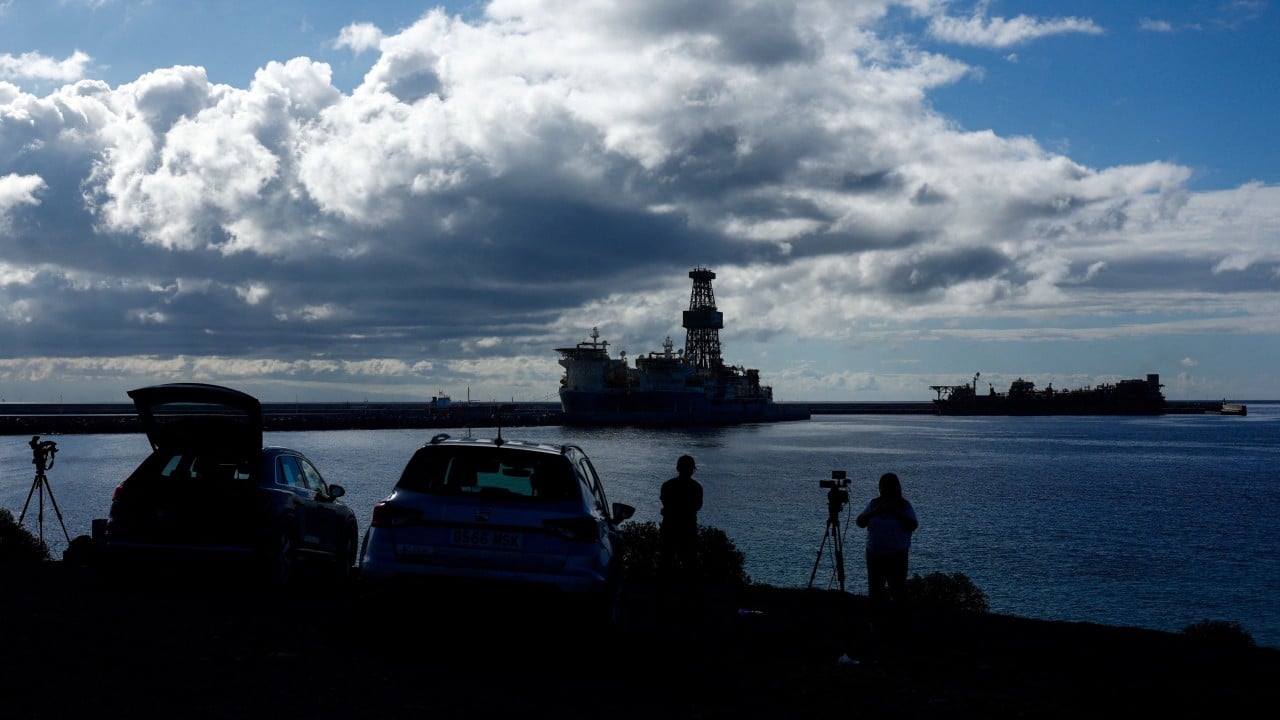
The maritime industry is currently facing a logistical nightmare as the stricken vessel currently redirected toward the Canary Islands exposes the fragile reality of international health protocols. While official reports focus on the immediate movement of the ship and the urgent contact tracing efforts underway, the situation reveals a much deeper systemic failure in how the cruise sector manages mid-ocean crises. The immediate priority for Spanish authorities is the identification of passengers who may have been exposed to the undisclosed pathogen, but the long-term fallout involves a complex web of maritime law, insurance liabilities, and the sheer physical difficulty of isolating thousands of people in a floating steel environment.
This isn't just about a single ship losing its path. It is about the industry’s inability to reconcile the luxury of mass tourism with the brutal requirements of biosafety. When a ship of this scale is forced to change course, every hour spent at sea without a port of refuge increases the risk of transmission and escalates the operational costs by hundreds of thousands of dollars. The Canaries were chosen for their proximity and existing medical infrastructure, but the decision was a desperate one, born of necessity rather than a smooth execution of a pre-planned strategy.
The Failure of Mid-Ocean Isolation
Quarantining a modern cruise liner is an exercise in futility. These vessels are designed to move people through shared spaces—buffets, theaters, and narrow corridors—to maximize revenue per square foot. When an outbreak occurs, the very architecture that makes the ship profitable becomes its greatest liability. Air filtration systems, while upgraded in recent years, are rarely capable of the total particulate isolation required for high-level infectious threats.
The current contact tracing effort is a race against a clock that has already run out. Passengers have already mingled. They have shared elevators and touched the same railings. By the time the ship docks in Las Palmas or Santa Cruz, the data being collected by authorities will likely be a week behind the actual spread. This lag time creates a massive blind spot for shore-side health officials who must decide whether to allow disembarkation or keep the "stricken" ship in a state of limbo offshore.
Maritime Law and the Refusal of Entry
A significant part of this crisis remains hidden in the radio silence between ship captains and port authorities. International maritime law suggests a duty to assist those in distress, but sovereign nations have the right to protect their borders from perceived biological threats. We are seeing a repeat of the "pariah ship" phenomenon, where a vessel is shuffled from one jurisdiction to another because no local government wants to inherit the political risk of a new outbreak.
The Canaries are accepting this burden because they have little choice. As a major maritime hub, refusing entry could lead to a humanitarian disaster right off their coastline. However, the negotiations happening behind closed doors involve intense pressure from the ship's parent company and diplomatic channels. The cost of this redirection isn't just fuel; it's the massive payout to passengers, the destruction of future bookings, and the potential legal battles over whether the ship was seaworthy from a health perspective when it departed.
The Insurance Shadow Play
Behind every "stricken" ship is a team of adjusters calculating the exact moment the voyage becomes a total loss. Protection and Indemnity (P&I) clubs are currently looking at the fine print of the ship’s coverage. If the operator is found to have ignored early warning signs of illness among the crew or passengers before leaving the previous port, the financial protection could vanish.
This leads to a dangerous incentive structure. To avoid the massive costs of a redirected voyage, there is often pressure to downplay early symptoms. This "wait and see" approach is exactly what allows a localized issue to turn into a full-scale quarantine event. The ship heading for the Canaries is the physical manifestation of a gamble that the industry lost.
The Reality for the Passengers
For those trapped on board, the experience is far from the marketing brochures. Information is filtered through the ship's intercom system, often sanitized to prevent panic. But panic is the natural result of uncertainty. When people see crew members in enhanced personal protective equipment while they are told to remain in their cabins, the illusion of the vacation is permanently shattered.
The psychological toll of being on a ship that is being actively avoided by other ports cannot be overstated. Passengers are effectively in a high-end prison. They are watching their GPS trackers show a course that leads away from their homes and toward a high-security docking facility. The "contact tracing" mentioned by authorities sounds organized and clinical, but on the ground—or on the water—it involves intrusive questioning and the sudden disappearance of travel companions into isolation wards.
Logistics of a Port Side Standby
Once the ship reaches the Canary Islands, the real struggle begins. You cannot simply walk 3,000 people off a ship and into a city when a health crisis is active. The logistics involve:
- Dedicated corridors: Creating sealed pathways from the gangway to waiting transport.
- Medical triage: Assessing every individual before they touch land.
- Quarantine hotels: Finding thousands of beds in a region that relies on those same beds for healthy tourists.
- Repatriation flights: The massive expense of chartering private aircraft because commercial airlines will refuse to carry high-risk passengers.
The local government in the Canaries is currently scouting locations for these temporary holding areas. They are looking at sports arenas and secondary hotels, places that can be easily guarded and monitored. This is not a "welcome to Spain" moment; it is a containment operation.
The Broken Model of Mass Tourism
We have to ask why this keeps happening. The industry insists that its protocols are world-class, yet we see the same pattern of redirection and quarantine year after year. The problem is the scale. When you put several thousand people in a closed loop, the margin for error is zero.
The ship currently steaming toward the Atlantic islands is a warning. It shows that despite all the technology and "enhanced cleaning" promised over the last few years, the fundamental vulnerability of the cruise model remains. The reliance on the Canary Islands as a safety net also places an unfair burden on island territories that lack the deep-pocketed resources of mainland hubs to manage long-term medical fallout.
The financial impact on the Canaries will be twofold. While the ship's operator will pay for the immediate docking and medical services, the reputational damage to the islands as a "safe" destination is a hidden cost the local government is forced to swallow. They are stuck between a humanitarian duty and a tourism-based economy.
Technical Failures at Sea
Reports suggest the ship is "stricken," a term that usually implies mechanical failure, but in this context, it refers to the total breakdown of the onboard social and health order. If there were mechanical issues compounded by the health crisis, the situation would be catastrophic. Current data suggests the engines are fine, but the ship's "brain"—its ability to manage its population—has failed.
The tracking of contacts is being done through keycard data and CCTV. This is an invasive but necessary measure. Authorities are looking at who opened which door, who sat at which table, and who was in the gym at the same time as the primary cases. It is a level of surveillance that passengers agreed to in the fine print of their tickets, likely without realizing it would one day be used to determine their freedom of movement.
Accountability and the Next Voyage
The cruise line will eventually issue a press release praising the "swift action" of the crew and the "cooperation" of the Spanish authorities. They will offer a 50% discount on a future cruise to the affected passengers. This is the standard playbook. It is designed to bury the reality of the experience under a layer of corporate PR.
But the reality is that a ship is currently a floating laboratory for a pathogen, heading toward a populated island chain because it has nowhere else to go. The investigative focus should not be on how fast the contacts are identified, but on why the ship was allowed to become a vector in the first place. Who made the call to stay at sea when the first signs of trouble appeared? Why was the redirection to the Canaries the only viable option?
The industry needs to move away from these emergency redirections and toward a model where ships are actually equipped to handle internal isolation without requiring a whole province to go into high-alert. Until that happens, every cruise is a calculated risk where the passengers are the ones holding the losing hand.
Stop looking at the maps and start looking at the manifests. The paperwork will tell you more about this crisis than the official statements ever will. Look for the logs of when the first passenger reported to the infirmary and compare it to the moment the ship finally turned toward the Canaries. That gap in time is where the truth lives.