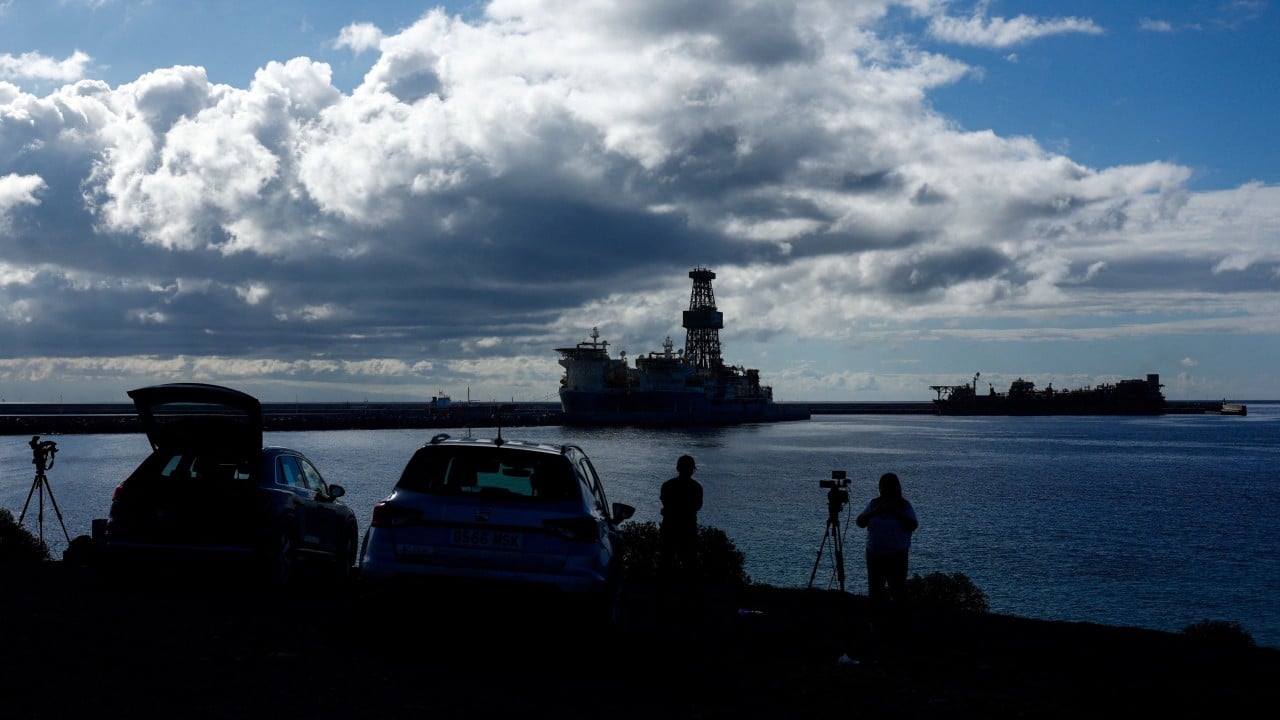
The champagne was cold. The linens were crisp. Outside the porthole of the Grand Horizon, the Pacific Ocean stretched out in a shimmering, endless blue that promised nothing but peace. For the eight hundred passengers on board, the ship was a floating sanctuary, a steel fortress designed to keep the world’s grit and grime at bay. They were there to forget the anxieties of the mainland.
They didn't know that the danger had already boarded. It wasn't a hijacker or a storm. It was something microscopic, carried in the lungs of a creature no larger than a thumb, hidden behind the mahogany paneling of the most expensive suites.
Hantavirus is supposed to be a rural tragedy. We associate it with dusty barns in Montana or remote hikers in the Four Corners region of the American Southwest. It is a virus of the soil and the shack. Finding it on a luxury cruise liner is like finding a rattlesnake in a nursery—it defies our sense of order. Yet, as the Grand Horizon began its journey, the first cough echoed through Deck 7. It sounded like a common cold.
It was anything but.
The Breath of the Deer Mouse
Imagine you are relaxing in your cabin after a long day of sightseeing. The air conditioning hums, a silent invisible river of processed air. You feel safe. But hantavirus doesn't need an invitation. It hitches a ride on dust.
Specifically, the virus—often the Sin Nombre strain—is shed in the saliva, urine, and droppings of rodents, most notably the deer mouse. When those waste products dry out, they become brittle. When a cleaning crew or a gust of air disturbs that dust, the virus becomes airborne. It enters the lungs as a mist. You don't even know you've inhaled it.
On a ship, space is a premium. Behind every beautiful wall is a labyrinth of wires, pipes, and ventilation ducts. This is the "interstitial space," the dark world the passengers never see. In this case, a small infestation during the ship’s dry-dock period in a rural port had left behind a lethal residue. The rodents were gone by the time the guests arrived, but their ghostly imprint remained in the form of viral particles settled in the vents.
The biology is brutal. Once the virus reaches the lower respiratory tract, it doesn't just cause an infection; it triggers a civil war. Your immune system, seeing the invader, overreacts with such violence that the tiny blood vessels in your lungs begin to leak.
Your lungs fill with your own plasma. You aren't just sick. You are drowning from the inside out while standing on dry land.
A Slow Burn Toward Chaos
The first victim was a retired schoolteacher from Ohio. Let's call her Martha. Martha started feeling "off" four days into the cruise. She felt a nagging ache in her thighs and a dull throb behind her eyes.
"Sea legs," she told her husband.
But by day six, the fever hit. It wasn't the shivering chill of the flu; it was a furnace-blast of 103 degrees. The ship’s infirmary is a marvel of modern engineering, but it is built for broken ankles, norovirus outbreaks, and the occasional heart flutter. It is not an ICU.
The ship’s doctor looked at Martha’s X-ray and saw a "white-out." In a healthy person, the lungs on an X-ray look like black butterfly wings because they are full of air. Martha’s were a cloudy, opaque mess.
This is the Hantavirus Pulmonary Syndrome (HPS). It is a race against time where the mortality rate hovers around 38 percent. To put that in perspective: if three people in your dinner party catch it, one of them is likely not going home.
The panic on a cruise ship is a specific kind of claustrophobia. You are in the middle of the ocean. There is nowhere to run. As two more passengers—a honeymooning couple from Deck 7—presented with the same "crushing" fatigue and respiratory distress, the captain had to make a choice. Turn back? Quarantine? Or hope it was just a localized fluke?
The Science of the Unseen
Why is hantavirus so much scarier than the seasonal flu? Because it is unpredictable. While the flu primarily attacks the lining of the throat and lungs, hantavirus targets the endothelium—the very walls of your circulatory system.
Think of your blood vessels like a garden hose. Usually, they are watertight. Hantavirus turns that hose into a sieve. The pressure drops. The heart struggles to pump. The kidneys begin to fail because there isn't enough fluid pressure to keep them filtering.
What makes the cruise ship outbreak a case study in modern vulnerability is our reliance on centralized systems. We share the same air. On the Grand Horizon, the viral particles weren't staying in the infested suites. The HVAC system was acting as a delivery mechanism, gently puffing the virus into the hallways every time the fans kicked on.
It is a sobering reminder that our "sanitized" lives are only as clean as the last inspection. We build these cathedrals of glass and steel to escape nature, but nature is patient. It finds the gaps. It finds the vents.
The Human Cost of Silence
By the time the ship reached port, five people were in critical condition. Two had already succumbed. The tragedy of a hantavirus death is its speed. One day you are complaining about the quality of the buffet; forty-eight hours later, you are on a ventilator, fighting for every cubic centimeter of oxygen.
The families left behind don't just feel grief. They feel a profound sense of betrayal. You don't pay five figures for a balcony suite to die of a "dirt disease." There is a cognitive dissonance that comes with a primitive virus attacking a high-tech environment.
Epidemiologists from the CDC met the ship at the pier. They didn't wear stethoscopes; they wore respirators and Tyvek suits. They crawled into the crawlspaces with flashlights, looking for the telltale signs of the deer mouse: the dark, rice-shaped droppings and the chewed insulation.
They found the "hot zone" in a storage locker near the main air intake for Deck 7. A nest had been disturbed during a routine maintenance check just before the cruise departed. The worker who moved the boxes probably didn't even sneeze. But he had inadvertently launched a cloud of Sin Nombre into the ship’s lungs.
Living in the Aftermath
We often treat health headlines as something that happens to "other people." We see a story about a virus and think about statistics and geographic boundaries. But the Grand Horizon incident changed the way the travel industry looks at risk.
It forced a reckoning. Now, high-end travel isn't just about the thread count of the sheets or the vintage of the wine. It’s about the invisible. It’s about HEPA filters. It’s about rodent-proofing the dry-docks. It’s about acknowledging that the wild doesn't stop at the shoreline.
If you ever find yourself in an old cabin, a dusty attic, or even a luxury suite that has been closed up for a while, remember Martha. Remember the "white-out" on the X-ray.
Prevention is deceptively simple, yet vital. You don't sweep. You don't vacuum. You wet things down. You use bleach. You kill the dust before it can kill you. You treat the air with the respect it deserves.
The survivors of the Grand Horizon don't look at cruise ships the same way anymore. When they board a vessel now, they don't head straight for the bar or the pool. They look at the vents. They listen to the hum of the air conditioning. They know that the most dangerous thing on the ship isn't the deep water outside.
It’s the breath you just took.
The ocean remained calm as the ship was eventually cleared and disinfected, the blue water hiding the secrets of the deep just as the polished walls had hidden the ghosts of the mice. The luxury remained, but the innocence was gone, replaced by a quiet, lingering vigilance. The world is smaller than we think, and the distance between a wilderness burrow and a first-class cabin is only a single, invisible breath.