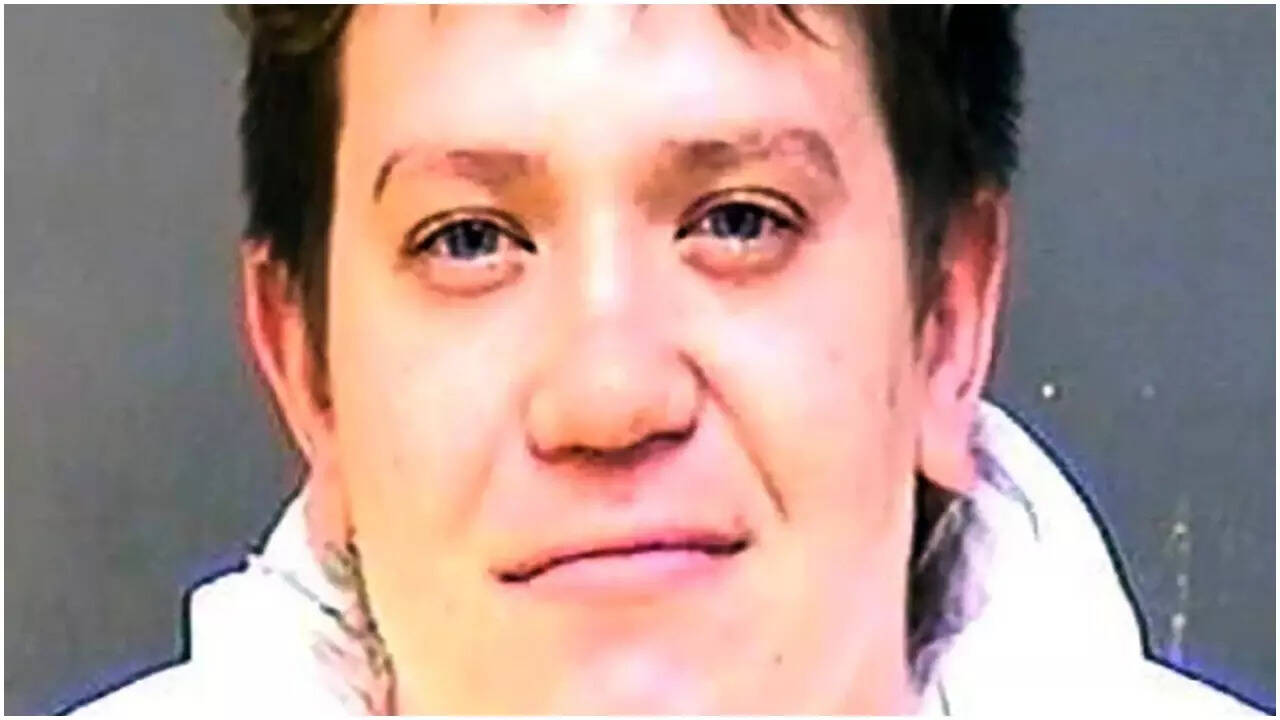
The intersection of professional niche athletics and capital criminal charges creates a unique distortion in public perception that often obscures the mechanical realities of a legal investigation. In the case of Dayton James Webber, a prominent figure in the professional cornhole circuit and a quadruple amputee, the arrest on suspicion of second-degree murder regarding the death of Bradrick Michael Wells represents a collision between high-visibility persona and the rigid protocols of the Maryland judicial system. To analyze this event beyond the surface-level shock value, one must deconstruct the specific investigative thresholds, the physical variables of the alleged incident, and the procedural trajectory that follows a homicide arrest in the state of Maryland.
The Jurisdictional and Investigative Framework
The arrest of Dayton Webber by the Charles County Sheriff’s Office is the culmination of an investigative process that shifted from a welfare check to a criminal recovery. When officers arrived at the 6300 block of Advanced Lane in Waldorf, Maryland, the discovery of Bradrick Michael Wells’ body necessitated an immediate transition into a "major crimes" protocol. This protocol is governed by three primary investigative pillars:
- Forensic Serialization: The process of mapping the physical environment to determine the timeline of the struggle or the discharge of a weapon. In cases involving unconventional physical profiles, forensic experts must calculate trajectory and force through the lens of adaptive mechanics.
- Testimonial Corroboration: The reconciliation of witness statements with the physical evidence found at the scene. Discrepancies here often form the basis for "Probable Cause" affidavits.
- Digital and Telemetric Footprinting: The extraction of data from mobile devices and surveillance systems to establish the proximity of the suspect to the victim at the estimated time of death.
The issuance of an arrest warrant for second-degree murder suggests that the State’s Attorney’s Office believes it has sufficient evidence to prove a "depraved heart" or an intent to kill that was not necessarily premeditated. Unlike first-degree murder, which requires proof of a "willful, deliberate, and premeditated" plan, second-degree murder focuses on the immediate intent at the time of the act.
The Mechanics of the Incident
Public discourse often fixates on Webber’s physical status as a quadruple amputee, yet from a forensic and tactical perspective, physical disability does not equate to physical incapacity in the context of a violent encounter. Webber’s success in professional cornhole—a sport requiring extreme precision, repetitive motor control, and significant core stability—demonstrates a high level of kinetic adaptation.
When evaluating a homicide involving an individual with prosthetic or limb differences, the investigation must account for:
- Adaptive Leverage: How the suspect utilizes core strength and specialized movement to manipulate objects or weapons.
- Mechanical Advantage: The use of tools or firearms that equalize physical disparities. In the eyes of the law, the "means" of the crime are prioritized over the physical "form" of the perpetrator.
- Proximity Dynamics: The spatial relationship between Wells and Webber during the escalation. The "how" of the crime is often reconstructed through blood spatter analysis and ballistic positioning, which remain objective regardless of the suspect's physical profile.
The victim, Bradrick Michael Wells, was found with trauma that led to his pronouncement of death on-site. The specific nature of this trauma—whether ballistic, blunt force, or sharp force—dictates the complexity of the prosecution's case. If a firearm was involved, the investigation shifts to the legal acquisition and physical operation of the weapon.
The Legal Threshold of Second Degree Murder in Maryland
The Maryland criminal code classifies second-degree murder as a felony that carries a maximum penalty of 40 years in prison. The prosecution's strategy will likely hinge on the "Specific Intent to Kill" or "Specific Intent to Inflict Grievous Bodily Harm." To secure a conviction, the state must navigate the following legal bottlenecks:
The Absence of Premeditation
The state opted for second-degree charges initially, which implies a lack of evidence for a long-term plot. This suggests the event may have been the result of an escalated dispute. In legal terms, this is often characterized as a "sudden heat of passion," though that specifically applies to voluntary manslaughter. Second-degree murder sits in the middle: more than an accident, less than a cold-blooded execution.
The Standard of Probable Cause
The warrant served on Webber indicates that a judge reviewed an affidavit of probable cause and found it "more likely than not" that Webber committed the crime. This is a significantly lower burden of proof than the "beyond a reasonable doubt" standard required at trial. The defense will likely move to suppress evidence based on the validity of this initial warrant or the methods used to obtain the suspect’s location.
Structural Implications for Professional Cornhole
The American Cornhole League (ACL) and the broader competitive community face a significant branding crisis. Webber was not merely a participant; he was a symbol of the sport's accessibility and a high-ranking competitor. The removal of a top-tier athlete under these circumstances triggers a "Reputational Risk Cascade":
- Sponsorship Decoupling: Corporations associated with the athlete or the league will likely exercise "Morals Clauses" to terminate contracts immediately.
- Sanctioning Body Liability: Organizations must review their background check protocols and athlete conduct policies. The question of whether there were prior indicators of volatility becomes a central focus for internal audits.
- Media Re-contextualization: The "inspirational" narrative previously attached to Webber’s career is now permanently entwined with the criminal proceedings, effectively ending his commercial viability regardless of the trial's outcome.
The Trajectory of the Judicial Process
Webber is currently held at the Charles County Detention Center without bond. This status is critical. In Maryland, a "no-bond" status is typically reserved for individuals deemed a flight risk or a significant danger to the community.
The next phases of the case follow a rigid sequence:
- The Preliminary Hearing: A check on the state's evidence to ensure the case should proceed to the Circuit Court.
- Grand Jury Indictment: The prosecution will present evidence to a grand jury to secure a formal indictment, which may upgrade or add charges based on the completed forensic reports.
- Discovery Phase: The defense will gain access to the state's evidence, including DNA, digital forensics, and witness statements. This is where the "Adaptive Mechanics" defense would likely be formulated, arguing the physical impossibility of the act if the evidence is circumstantial.
The state of Maryland vs. Dayton James Webber will not be decided on the inspirational history of the defendant, but on the cold synchronization of physical evidence and the Maryland homicide statutes. The defense will likely focus on the "incapacity" argument as a diversionary tactic, but forensic science focuses on the result of the force applied, not the biology of the hand that applied it.
Parties involved must prepare for a prolonged evidentiary battle. The focus should shift from the novelty of the suspect’s physical condition to the forensic realities of the crime scene at Advanced Lane. If the prosecution can link Webber to the scene through non-circumstantial biometrics or undisputed digital markers, the defense's path narrows to a plea negotiation or a high-risk trial centered on "justifiable force," though the latter is difficult to maintain in a second-degree murder context without clear evidence of self-defense.
Monitor the grand jury's actions over the next thirty days; an indictment for first-degree murder would signal that the digital forensics have revealed a level of planning previously unconfirmed by the initial responding officers.