The border between Afghanistan and Pakistan does not feel like a line on a map. It feels like a fever. It is a jagged, vertical world of shale and cedar, where the wind carries the scent of juniper and the constant, vibrating anxiety of shifting loyalties. In the early hours of a Monday, that anxiety turned into fire.
When the Pakistani jets crossed into the airspace of Paktika and Khost provinces, they weren't just dropping munitions on suspected Tehrik-i-Taliban Pakistan (TTP) hideouts. They were dropping a match into a powder keg that spans the entire South Asian subcontinent. In the instantaneous flash of those explosions, the fragile status quo of the region evaporated. Eight people died—five women and three children, according to Afghan officials.
Blood.
It is the only currency that never devalues in this part of the world.
The Echo in the South Block
Thousands of miles away, in the air-conditioned silence of New Delhi’s South Block, the explosions were heard differently. They arrived as data points, satellite imagery, and urgent diplomatic cables. India did not wait long to voice its stance. The Ministry of External Affairs issued a statement that was surgically precise: "Yet another act of aggression."
To understand why India cares about a mountain ridge in Paktika, you have to understand the geography of fear. For Delhi, any military escalation between Islamabad and the Taliban-led Kabul is a kaleidoscope of nightmares. If Pakistan feels emboldened to strike across its western border, what does that mean for the Line of Control to its east?
Diplomacy is often described as a game of chess, but that is too clean. It is more like a communal tightrope walk in a hurricane. When one person shakes the rope, everyone feels the vibration in their marrow.
The Ghost of the Durand Line
Consider a hypothetical shopkeeper in a border village. Let's call him Aman. Aman doesn't read the press releases from Islamabad or the rebuttals from Kabul. He knows the truth by the sound of the engines. When the jets scream overhead, the porcelain bowls in his shop rattle. He knows that the "Durand Line"—the colonial-era border that Pakistan recognizes and Afghanistan ignores—is a scar that refused to heal.
Pakistan claims these strikes were a necessary response to a heinous attack on an army post in North Waziristan that killed seven soldiers. They argue that the Afghan soil has become a sanctuary for the TTP, a group that has bled Pakistan for years. The Taliban, meanwhile, deny providing harbor. They see the strikes as a violation of sovereignty, a heavy-handed move by a neighbor that is struggling to contain its own internal fires.
India’s condemnation is not merely a gesture of solidarity with the Afghan people. It is a calculated signal. By labeling the strikes as "aggression," Delhi is highlighting a pattern. It is telling the world that Pakistan’s tactical decisions have regional consequences. It is a reminder that stability is a collective resource, and it is currently being squandered.
The Invisible Stakes of a Proxy War
The tragedy of the "human element" in this conflict is that the civilians caught in the middle are often reduced to footnotes. The five women and three children in Paktika were not combatants. They were not strategists. They were people who happened to be sleeping in a geography that has become a theater for a shadow war.
When a state uses air power against targets in a neighboring country, it crosses a psychological Rubicon. It signals that the tools of diplomacy have failed and the tools of kinetic force are now the primary language. For India, this shift is alarming. A volatile Pakistan, battling an insurgency on its western flank while simultaneously engaging in cross-border strikes, creates a vacuum.
Vacuums in this region are never filled by peace. They are filled by more radicalism, more desperation, and more intervention.
The Indian Ministry of External Affairs pointed out that such actions only serve to destabilize the region further. It’s a dry sentence that masks a terrifying reality. "Destabilization" looks like refugees. It looks like closed trade routes. It looks like a generation of children in the tribal belts who grow up knowing the sound of a drone better than the sound of a school bell.
A Cycle Without a Circuit Breaker
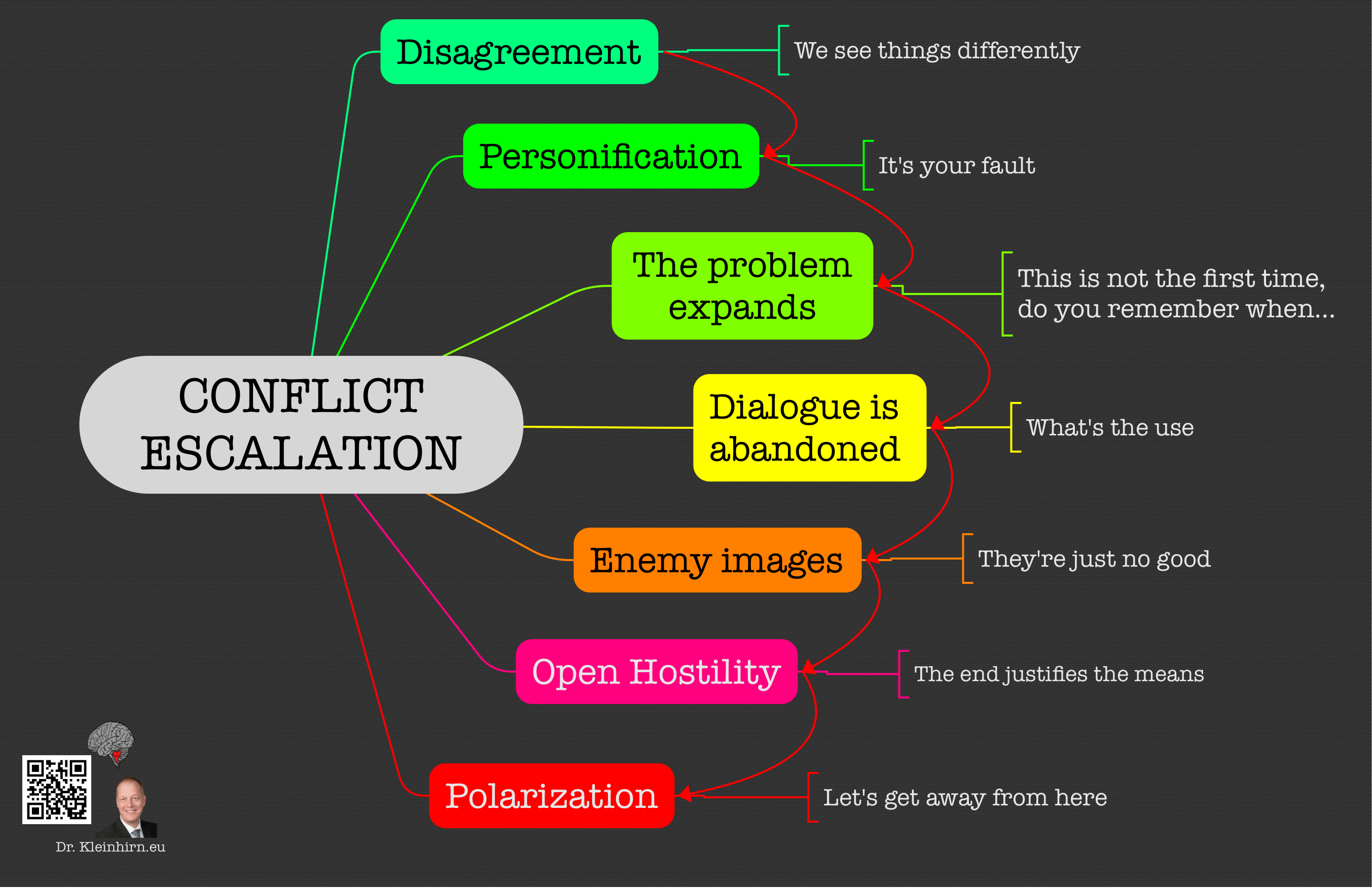
The tension between Islamabad and the Taliban is a bitter irony. Many analysts spent decades arguing that a Taliban-led Afghanistan would be a strategic asset for Pakistan—a source of "strategic depth." Instead, it has become a source of strategic friction. The TTP, emboldened by the Taliban’s victory in 2021, has ramped up its campaign within Pakistan.
Now, the mentor and the protege are at each other's throats.
India’s involvement in this narrative is fueled by a desire for a "contiguous" stability. Delhi has invested billions in Afghan infrastructure over the last twenty years—roads, dams, and the parliament building itself. While the political landscape has shifted drastically since the 2021 takeover, India’s core interest remains the same: an Afghanistan that is not a springboard for terror.
When Pakistan strikes Afghanistan, it complicates India's efforts to engage with the Afghan people. It forces a choice. Does the region move toward a collaborative security framework, or does it retreat into a series of bilateral skirmishes?
The Architecture of the Aftermath
What happens when the smoke clears?
In Islamabad, the government faces a crumbling economy and a surging internal security threat. The strikes were a show of strength, a message to the TTP and its alleged backers. But strength is a fickle thing. If it doesn't solve the underlying insurgency, it only breeds more resentment.
In Kabul, the Taliban leadership faces a crisis of legitimacy. If they cannot protect their own airspace, their claim to being the sole defenders of Afghan sovereignty rings hollow. This leads to more bellicose rhetoric, more troop movements toward the border, and more chances for a miscalculation that leads to a full-scale conflagration.
In Delhi, the hawks and the doves watch the monitors. They see a Pakistan that is increasingly desperate. A desperate nuclear-armed state is a variable that no one knows how to solve for. India’s condemnation is a plea for a return to the norms of international law—not because Delhi is a naive believer in global rules, but because it knows the cost of the alternative.
The Reality of the Ridge
The shale mountains of Khost don't care about sovereignty. They don't care about press releases or the "aggression" cited by diplomats. They only hold the heat of the day and the cold of the night.
But the people living among them care deeply. Every time a bomb falls, the social fabric of the borderland is torn. The trust between neighbors, already thin, dissolves into the dust. We are witnessing the slow-motion fracturing of an entire region's security architecture.
India’s stance is a reflection of a hard truth: you cannot set your neighbor's house on fire and expect the smoke not to drift into your own windows. The air strikes in Afghanistan are not an isolated event. They are a symptom of a deeper, more systemic rot in the way these nations interact.
The "invisible stakes" are the lives of the millions who live in the shadow of these decisions. They are the traders who can no longer cross the border, the students whose schools are shuttered by security alerts, and the families who wait for the sound of the morning call to prayer, hoping it isn't replaced by the whistle of a descending missile.
As the sun sets over the Hindu Kush, the light catches the metallic glint of military hardware positioned along the Durand Line. The world watches, waiting to see if the next move will be a handshake or another strike. In this landscape, the only thing more dangerous than the fire itself is the belief that one can control where it spreads.
The porcelain in Aman’s shop is still rattling. It might not stop for a very long time.