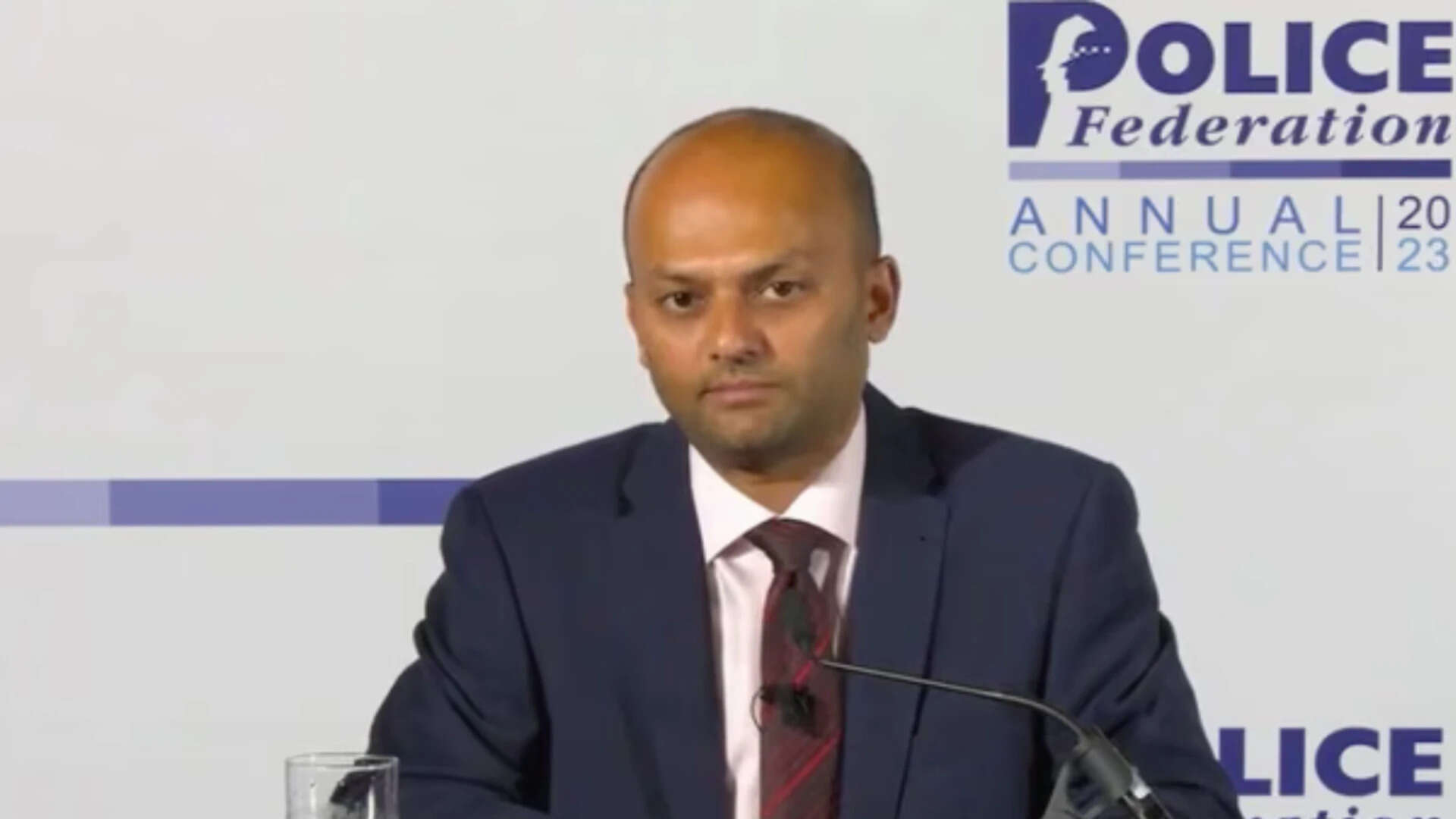
The arrest of Mukund Krishna, the high-profile chief executive of the Police Federation of England and Wales, on suspicion of corruption has sent a shockwave through the UK’s legal infrastructure. For an organization already reeling from systemic reviews and internal friction, the sight of its top civilian administrator being detained by the very service he was hired to modernize is more than an irony. It is a catastrophe. Krishna, a man brought in specifically to overhaul the Federation's business operations and repair its tarnished reputation, now finds himself at the center of a criminal investigation that threatens to dismantle years of reform.
This is not merely a story about one man’s legal troubles. It is an indictment of the oversight mechanisms within the bodies that represent the rank and file of British policing. The Federation represents over 145,000 officers, and the "suspicion of corruption" hanging over its executive suite strikes at the core of its mandate. When the gatekeeper is accused of breaking the locks, the entire house feels unsafe.
A Modernizer Caught in the Machine
Mukund Krishna did not rise through the ranks of the thin blue line. He was an outsider, a business strategist with an impressive pedigree that included stints at major consulting firms. His appointment was a deliberate signal that the Police Federation was moving away from its "old boys' club" image and toward a more corporate, accountable model of governance. He was the man who was supposed to fix the books and professionalize the advocacy.
The optics of his tenure were, for a time, exemplary. He spoke the language of efficiency and transparency. However, the reality behind the scenes appears to have been far more volatile. Sources within the Federation suggest that the drive for modernization created deep-seated resentment among the traditionalists, but more importantly, it may have obscured a lack of rigorous internal audit. The arrest, conducted by officers from a separate force to ensure impartiality, suggests that the concerns were not merely internal grumbles but substantive evidence of financial or procedural impropriety.
The Mechanics of the Investigation
Corruption investigations into public-facing bodies usually follow a specific, grueling pattern. They often begin with a whistleblower or a discrepancy in procurement contracts. In the case of a CEO, the scrutiny typically falls on "ghost" contracts, kickbacks from vendors, or the misappropriation of member funds. It is important to remember that the Federation is funded primarily by the monthly subscriptions of its members—the constables, sergeants, and inspectors who pay for protection and representation.
If money has been diverted, it is their money.
The investigation is being handled with extreme sensitivity. The Metropolitan Police or a neighboring territorial force usually steps in when the Federation's headquarters in Leatherhead is the subject of a probe. This prevents the "conflict of interest" trap that so often plagues internal police matters. The chargers involve "suspicion of corruption," a broad legal umbrella that can cover anything from bribery to the abuse of a position of power for personal gain.
The Institutional Vacuum
The timing could not be worse. The Police Federation is currently navigating a period of intense public scrutiny following the Casey Review and several high-profile scandals involving officer conduct. Its primary role is to argue for better pay and conditions while defending the integrity of the profession. With its CEO under arrest, its ability to lobby the Home Office is effectively neutralized. Who wants to sit across the table from a group whose leader is in a cell?
The leadership vacuum created by Krishna’s suspension is profound. While the National Chair remains the public face of the union side, the CEO holds the keys to the budget, the legal strategy, and the administrative staff. Without that engine running smoothly, the organization is a ship without a rudder.
The Problem with Outsourced Integrity
The Krishna era was supposed to be the "Expertise Era." By hiring an Indian-origin executive with a background in global consultancy, the Federation sought to prove it was diverse, forward-thinking, and beyond the reach of local precinct politics. This move was a double-edged sword. While it brought a fresh perspective, it also brought a corporate culture that some argue is less compatible with the rigid, regulated world of public service accountability.
In the private sector, "aggressive growth" or "creative procurement" might be rewarded. In the public sector, it is often a crime. The clash between corporate ambition and the legal constraints of a staff association has likely played a role in this unfolding drama. If the investigation reveals that Krishna treated the Federation’s coffers like a private equity fund, the fallout will be felt far beyond his office.
A Pattern of Governance Failure
This is not the first time the Federation has faced questions about its finances. For years, the organization has sat on a "Number 2 Account," a controversial reserve of cash held by local branches that was largely shielded from central oversight. Efforts to consolidate these funds and bring them under a central, audited authority were exactly the kind of projects Krishna was tasked with leading.
There is a dark irony if the man hired to centralize and clean up the accounts ended up allegedly exploiting that very centralization. It points to a failure of the Board of Directors—the National Board—to provide the necessary friction. In any organization, a CEO with too much autonomy and too little oversight is a liability. In a police organization, it is a danger to the state.
The Impact on the Rank and File
Walk into any station canteen in the UK right now and the mood is one of betrayal. Officers are already facing a cost-of-living crisis and a feeling that they are being used as political footballs. To see their subscription fees potentially embroiled in a corruption scandal is a bitter pill.
- Financial Loss: If funds were misappropriated, the legal defense funds for officers could be depleted.
- Reputational Damage: Every time a Federation official is linked to a crime, the "rogue officer" narrative is reinforced in the public mind.
- Political Weakness: The Federation’s bargaining power with the government is now at an all-time low.
The "why" of this situation is simple: the Federation tried to buy a corporate solution for a cultural problem. They thought a high-flying CEO could bypass the hard work of internal reform. They were wrong.
Transparency as a Weapon
To recover from this, the Federation cannot simply wait for the legal process to play out. It needs to perform a forensic audit that is made public—not a sanitized version, but the raw data. The members deserve to know where every pound of their money went. If the investigation into Krishna reveals a wider web of complicity, the entire National Board may need to step down to allow for a total reset.
The "how" of the corruption, if proven, will likely involve the complexity of modern procurement. In the digital age, corruption doesn't always look like a briefcase full of cash. It looks like a signed contract for IT services that never materialize, or a consultancy fee paid to a shell company. These are the trails the investigators are now following through the digital records at the Leatherhead headquarters.
The Structural Flaw
The real crisis isn't just Mukund Krishna; it's the structure that allowed him to operate without a safety net. The Police Federation occupies a strange legal space—it’s not quite a trade union and not quite a government department. This ambiguity creates shadows where oversight can fail.
The government may now be forced to intervene. There have been long-standing calls to turn the Federation into a fully regulated body subject to the same transparency laws as the police forces themselves. This arrest makes that transition almost inevitable. The era of the Federation operating as a private club with public-sector influence is over.
Beyond the Headlines
While the media focuses on the shock of the arrest, the more important story is the collapse of the "Modernization Project." Krishna was the poster child for a new, cleaner Federation. His failure—legal or otherwise—is the failure of that specific vision of reform. It suggests that you cannot simply graft a corporate head onto a policing body and expect it to work without changing the DNA of the entire organization.
The investigation will take months, perhaps years. Digital forensics and international financial trails are not cleared overnight. In the meantime, the 145,000 officers on the street are left wondering who, if anyone, is actually looking out for them. They are the ones who will pay the price for this institutional arrogance, long after the CEO’s legal fate is decided.
The Federation must now decide if it exists to serve its members or its executives. If it cannot prove its integrity in the wake of the Krishna arrest, it may find that the government—and its own members—decide it no longer needs to exist at all.
Demand an immediate, third-party forensic audit of all Police Federation central accounts from the last three years to determine the true scale of the financial risk.