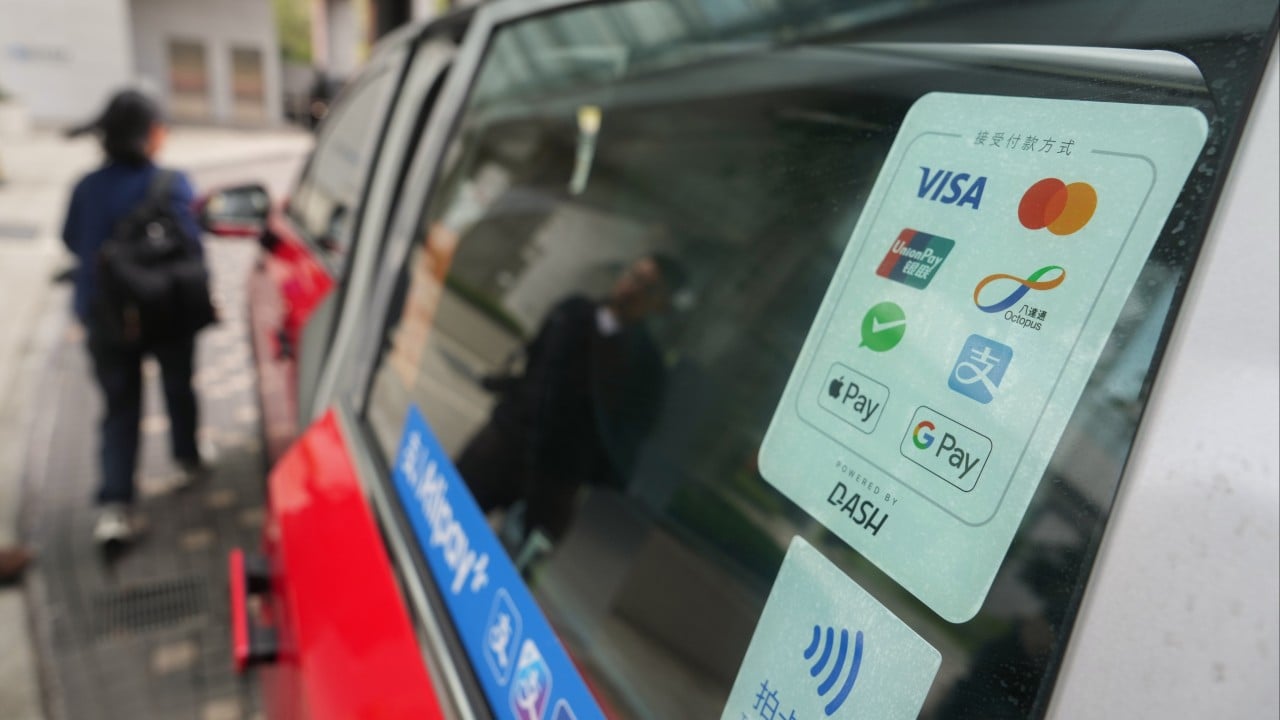
The transition of the Hong Kong taxi industry from a cash-dominant ecosystem to a digital payment infrastructure is not a matter of simple technological adoption but a complex negotiation of three conflicting economic incentives: fiscal opacity, operational liquidity, and settlement velocity. While the entry of international ride-hailing platforms and government-mandated hardware upgrades suggests an inevitable shift, the underlying unit economics of a local taxi driver reveal why "keeping the change" remains a more efficient micro-transactional model than digital clearing.
The Triple Constraint of the Taxi Micro-Economy
To analyze why digital payments have historically failed to penetrate this specific market, one must evaluate the trade-offs between three primary drivers of driver behavior. Meanwhile, you can explore related stories here: Structural Accountability in Utility Governance: The Deconstruction of Southern California Edison Executive Compensation.
- Immediate Liquidity (The Cash-on-Hand Requirement): Most Hong Kong taxi drivers operate as independent contractors on a two-shift system. They rent vehicles from owners or agencies, typically paying a daily rental fee in cash. Fuel costs, predominantly Liquefied Petroleum Gas (LPG), are also settled in cash at the pump. A driver who accepts only digital payments faces a liquidity mismatch: their income is trapped in a digital ledger with a T+2 or T+3 settlement cycle, while their primary operational expenses require immediate physical tender.
- Fiscal Discretion and Informal Earnings: The "keep the change" culture represents a significant percentage of a driver’s net take-home pay. On a HK$27.00 flag-fall rate, a passenger leaving the change from a HK$30.00 note effectively provides an 11% tip. Digital payment interfaces often force a binary choice—either the exact fare or a predefined percentage tip—which disrupts the social friction that currently favors the driver in cash transactions.
- Hardware Sunk Costs and Transaction Fees: For a driver netting HK$800 to HK$1,200 per shift after expenses, a 1.5% to 3% transaction fee imposed by payment gateways is not a negligible cost of doing business; it is a direct reduction in margin. When coupled with the monthly rental of card terminals, the "cost to play" often exceeds the perceived value of capturing the small segment of passengers who refuse to carry cash.
Structural Bottlenecks in the Digital Transition
The push toward e-payments in 2024 and 2025 is driven by the Transport Department’s regulatory pressure and the integration of the "HKeToll" system. However, the architecture of the transition contains several inherent flaws.
The Interoperability Gap
Hong Kong’s payment market is fragmented between Octopus, AlipayHK, WeChat Pay HK, and credit card processors (Visa/Mastercard). For a driver, maintaining multiple QR codes or terminals is an ergonomic burden in a cramped cockpit. The lack of a unified clearinghouse means a driver might have to check four different apps to verify successful transactions, increasing the "dwell time" between fares and reducing hourly throughput. To see the bigger picture, check out the excellent analysis by Investopedia.
The Latency of Verification
In a high-density urban environment like Central or Mong Kok, the speed of the "handshake" between the passenger’s device and the driver’s terminal is critical. If a digital transaction takes 15 seconds to process due to network latency or biometric authentication, and a cash transaction takes 5 seconds, the driver loses 10 seconds of potential cruising time per trip. Over a 20-trip shift, this is a non-trivial loss of operational efficiency.
The Mathematics of the Shift
The economic viability of digital adoption can be expressed through a simple cost-benefit function for the driver ($D$):
$$V_d = (I_g \cdot (1 - f)) - (C_h + C_o)$$
Where:
- $V_d$ is the net value of digital adoption.
- $I_g$ is the gross income from digital fares.
- $f$ is the transaction fee percentage.
- $C_h$ is the hardware rental/maintenance cost.
- $C_o$ is the opportunity cost of delayed settlement (liquidity premium).
For $V_d$ to be greater than the value of cash ($V_c$), either the volume of digital-only passengers must increase to the point where ignoring them results in significant idle time, or the transaction fee ($f$) must be subsidized by the platform or government. Currently, the market is in a state of "forced adoption" where the government is attempting to artificially lower $C_h$ through subsidies, but the liquidity premium ($C_o$) remains high.
Regulatory Catalysts vs. Market Reality
The introduction of the "Taxi Fleet" license system is the most significant attempt to professionalize the sector. By grouping individual drivers under corporate umbrellas, the government shifts the burden of digital integration from the individual to the fleet operator.
- Centralized Clearing: Fleet operators can act as the "bank," receiving digital payments and providing drivers with immediate cash advances or fuel credits, thereby solving the liquidity mismatch.
- Standardized Service Levels: Fleet licenses require the provision of e-payment options. This removes the "choice" from the driver, treating the transaction fee as a corporate overhead rather than a personal loss.
- Data Monetization: Large-scale fleet data allows operators to optimize routing and reduce "dead mileage," potentially recouping the cost of transaction fees through improved asset utilization.
The Role of Octopus and the NFC Advantage
Octopus remains the dominant incumbent due to its Near Field Communication (NFC) speed. Unlike QR code-based systems (Alipay/WeChat) which require opening an app and scanning, Octopus mirrors the tactile speed of cash. The 2024 rollout of the "Octopus App for Business" which allows drivers to use their own NFC-enabled smartphones as terminals, significantly lowers the $C_h$ (hardware cost) variable. However, even Octopus faces the hurdle of the "silver economy"—the significant portion of the driver workforce aged 60 and above who view digital interfaces with skepticism and prefer the tangible security of physical currency.
Risk Assessment of the Cashless Mandate
A total shift to digital payments introduces two systemic risks that are rarely discussed in public policy.
- The Fragility of Connectivity: In tunnels or high-rise canyons where GPS and 5G signals degrade, digital payment systems often fail. A cash-based system provides a fail-safe. Without a robust offline-first digital payment protocol, disputes over "failed" transactions will increase, leading to administrative burdens for police and transport regulators.
- The Privacy Trade-off: For the passenger, the shift to digital creates a permanent ledger of movement. In the specific socio-political context of Hong Kong, a segment of the population may prioritize the anonymity of cash, creating a persistent "gray market" for cash-only taxis that operates outside of digital fleet tracking.
Strategic Optimization for Operators and Drivers
For the digital transition to reach a tipping point, the value proposition must move beyond "convenience" and into "revenue enhancement."
Dynamic Fare Integration
Digital platforms allow for the implementation of surge pricing or time-of-day adjustments that are difficult to execute with physical meters. If digital-only fleets are permitted to adjust rates based on real-time demand, the increased $I_g$ (gross income) will quickly outpace the $f$ (transaction fees).
The Fuel-Payment Loop
The most effective way to drive adoption is to close the loop between income and expenses. If LPG stations (such as those operated by Sinopec or Towngas) accept the same digital tokens or platform credits that the drivers receive from passengers, the liquidity requirement ($C_o$) disappears. The driver never needs to "cash out" because their digital earnings are immediately fungible for their largest expense.
Incentivizing the Micro-Tip
Payment UI/UX must be redesigned to mimic the "keep the change" psychology. Instead of asking for a percentage tip, the interface should suggest "rounding up" to the nearest HK$10. This maintains the driver’s informal earnings margin while providing the passenger with the convenience of a card tap.
The evolution of the Hong Kong taxi is currently stalled in the "Hardware Phase"—installing terminals and scanning codes. The "Economic Phase"—realigning incentives so that digital money is as useful to a driver as a pocketful of HK$10 coins—is only just beginning. Until the settlement speed matches the speed of a hand-off in the backseat, cash will remain the undisputed "king" of the red urban taxi.
To capitalize on this shift, stakeholders should prioritize the integration of fuel-payment gateways directly into driver-facing apps, bypassing the need for traditional bank settlement and providing the immediate utility that the current cash ecosystem provides. This "closed-loop" utility is the only mechanism capable of overcoming the structural inertia of the 18,163 licensed taxis currently operating in the territory.