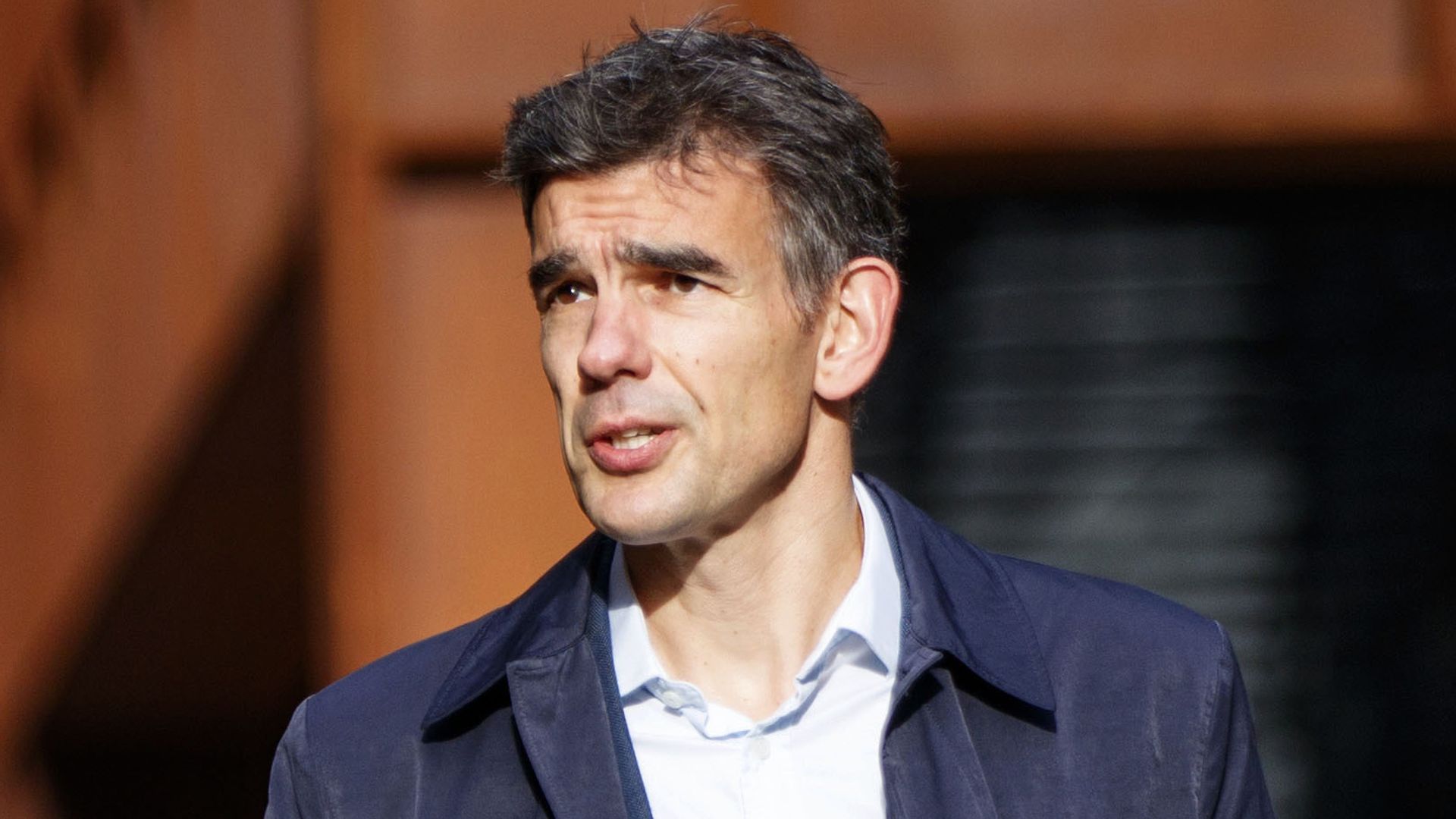
The BBC board has finally found its man, and he happens to be the person who once told a room full of MPs that he didn't know his own salary. Matt Brittin, the former president of Google EMEA and a one-time Olympic rower, has been tapped to lead the British Broadcasting Corporation as its next director-general. The move, expected to be formalized this week, marks a definitive shift in the history of the 104-year-old institution. For the first time, the "Beeb" will be steered not by a veteran broadcaster or a career journalist, but by a silicon-valley-adjacent operator whose career was built on the very algorithms currently cannibalizing traditional media.
Brittin replaces Tim Davie, who is exiting under the cloud of a $10 billion defamation lawsuit from Donald Trump following a botched edit of a campaign video. While the optics of the transition suggest a search for stability, the choice of Brittin is anything but safe. It is a calculated, perhaps desperate, pivot toward a tech-first future. By hiring the man who spent nearly two decades scaling Google’s dominance across Europe, the BBC isn't just looking for a manager; it is looking for a survivalist who knows the enemy’s playbook because he helped write it. You might also find this connected coverage useful: The Middle Power Myth and Why Mark Carney Is Chasing Ghosts in Asia.
A Legacy of Algorithm and Ink
To understand the friction this appointment will cause, one must look at Brittin’s track record at the "Big G." He joined Google in 2007, a time when the search engine was still evolving from a handy tool into a global hegemon. Over the next 18 years, Brittin presided over a period of aggressive expansion and equally aggressive tax maneuvering. He became the face of Google’s "sweetheart" tax deals in the UK, famously defending a £130 million settlement that critics argued represented a mere 3% effective tax rate.
During his 2016 grilling by the Public Accounts Committee, Brittin’s inability to recall his compensation became a symbol of corporate detachment. To his detractors, he represents the "hired gun" mentality of multinational giants. To his supporters, he is a man of immense discipline—a trait forged in the rowing shells of the 1988 Seoul Olympics—who can navigate the BBC through the "profound jeopardy" Tim Davie warned about in his final months. As reported in detailed articles by Bloomberg, the effects are widespread.
The BBC is currently trapped in a pincer movement. On one side, a government skeptical of the mandatory license fee; on the other, a generation of viewers who find more value in a five-minute YouTube clip than a flagship evening news broadcast. Brittin’s hiring is an admission that the BBC can no longer win on content alone. It must win on distribution, data, and platform stickiness.
The Disruption Architect
Brittin has a history of telling the television industry things it doesn't want to hear. In 2017, he stood before the Royal Television Society and warned that the UK's commercial TV sector was "incredibly inward-looking." He told the room to "wise up and speed up," predicting the very disruption that has since gutted linear advertising revenues.
His philosophy on media is built on two pillars:
- Platform Agnosticism: Brittin has long argued that the "schedule" is a relic. For him, the BBC is not a set of channels (BBC One, Two, etc.) but a content library that must compete for attention in the same feed as MrBeast and Netflix.
- The AI Mandate: Upon leaving Google last year, Brittin spoke of the "transformative benefit" of AI. Expect him to push for aggressive integration of machine learning in everything from the BBC iPlayer’s recommendation engine to automated local news reporting.
This "tech takeover" of a British cultural pillar will not be bloodless. The BBC’s editorial staff, already weary from years of "efficiency savings," are likely to view a Google veteran with suspicion. There is a fundamental tension between the public service remit—which demands serving the underserved and maintaining high-brow cultural standards—and the algorithmic logic of engagement-at-all-costs that fueled Brittin’s success at Google.
The Taxman Cometh to Portland Place
One of the most immediate hurdles Brittin faces is his own reputation for corporate opacity. The Director-General of the BBC is a public-facing role that requires a high degree of transparency and a certain "common touch." Brittin’s past struggles in front of parliamentary committees suggest a vulnerability. He will be defending the license fee—a flat tax on the British public—while his own history is tied to the sophisticated tax avoidance strategies of a trillion-dollar American corporation.
The irony is thick. The BBC is funded by a tax that many feel is outdated, and it is now led by a man who became a lightning rod for anti-tech-tax sentiment. If he cannot convince the public that he understands their financial reality, his tenure will be plagued by the same accusations of elitism that haunted his predecessors.
Furthermore, the BBC’s charter renewal in 2027 is the looming "Great Boss" at the end of the level. Brittin was hired specifically to handle this negotiation. The government wants a BBC that is smaller, cheaper, and more "commercial." Brittin’s experience at McKinsey and Google makes him the perfect candidate to oversee a managed retreat from universal broadcasting toward a subscription or hybrid model.
The Talent Vacuum
The shortlist for the DG role was a "who's who" of media heavyweights, including former Channel 4 boss Alex Mahon and internal favorite Charlotte Moore. By passing over these creative-led candidates for a "platform man," the BBC board is signaling that the era of the "Great Commissioning Editor" is over.
In the old BBC, the DG was the "Editor-in-Chief of the Nation." In Brittin’s BBC, the DG is effectively the Chief Product Officer.
This shift has internal consequences. The BBC’s greatest asset has always been its ability to attract top-tier creative talent. If the corporation begins to feel like just another tech firm—obsessed with "digital skills" and "optimization"—it risks losing the storytellers who give the brand its value. You can optimize a player, but you cannot optimize a masterpiece like I May Destroy You or Planet Earth into existence.
The Strategy of the Scull
Brittin is a sculler by nature. Rowing requires a singular focus on the line ahead, ignoring the noise of the crowd on the banks. He will need that stoicism. He is entering an organization that is currently a political football, caught between a US President filing lawsuits and a domestic audience that is increasingly "tuning out."
If Brittin succeeds, he will have transformed the BBC into a global digital powerhouse capable of surviving the post-broadcast era. If he fails, he will be remembered as the man who brought the cold, transactional logic of Silicon Valley to a British treasure, only to watch it lose its soul in the process.
The "mini gap year" he took after Google, where he reportedly bought a sculling boat and learned to scuba dive, is over. He is now back in the deep water, and this time, the boat he’s steering has 20,000 employees and a skeptical nation as passengers.
Would you like me to analyze the specific regulatory hurdles Brittin will face during the 2027 Charter Review?