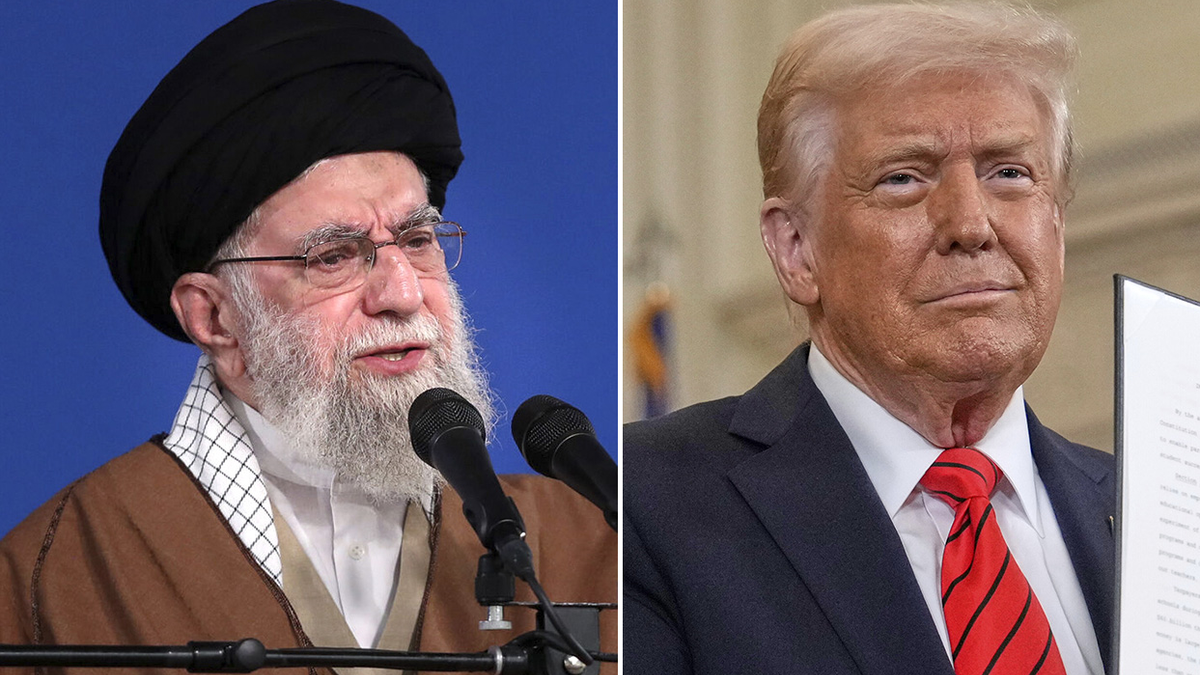
The Iranian military command recently broadcast a familiar refrain to the international community. Their spokesmen claimed that the armed forces would continue their operations against Israel until they achieved a complete victory. While the statement is designed to project strength and unwavering resolve to a domestic and regional audience, it masks a much more complicated and precarious reality for the Islamic Republic. The "complete victory" mentioned by Tehran is not a defined military objective with clear benchmarks, but rather a flexible political placeholder used to justify an ongoing, high-stakes shadow war that has now stepped out of the dark.
Understanding this conflict requires looking past the televised bravado. For decades, the confrontation between Iran and Israel was defined by the "war between wars" doctrine. It was a cycle of cyberattacks, maritime sabotage, and proxy skirmishes that allowed both sides to maintain a level of plausible deniability. That era is over. The direct exchange of long-range munitions between the two nations has stripped away the comfort of the shadows, leaving the Iranian leadership in a position where they must balance aggressive rhetoric with the survival of their own infrastructure.
The Mathematics of Deterrence and Failure
Military officials in Tehran speak of victory in absolute terms, yet the technical reality of their recent engagements suggests a massive gap between intent and outcome. When Iran launched its massive barrage of drones and missiles toward Israel, the stated goal was to reset the rules of engagement. However, the sheer volume of intercepted projectiles highlighted a significant technological disparity.
Modern warfare is not just about the size of an arsenal. It is about the sophistication of the kill chain. Israel’s multi-layered defense system, supported by a regional coalition and high-level satellite integration, turned a supposedly "crushing" blow into a series of expensive fireworks. For the Iranian military, the "victory" they claimed was psychological. They proved they could reach out and touch Israeli soil. But in doing so, they also provided Western intelligence with a treasure trove of data on Iranian flight paths, telemetry, and terminal guidance systems.
This creates a paradox for the Iranian Revolutionary Guard Corps (IRGC). To achieve a "complete victory" in a conventional sense, they would need to overwhelm these defenses. Doing so would require a scale of attack that would almost certainly trigger a full-scale retaliatory campaign against their nuclear sites and oil refineries. Tehran knows this. Therefore, the "victory" they speak of is intentionally vague. It is a war of attrition, not a war of conquest.
Proxy Networks and the Diminishing Return of Influence
The backbone of Iran’s regional strategy has always been its "Axis of Resistance." This network of militias in Lebanon, Yemen, Iraq, and Syria allows Tehran to exert pressure on Israel without putting Iranian cities at risk. When the military spokesman talks about fighting until the end, he is largely referring to the endurance of these groups.
However, this strategy is hitting a wall of diminishing returns. Hezbollah, the crown jewel of the Iranian proxy system, is currently tethered to a Lebanese state that is effectively a failed economy. The group cannot afford a total war that leads to the destruction of Beirut. In Yemen, the Houthis have proven they can disrupt global shipping, but they cannot win a war against Israel from 1,600 miles away.
The "complete victory" narrative is becoming harder to sell to these proxies. They are beginning to realize that while Tehran provides the rockets, they provide the targets. There is a growing tension within these groups about how much they are willing to sacrifice for an Iranian geopolitical agenda that keeps the IRGC leadership safe in their bunkers while Lebanese and Syrian infrastructure is leveled.
The Domestic Pressure Cooker
Inside Iran, the military’s hardline stance serves a second, equally important purpose: internal security. The government is facing an existential crisis of legitimacy. Years of sanctions, mismanagement, and social unrest have alienated a significant portion of the population. A state of perpetual war provides a convenient excuse for the suppression of dissent.
When the military vows to fight until victory, they are signaling to the Iranian people that the nation is under siege. This allows the state to frame any domestic protest as a betrayal of the national cause. The "victory" the military speaks of is, in many ways, the survival of the regime itself. As long as there is an external enemy to fight, the security forces can justify their massive budgets and their iron-grip control over the economy.
If a peace or a de-escalation were to occur, the focus would inevitably shift back to the price of bread, the value of the rial, and the lack of social freedoms. For the IRGC, the "war" is a vital organ of the state. They do not actually want a "complete victory" if it means the end of the conflict, because the conflict is what keeps them in power.
Technological Isolation and the Russian Connection
One factor often overlooked in the analysis of Iranian military capability is the shifting nature of their international alliances. Tehran has moved closer to Moscow, trading drone technology for potential upgrades in their air defense and fighter jet programs. This is a desperate move for a country that has been flying Vietnam-era F-4 Phantoms and F-14 Tomcats for nearly half a century.
The military spokesman’s confidence likely stems from the belief that Russian hardware like the S-400 missile system or Su-35 jets will eventually arrive to level the playing field. But Russia is bogged down in its own conflict and is notoriously transactional with its military exports. Relying on Moscow for the "victory" they promise is a gamble with incredibly low odds.
Furthermore, the shift to a more conventional alliance with Russia makes Iran more predictable. The strength of the Iranian military has always been its asymmetric nature. By trying to build a conventional force capable of "complete victory" against a Western-aligned power, they are entering a race they do not have the industrial base to win.
The Miscalculation of Western Resolve
Tehran’s strategy relies heavily on the assumption that the West, and specifically the United States, has no stomach for another Middle Eastern war. They view the withdrawal from Afghanistan and the internal political divisions in Washington as signs of terminal weakness. They believe they can push right up to the edge of total war without falling over.
This is a dangerous misreading of historical precedent. While the U.S. may be weary of "nation-building," its commitment to the security of global energy markets and its primary regional ally remains a bipartisan constant. The Iranian military’s rhetoric about "fighting until the end" risks triggering a level of intervention that their current air defenses simply cannot handle.
The "victory" they are chasing is a mirage. In a real-world scenario where the "gloves come off," the Iranian military would find its command and control centers, its power grids, and its primary export hubs targeted with a precision they cannot match. The rhetoric of the spokesman is designed to prevent that war by making the cost of engagement seem too high, but it simultaneously increases the likelihood of a catastrophic miscalculation.
Tactical Reality vs Political Theater
To see the truth of the situation, one must look at the specific units being deployed and the nature of the drills being conducted. Iran has significantly increased its domestic production of "suicide" drones and short-range ballistic missiles. These are weapons of terror and harassment, not weapons of conquest. You cannot achieve a "complete victory" over a modern state with moped-engined drones and unguided rockets.
The Iranian military is built for a specific type of combat: making it too painful for an occupier to stay. They are excellent at insurgency and asymmetric disruption. They are remarkably poorly equipped for a high-intensity, multi-domain war against a peer or near-peer adversary. The spokesman’s words are a political theater meant to bridge the gap between their actual capabilities and their ideological goals.
The Strategy of Perpetual Friction
Rather than a "complete victory," what Iran is actually pursuing is a state of "perpetual friction." By keeping the region in a constant state of low-to-medium intensity conflict, they prevent any regional integration that excludes them. They have successfully inserted themselves into every major crisis in the Middle East, making it impossible to solve any problem without talking to Tehran.
This is their version of victory. It is not the total defeat of their enemies, but the total relevance of their regime. The cost of this strategy is the systematic destruction of the civilian economies in the countries they influence and the continued impoverishment of their own people.
The Infrastructure of a Long War
Iran has moved much of its sensitive military manufacturing underground. The "cities" of missiles buried deep in the mountains are real, and they provide a second-strike capability that any adversary must respect. This underground infrastructure is the physical manifestation of their "fight until the end" philosophy. It is designed to survive a massive initial bombardment and allow the regime to continue firing back for weeks or months.
This is not a winning strategy; it is a "not losing" strategy. It is the military equivalent of a hedgehog curling into a ball. It makes the animal hard to eat, but it also means the animal cannot go anywhere or do anything. The Iranian military is currently curled in a ball, showing its quills and claiming it is winning the race.
The Question of Nuclear Ambiguity
The elephant in the room regarding any "complete victory" talk is the Iranian nuclear program. For years, the official line has been that the program is for peaceful purposes. However, as the conventional military balance shifts further against them, the voices within the Iranian establishment calling for a nuclear deterrent are getting louder.
A nuclear-armed Iran would redefine "victory" entirely. It would provide the regime with the ultimate insurance policy, allowing them to expand their proxy wars with near-total impunity. This is the real "complete victory" that the hardliners are aiming for—a world where the Islamic Republic is untouchable and its regional ambitions are unchecked.
The military spokesman won't say that out loud, but the shift in rhetoric from "defense" to "complete victory" suggests a change in the internal calculus. They are no longer just trying to survive; they are trying to dominate. And in the logic of the Middle East, dominance usually requires a weapon that makes conventional defeat impossible.
The regional powers watching these developments are not fooled by the slogans. They are looking at the enrichment levels at Fordow and Natanz. They are looking at the development of solid-fuel rockets that can be launched with very little notice. The rhetoric is the music, but the nuclear program is the heartbeat.
The Dead End of Revolutionary Zeal
The fundamental flaw in the Iranian military’s "complete victory" doctrine is that it relies on an ideology that the rest of the region is moving past. While Tehran is doubled down on a 1979 revolutionary mindset, its neighbors are focused on the "2030" visions of economic diversification, high-tech cities, and global trade.
Iran is increasingly an ideological island. Its military can break things, but it cannot build anything that anyone else wants to be a part of. A "victory" that results in a charred region and a pariah state is no victory at all. It is a slow-motion national suicide.
The military spokesman will continue to give his briefings. He will continue to use the language of the martyrs and the language of the resistance. But the hard data of the 21st century—satellite imagery, economic indicators, and technological benchmarks—all point to a different conclusion. The Iranian military is not fighting for a complete victory; they are fighting to stay relevant in a world that is rapidly outgrowing them.
The immediate step for regional players and global powers is to stop reacting to the rhetoric and start addressing the specific technological and financial channels that allow this "friction strategy" to continue. Sanctions on finished products are less effective than the interdiction of dual-use components for drone navigation. Addressing the shadow banking systems that fund the proxies is more effective than trading missile volleys. The goal should be to make the "perpetual friction" too expensive for the IRGC to maintain, forcing a choice between the survival of the regime and the continuation of the war. Until that choice is forced, the hollow promise of victory will be the only thing Tehran has to offer.