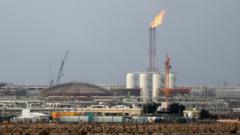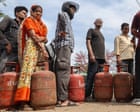
The headlines are screaming about a crisis. "Waiting for days." "Supply chain collapse." "Energy security at risk."
The consensus view is that India is a victim of Middle Eastern geography. The narrative suggests that the conflict involving Iran has exposed a fatal flaw in India’s energy strategy, leaving the nation’s industrial heartlands and transport sectors gasping for molecules.
They are wrong.
The current "disruption" is not a tragedy. It is a long-overdue stress test that most Indian policymakers were too timid to run themselves. If you are a logistics provider or a factory owner complaining about a three-day wait for Natural Gas (NG) or Liquefied Natural Gas (LNG), you aren't a victim of geopolitics. You are a victim of your own refusal to price in the volatility of the Strait of Hormuz.
For a decade, the Indian energy sector has been coddled by the illusion of cheap, stable fossil fuels. We built entire distribution networks—the City Gas Distribution (CGD) projects—on the shaky premise that the world would stay quiet so we could keep our stoves burning. The world is no longer quiet.
The Myth of the Unavoidable Shortage
The mainstream media loves the "unavoidable" angle. It suggests that because Iran and Israel are trading strikes, India must suffer. This ignores the basic mechanics of energy procurement.
India imports roughly 50% of its natural gas. A significant portion of that LNG flows through the Persian Gulf. When tensions spike, insurance premiums for tankers skyrocket, and "Force Majeure" becomes the most popular phrase in the legal department.
But here is the truth: there is no physical shortage of gas in the world. There is only a shortage of cheap gas for people who didn't hedge their bets.
Companies like GAIL and Petronet LNG have spent years diversifying, yet the domestic infrastructure remains brittle. Why? Because the Indian market has been trained to expect subsidies. When the real price of risk shows up at the pump or the factory gate, the system breaks because it was never designed to handle reality.
The "disruption" is actually a price discovery mechanism. It is telling the Indian industrial sector that if your business model depends on $10 per MMBtu gas being delivered with 100% uptime through a war zone, your business model is a fantasy.
Why "Energy Security" is a Participation Trophy
The "experts" will tell you that the solution is more strategic reserves. They want the government to sink billions into underground storage to "insulate" the consumer.
This is a coward’s strategy.
Strategic reserves are a sedative. They allow inefficient industries to keep burning fuel without adapting. True energy security does not come from hoarding; it comes from optionality.
- Fuel Switching Capabilities: Any industrial unit built in the last five years that cannot switch between gas, naphtha, or electricity in under 24 hours is an engineering failure.
- Aggressive Deglobalization of the Grid: We are obsessed with pipelines when we should be obsessed with the "Micro-Grid."
- Price Transparency: The government’s habit of shielding the public from global price spikes prevents the very market signals that drive innovation.
If gas prices triple because of a drone strike in the Gulf, the price at the Indian station should triple instantly. Only then will the market find the motivation to invest in the alternatives that actually matter.
The Gas Grid is a Sunk Cost Trap
India is currently obsessed with the "One Nation, One Gas Grid" vision. It sounds noble. In practice, it’s a multi-billion dollar bet on a 20th-century technology.
Pipelines are static. They are vulnerable. They are tied to specific geographies and specific regimes. In a world of shifting alliances, a pipeline is a leash.
The current conflict hasn't just delayed tankers; it has highlighted the absurdity of our reliance on a singular, fragile supply chain. While the "lazy consensus" argues for faster pipeline completion to "fix" the supply issue, the contrarian move is to recognize that gas is a bridge fuel that just got its bridge blown up.
Instead of begging for more LNG from Qatar or the US, the industrial sector should be cannibalizing that investment for Green Hydrogen and high-density battery storage. The "impact" India feels today is the friction of a country trying to move backward into the age of fossil fuel stability that no longer exists.
The Logistics Lie: "Waiting for Days"
The reports of trucks lined up for days at CNG stations are being framed as a failure of the state. It is actually a failure of logistics management.
I have seen companies lose millions because they switched their entire fleet to CNG to chase "green" optics and lower fuel costs, without once accounting for the infrastructure lag. They optimized for the best-case scenario. Now, the worst-case scenario is here, and they are crying foul.
In the logistics world, "just-in-time" is dead. If your fleet is grounded because of a two-week delay in the Gulf, your supply chain wasn't "lean"—it was anorexic.
The solution isn't more gas. It’s better math.
The Invisible Winners of the Crisis
While the headlines focus on the "impact" (a word people use when they want to sound like a victim), they ignore who is winning.
- Renewable Heavyweights: Every time a tanker is diverted, the ROI on a solar-to-hydrogen plant in Gujarat improves.
- Efficiency Consultants: The era of "gas is cheap, let it burn" is over. The engineers who can squeeze 5% more thermal efficiency out of an existing plant are now the most valuable people in the room.
- The Agnostic Energy Consumer: Those who built their operations to be fuel-blind are currently eating the market share of their "gas-only" competitors.
Stop Asking When the Gas Will Come Back
The most common question I get is: "When will the supply chain return to normal?"
This is the wrong question. It assumes "normal" is a state where geopolitics doesn't affect your bottom line. That "normal" was an anomaly. We are returning to the historical mean—where energy is expensive, volatile, and a weapon of war.
If you are waiting for the Iran conflict to "simmer down" so you can go back to business as usual, you have already lost. The conflict is not the problem; your dependence is the problem.
The math of energy has changed. In the $1 \text{ MMBtu}$ to $20 \text{ MMBtu}$ range, the volatility isn't a bug; it's the defining feature.
$$Price_{Risk} = \text{Geopolitics} \times \text{Dependency}$$
If you want to reduce the $Price_{Risk}$, you don't try to change the "Geopolitics" variable. You are not a diplomat. You change the "Dependency" variable.
The Brutal Reality of the CGD Sector
The City Gas Distribution (CGD) companies are in for a reckoning. They have promised "uninterrupted" supply to millions of households and small businesses. They cannot deliver on that promise during a global flare-up without massive government bailouts.
These companies should be forced to fail or adapt. Protecting them only delays the inevitable shift toward a decentralized, electrified India.
We need to stop treating gas as a social right and start treating it as a volatile commodity. If the price goes up, the consumer should feel it. If the supply stops, the consumer should look for a different energy source.
Hard? Yes. Brutal? Certainly. But it’s the only way to build a system that doesn't crumble every time a missile is fired in a different time zone.
Stop mourning the broken supply chain.
Build a business that doesn't need it.