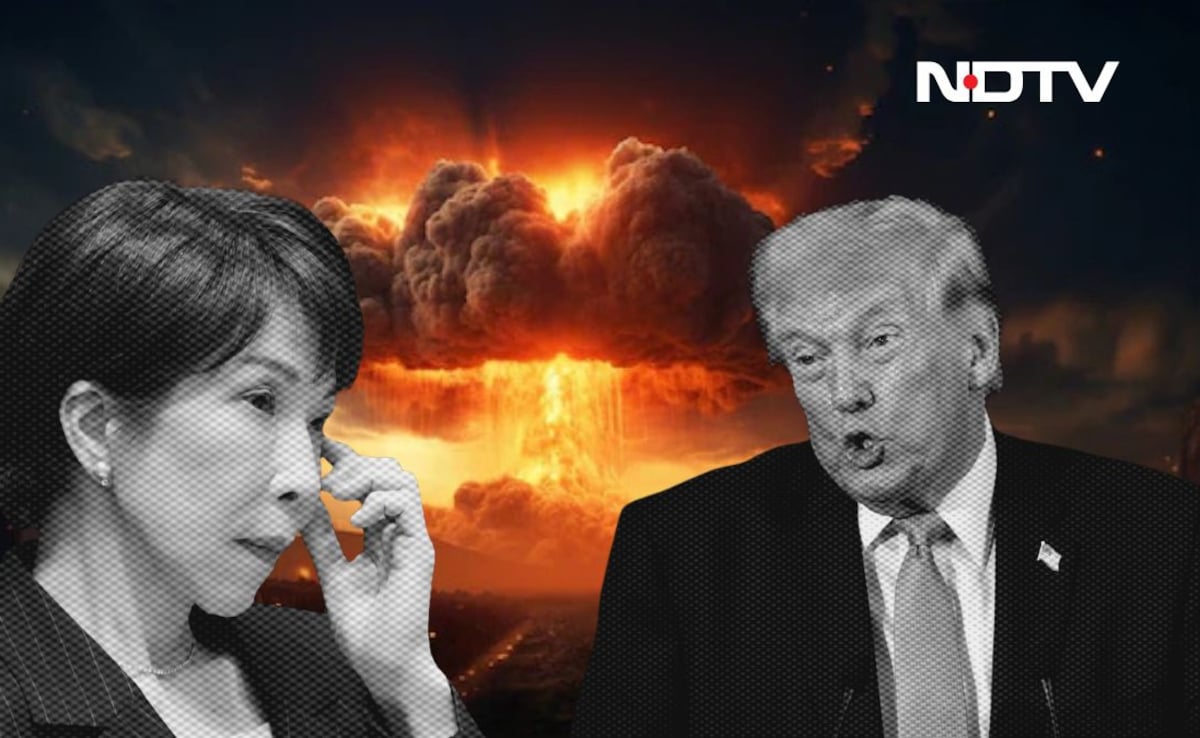
Eighty years ago, the sky over Hiroshima turned white, then black. Today, that memory is no longer a historical relic stored in a museum. It is a live wire in Japanese foreign policy. As Donald Trump returns to the White House with a transactional "America First" mandate, Tokyo finds itself forced into a high-stakes diplomatic gamble it never wanted. The Japanese government is being squeezed between its ironclad security alliance with Washington and its unique, decades-long role as a mediator with Tehran. This isn't just about trade or tariffs. It is about whether the only nation to ever suffer a nuclear attack can prevent the next one while its primary protector threatens to tear up the existing global order.
The crisis stems from a fundamental shift in how Washington views nuclear proliferation. Under the second Trump administration, the strategy has moved away from multilateral containment toward "maximum pressure" 2.0. For Japan, this is a nightmare scenario. Tokyo relies on Middle Eastern oil for nearly 90% of its energy needs. Any conflict in the Persian Gulf triggered by a nuclear standoff doesn't just raise gas prices in Osaka; it threatens the basic functionality of the Japanese economy.
The Ghost of 1945 Meets Modern Realpolitik
To understand why Japan is so deeply invested in the Iran nuclear issue, you have to look past the spreadsheets. It is a matter of national identity. Japan has spent eight decades positioning itself as the world’s moral conscience on nuclear weapons. This isn't flowery sentiment. It is a strategic tool. By leading the charge for non-proliferation, Japan earns a seat at the table of Great Powers despite its "Peace Constitution" and limited military footprint.
When Trump exited the Joint Comprehensive Plan of Action (JCPOA) during his first term, he didn't just break a treaty. He broke the bridge Japan had spent years building. Tokyo had cultivated a rare, functional relationship with the Iranian leadership, rooted in the fact that Japan has no colonial history in the region and no appetite for regime change. Now, the Trump administration expects Tokyo to choose sides.
This pressure creates a massive internal fracture in the Kantei—the Prime Minister’s office. On one hand, Japan must maintain the U.S. security umbrella to deter a rising China and a nuclear-armed North Korea. On the other, if Japan follows Washington into a total embargo or a kinetic confrontation with Iran, it loses its leverage as an independent diplomatic actor. It becomes just another client state.
The Energy Trap and the Yen
Economics and security are inseparable in this context. While the U.S. has become a net exporter of energy thanks to the shale boom, Japan remains an island in every sense of the word. Its energy security is fragile. The 2011 Fukushima disaster crippled the nation’s nuclear power industry, making it more dependent than ever on LNG and crude oil from the Middle East.
If the Trump administration enforces secondary sanctions that forbid Japan from interacting with Iranian financial institutions, Tokyo faces a choice between its energy supply and its standing with the Treasury Department. During the first Trump term, Japan was eventually forced to cut its Iranian oil imports to zero. This time, the global market is different. With Russia already under heavy sanctions and OPEC+ tightening its grip, Japan cannot simply pivot to another supplier without causing a massive spike in domestic costs.
The Technological Component of Proliferation
We often talk about "nuclear weapons" as a monolithic concept, but the path to a bomb is a series of industrial hurdles. Iran’s enrichment capabilities have advanced significantly since 2018. They are now working with IR-6 centrifuges, which are far more efficient than the older models.
$$(Separative Work Unit) \propto (Peripheral Velocity)^4$$
The physics dictate that the closer a nation gets to the 90% enrichment threshold, the faster the final "breakout" occurs. Japan, which possesses a world-class civilian nuclear cycle, understands the technical nuances better than most. Japanese engineers know that once the "know-how" is established, no amount of economic pressure can erase the physics. This is why Tokyo favors "engagement" over "strangulation." You can sanction a bank, but you can't sanction a mathematical formula or a scientist's brain.
The Trump Transactionalism Problem
The current White House views alliances as protection rackets rather than shared ideological commitments. Trump has frequently questioned the cost of stationing U.S. troops in Japan and suggested that Tokyo should do more for its own defense. In a world where the U.S. might not be a reliable guarantor of security, some voices in Japan have begun to whisper the unthinkable: Should Japan develop its own nuclear deterrent?
This is the ultimate irony of the Trump-Japan-Iran triangle. By pressuring Iran to the point of collapse and simultaneously casting doubt on the U.S.-Japan security treaty, Washington is inadvertently fueling the very nuclear anxieties it claims to be solving. If the international "rules-based order" is replaced by a "might makes right" system, Japan’s commitment to the Three Non-Nuclear Principles—not possessing, not producing, and not permitting the introduction of nuclear weapons—starts to look like a strategic liability rather than a moral high ground.
The Brinkmanship of Sanctions
Sanctions are often presented as a peaceful alternative to war. In reality, they are a form of economic siege. When the U.S. uses the dominance of the dollar to cut a nation out of the global economy, it creates a "desperation logic" in the target country.
The Iranian leadership knows that a nuclear weapon is the only thing that historically prevents U.S.-led regime change. They look at Libya and see a cautionary tale. They look at North Korea and see a success story. Japan’s role has always been to offer Iran an "off-ramp"—a way to integrate into the global economy without the bomb. But Trump’s strategy removes the off-ramp and replaces it with a wall.
Navigating the Two Fronts
Prime Minister Ishiba—or any successor in the revolving door of Japanese politics—must now play a double game. In Washington, they will emphasize their commitment to "de-risking" and collective security. In Tehran, they will try to keep lines of communication open, acting as a "backchannel" for a White House that often prefers to shout through social media than speak through State Department cables.
This isn't about being a "nice" country. It is about survival. If Iran crosses the nuclear threshold, it triggers a domino effect in the Middle East. Saudi Arabia has already signaled it would follow suit. For Japan, a world with five or six new nuclear states is a world where its 1945 trauma becomes a recurring nightmare.
The immediate friction point will be the Strait of Hormuz. Japan has sent "information-gathering" naval vessels to the region before. If Trump demands a more active Japanese military presence to counter Iranian influence, it will spark a constitutional crisis in Tokyo. The Japanese public remains deeply skeptical of any overseas military involvement, especially one tied to a volatile U.S. policy.
The End of Neutrality
Japan’s long-standing policy of "omnidirectional diplomacy" is dying. The luxury of being everyone’s friend is a casualty of the new Cold War. The Trump administration demands loyalty tests. Iran, feeling the squeeze, demands that Japan stand up to its "imperial" patron.
Tokyo’s attempt to bridge these two worlds is becoming increasingly untenable. The sheer gravity of the U.S. economy and military power usually wins out, but the cost is Japan's credibility in the Global South and its moral authority on the nuclear issue.
We are moving into a period where the "Hiroshima Spirit" is being weaponized. It is no longer just a call for peace; it is a shield used to justify complex, often contradictory diplomatic maneuvers. The reality is that Japan cannot "fix" the U.S.-Iran relationship. It can only hope to manage the fallout.
The coming months will test whether Japanese diplomacy has the floor-strength to withstand the weight of Trump’s demands. If the U.S. pushes for a total blockade of Iran, Japan will have to decide if the "special relationship" with Washington is worth an energy crisis and a permanent stain on its non-proliferation record. There are no easy exits in this scenario. There is only the cold, hard math of national interest and the lingering shadow of a mushroom cloud that refuses to dissipate.
Check the current status of the Strait of Hormuz shipping lanes and the latest Yen-to-Dollar exchange rate to see exactly how much room Tokyo has left to breathe.