The maritime security architecture of the Strait of Hormuz is currently shifting from a U.S.-led hegemony toward a fragmented, multilateral "contribution" model. When the United Kingdom and France signal a readiness to contribute to safe passage, they are not merely offering naval hulls; they are responding to a fundamental breakdown in the cost-of-protection logic that has governed the Persian Gulf since the 1980s. The strategic significance of this shift lies in the transition from a unified deterrent to a tiered escort system, which alters the risk calculations for insurance markets, energy exporters, and regional antagonists alike.
The Mechanics of the Hormuz Chokepoint
Understanding the gravity of European involvement requires a technical deconstruction of the Strait itself. At its narrowest point, the shipping lane is only 21 miles wide, but the actual Traffic Separation Scheme (TSS) consists of two two-mile-wide lanes—one inbound, one outbound—separated by a two-mile buffer zone.
This geographic compression creates three specific operational vulnerabilities:
- Kinetic Proximity: Merchant vessels are forced into predictable vectors, making them susceptible to fast-attack craft (FAC) and unmanned aerial vehicles (UAVs) launched from nearby coastlines.
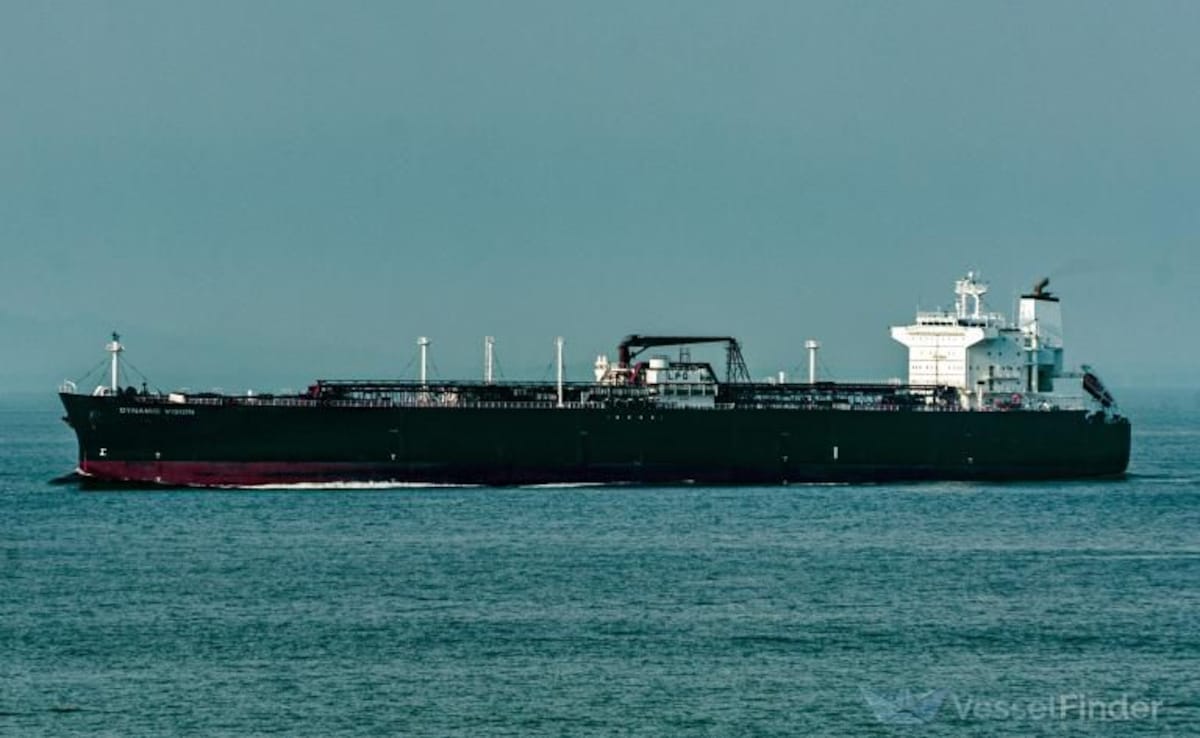
- Navigation Rigidity: Deep-draft VLCCs (Very Large Crude Carriers) possess limited maneuverability. Any attempt to deviate from the TSS to avoid a threat increases the risk of grounding or collision.
- Legal Ambiguity: While the United Nations Convention on the Law of the Sea (UNCLOS) provides for "transit passage," the overlapping Territorial Seas of littoral states provide a veneer of legal justification for boardings and inspections under the guise of environmental or safety regulations.
The Three Pillars of the European Security Pivot
The decision by London and Paris to move toward an active role in the Strait is driven by a breakdown in the previous security equilibrium. This pivot rests on three distinct pillars:
I. The Diversification of Deterrence
The traditional U.S. Fifth Fleet umbrella provided a singular, high-capacity deterrent. However, as U.S. strategic priorities shift toward the Indo-Pacific, a "deterrence gap" has emerged. The European contribution seeks to fill this void by providing a secondary layer of presence. This is not a replacement for U.S. power, but a diversification of the "flag" presence. By introducing UK and French assets, the geopolitical cost for an aggressor to intercept a vessel increases; they are no longer just Challenging a U.S. policy, but a broader international coalition with distinct diplomatic and economic levers.
II. The Insurance-Risk Feedback Loop
Maritime trade is governed by the Joint War Committee (JWC) of the Lloyd’s Market Association. When the Strait is designated a "listed area," insurance premiums (Additional Premium or AP) for hull and machinery spike. These costs are eventually passed to the consumer. A visible, persistent naval presence from major European powers acts as a market stabilizer. The primary objective of "contributing to safe passage" is the reduction of the perceived risk coefficient, which in turn prevents the decoupling of global energy prices from their fundamental supply-demand curves.
III. Technical Interoperability and Surveillance Gaps
Modern maritime security is as much about the "kill chain" of data as it is about physical weaponry. The UK and France bring specific high-end capabilities to the region:
- Type 45 Destroyers (UK): Specialized in Area Air Defence, capable of tracking hundreds of targets simultaneously to counter swarm-drone threats.
- FREMM Frigates (France): Advanced anti-submarine and electronic warfare suites designed to detect silent threats in the cluttered acoustic environment of the Gulf.
- Integrated Maritime Domain Awareness (MDA): The sharing of satellite and signals intelligence between these nations creates a more granular "Common Operating Picture" (COP), reducing the "blind spots" that asymmetric actors exploit.
The Cost Function of Naval Escorts
Providing "safe passage" is an expensive and resource-intensive operation. The logistical burden follows a non-linear growth pattern based on the volume of shipping.
The Security Efficiency Ratio ($SER$) can be conceptualized as:
$$SER = \frac{V_p}{R_a \times T_c}$$
Where:
- $V_p$ = Volume of protected tonnage
- $R_a$ = Rate of active threats in the sector
- $T_c$ = Tactical cycle time (the time a naval asset is tied to a specific convoy)
As the number of required escorts increases, the tactical cycle time rises, eventually leading to "asset exhaustion." This is why France and the UK are emphasizing "contribution" rather than total "ownership" of the problem. They are seeking to optimize the $SER$ by utilizing a "picket" system—positioning assets at high-risk nodes—rather than a direct "tethered" escort for every individual tanker.
Structural Obstacles to European Efficacy
Despite the high-level political commitment, several friction points limit the effectiveness of this new security framework.
Command and Control (C2) Fragmentation
There is a persistent tension between the U.S.-led International Maritime Security Construct (IMSC) and the European-led Maritime Awareness in the Strait of Hormuz (EMASoH). The UK often bridges these two, but the lack of a unified C2 structure leads to redundancies in some sectors and gaps in others. This fragmentation allows an adversary to exploit "seams" in communication between different national naval components.
The Asymmetric Offset
The cost of the interceptor (e.g., a Sea Viper missile costing over £1 million) is orders of magnitude higher than the cost of the threat (e.g., a loitering munition costing $20,000). This economic asymmetry means that a prolonged engagement in the Strait favors the disruptor. Over time, the "contribution" of France and the UK faces a sustainability crisis unless it is coupled with a "left-of-launch" strategy—neutralizing the threat before it enters the maritime domain.
The Legal Trap of "Safe Passage"
France and the UK operate under strict Rules of Engagement (ROE). Unlike non-state actors or regional powers who may disregard international norms, European navies must navigate the narrow corridor between "proactive defense" and "unlawful escalation." This creates a tactical lag; a naval commander may have seconds to determine if an approaching fast-craft is a legitimate threat or a provocative feint.
The Strategic Shift from Defense to Resilience
The entry of the UK and France into a more active role signals that the Strait of Hormuz is no longer viewed as a "policed zone," but as a "contested environment." This necessitates a move toward maritime resilience rather than just maritime defense.
- Hardened Merchant Infrastructure: Future "contributions" will likely involve providing merchant crews with specialized training and non-kinetic defense systems (long-range acoustic devices, high-intensity lasers) to bridge the gap between a threat appearing and a naval asset arriving.
- Automated Escorts: Given the high cost of manning frigates, there is a push toward Unmanned Surface Vessels (USVs) acting as forward "sensors" for the French and British fleets. These USVs can maintain a 24/7 presence at a fraction of the operational cost of a manned vessel.
- Diplomatic De-escalation as a Force Multiplier: The European presence is intended to be "de-escalatory" by its very nature. By maintaining a presence that is distinct from the U.S. "maximum pressure" campaigns of the past, London and Paris attempt to provide a "middle way" that secures trade without triggering a full-scale regional kinetic conflict.
The Strategic Play
The commitment by the UK and France to the Strait of Hormuz is a calculated bet on the endurance of the international rules-based order. However, naval presence alone is a depreciating asset. To maintain the "Safe Passage" mandate, the next phase must involve the integration of AI-driven predictive modeling to anticipate threat patterns before vessels enter the TSS.
The move from reactive patrolling to predictive positioning is the only way to overcome the math of the $SER$. Stakeholders must now look toward a "Digital Strait" initiative, where real-time encrypted data sharing between merchant VLCCs and European naval assets becomes a mandatory prerequisite for transit. This would turn every commercial ship into a sensor node, effectively "crowdsourcing" the security of the world's most vital energy artery. The end state is not just more ships in the water, but a more intelligent, networked defense that makes the cost of disruption prohibitively high for any actor.