The Dislocation of Individual Utility and National Stability
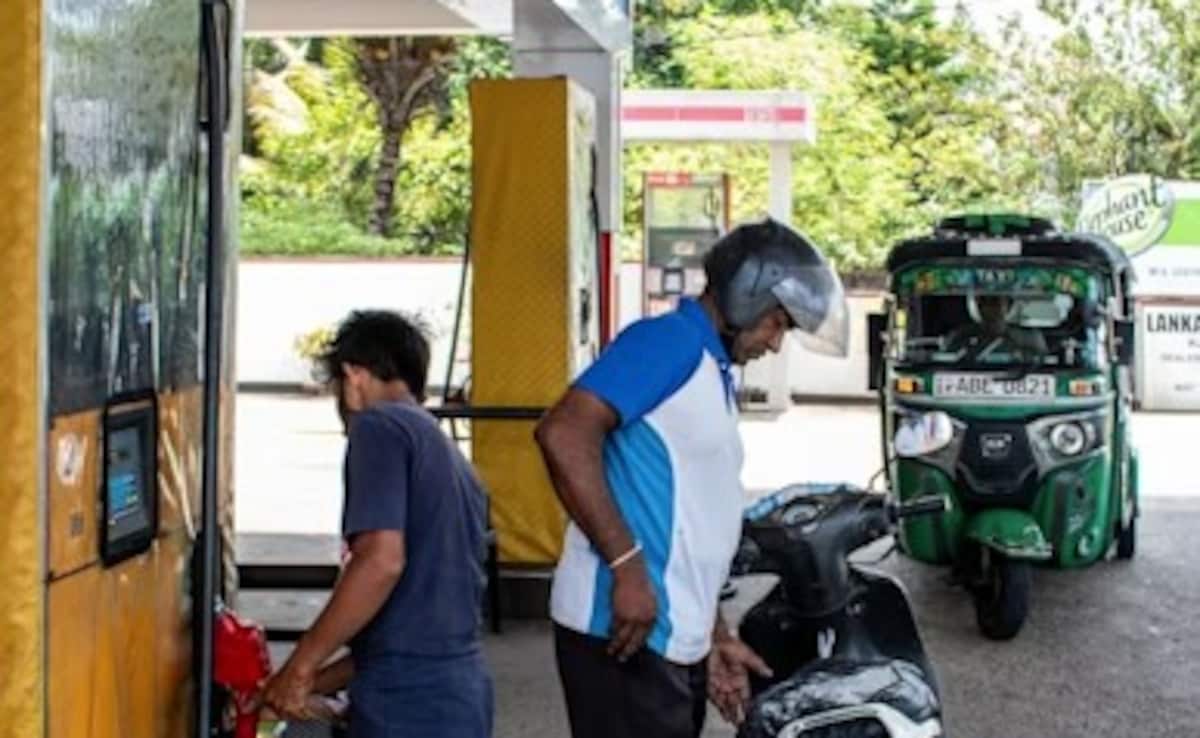
When a state face-plants into a foreign exchange crisis, the resulting fuel shortage is not merely a logistical failure; it is a breakdown of the social contract. In the case of Sri Lanka’s economic collapse, the arrest and imprisonment of an individual for possessing a mere four litres of petrol serves as a brutal case study in Command and Control Economics. While four litres—roughly one gallon—is a negligible volume in a global energy market, its value in a collapsed domestic market is infinite. The state’s decision to criminalize this micro-possession reveals a desperate shift from market-based distribution to coercive allocation.
This enforcement action highlights the "Tragedy of the Commons" in a hyper-localized context. When the national supply chain fails, individual actors naturally seek to de-risk their own survival through private stockpiling. However, when thousands of actors perform this "rational" individual action simultaneously, it accelerates the systemic collapse. The Sri Lankan judiciary's move to jail a citizen for such a small quantity is a signal of Extreme Deterrence Theory: the state is no longer punishing the volume of the theft from the collective pool, but the act of exiting the state-mandated rationing system itself. Learn more on a connected issue: this related article.
The Mechanics of the Sri Lankan Fuel Bottleneck
The crisis was rooted in a terminal depletion of foreign exchange reserves, which paralyzed the Ceylon Petroleum Corporation’s (CPC) ability to open Letters of Credit (LCs). This created a binary market: the Official Rationed Market and the Shadow Arbitrage Market.
The emergence of the shadow market is driven by three specific variables: More journalism by The New York Times highlights similar views on this issue.
- Price Disparity: The gap between the government-subsidized "pump price" and the "survival price" (what a delivery driver or fisherman is willing to pay to maintain their livelihood).
- Scarcity Rent: The profit margin extracted by "line-standers" or hoarders who convert time (spent in queues) into a liquid asset (petrol).
- Velocity of Despair: The rate at which public confidence in the next shipment erodes, triggering panic buying regardless of immediate need.
In this environment, four litres of petrol is not just fuel; it is a high-velocity currency. By hoarding, an individual is effectively shorting the state’s ability to provide, and the state, in turn, reacts with disproportionate legal force to protect the integrity of its rationing coupons.
The Cost Function of Civil Obedience
State stability relies on the majority of the population believing that the queue will eventually move. Once an individual perceives that "the queue is a lie," the incentive to hoard becomes mathematically superior to the incentive to obey.
The Calculus of the Hoarder
The decision to hoard can be modeled as a risk-reward equation:
$$U(h) = [V_s \cdot Q] - [P(a) \cdot C(p)]$$
Where:
- $U(h)$ is the Utility of hoarding.
- $V_s$ is the Value of the fuel in a scarcity environment.
- $Q$ is the Quantity hoarded.
- $P(a)$ is the Probability of arrest.
- $C(p)$ is the Cost of punishment (prison time, social stigma).
In the Sri Lankan scenario, as $V_s$ approached infinity due to the total absence of fuel, the $P(a) \cdot C(p)$ component had to be aggressively scaled by the government to maintain any semblance of order. Jailing someone for four litres is an attempt to artificially inflate $P(a)$ and $C(p)$ so high that even the smallest hoarding attempt becomes "irrational."
Structural Inefficiencies in State-Led Rationing
The Sri Lankan government implemented a QR-code-based rationing system to manage the flow of fuel. While technologically sound, this system failed to account for the informal economy's energy requirements. Small-scale entrepreneurs, who operate outside of formal registration, found themselves with zero legal allocation.
This created a "survival-driven" demand that the formal system could not satisfy. When the state treats survival as a criminal act, it inadvertently strengthens the black market. The four litres seized from the individual in question represents a "leakage" from the formal system. The state’s response—incarceration—is an attempt to plug this leakage through fear rather than through the restoration of supply.
The Deterrence Paradox
There is a point of diminishing returns in the use of legal force to manage economic shortages. If the punishment for hoarding four litres is the same as the punishment for hoarding forty litres, the incentive shifts toward large-scale, organized smuggling rather than petty stockpiling. This is the Deterrence Paradox: by being "tough" on micro-offenders, the state may inadvertently professionalize the black market.
The individual jailed for four litres is a "low-hanging fruit" for law enforcement. Capturing a major smuggler requires intelligence, resources, and often the confrontation of political corruption. Arresting a citizen with a jerry can is a performative act of "Order Maintenance" designed to satisfy a frustrated public, even if it does nothing to address the underlying supply deficit.
Operational Realities of the Energy Crisis
The crisis was exacerbated by a lack of strategic petroleum reserves (SPR). Most developed nations maintain at least 90 days of net imports in reserve. Sri Lanka was operating on a "just-in-time" basis with zero margin for error.
- The Infrastructure Gap: Sri Lanka’s sole refinery, Sapugaskanda, is aged and frequently shuts down due to its inability to process varied crude oil grades. This forces a reliance on more expensive refined product imports.
- Creditworthiness: The sovereign default meant that suppliers demanded "Cash in Advance" rather than the standard 30-to-90-day credit terms.
- The Dollarization of Fuel: Even though the fuel was sold in Rupees, it was bought in Dollars. Every litre hoarded was a direct drain on the central bank’s dwindling USD stack.
Strategic Pivot: Moving Beyond Coercion
For a state to recover from this level of economic dislocation, it must transition from Punitive Management to Market Restoration. The arrest of micro-hoarders is a symptom of a government that has lost its economic levers and is left only with its carceral ones.
The path to stabilization requires:
- Price Liberalization: Allowing the fuel price to reflect its true market value to kill the "Scarcity Rent" that motivates hoarding.
- Direct Cash Transfers: Instead of subsidizing fuel (which benefits the wealthy who own vehicles), the state should provide direct cash to the poor to offset the cost of inflation.
- Decentralized Importation: Breaking the monopoly of the state-owned CPC to allow private players to source fuel, thereby diversifying the risk of credit failure.
The incarceration of a man for four litres of petrol will be remembered as a footnote in Sri Lanka’s economic history, but it serves as a primary indicator of a state in a terminal defensive crouch. When the law is used to fight the laws of supply and demand, the law eventually loses. The strategic play for any administration in this position is not to increase the size of the prison cell, but to increase the transparency of the queue.
Establish a transparent, real-time audit of fuel arrivals and distribute that data to the public. Uncertainty is the fuel of hoarding; clarity is its extinguisher.