The headlines are screaming about a fourfold spike in Malaysia’s fuel subsidy bill. They blame the geopolitical furnace of the Middle East. They point to the Iranian conflict as an external monster eating the national budget.
This is a convenient lie. Don't miss our earlier article on this related article.
Blaming a war for a subsidy crisis is like blaming the rain for your leaky roof when you haven't patched the tiles in forty years. The "crisis" isn't the price of Brent crude; it’s the structural paralysis of a government terrified of its own shadow. We are told the rising bill is a threat to fiscal stability. The truth is much uglier: the subsidy itself is a slow-motion demolition of the Malaysian middle class, disguised as a gift.
The Myth of the "Protective" Subsidy
The standard narrative suggests that fuel subsidies protect the poor from inflationary shocks. It sounds noble. It’s also mathematically illiterate. If you want more about the history here, Reuters Business offers an in-depth summary.
In a blanket subsidy system, the person driving a $150,000 European SUV receives five times the financial benefit of the person riding a 110cc moped. Every time the government "stabilizes" the price at the pump, they are effectively transferring wealth from the tax base directly into the fuel tanks of the wealthy.
I’ve watched policy analysts wring their hands over "targeted subsidies" for a decade. They treat it like some unsolvable enigma of quantum physics. It isn't. The delay isn't due to technical limitations; it's due to the fact that the current system is a brilliant, if accidental, bribe. By keeping fuel artificially cheap, the state avoids having to build a world-class public transport system or address stagnant wage growth.
Why fix the economy when you can just make gasoline cheaper than bottled water?
The Iran Distraction
The current conflict involving Iran is being used as a scapegoat. Yes, volatility in the Strait of Hormuz sends jitters through the markets. Yes, the risk premium on a barrel of oil is real. But Malaysia is an oil and gas producer.
The disconnect is staggering. When global oil prices rise, Petronas—the national oil company—generates higher dividends. In a rational economic model, these windfall profits would be channeled into high-yield infrastructure, education, or the National Trust Fund (KWAN). Instead, we are stuck in a feedback loop where the more oil prices rise, the more the government has to burn those profits just to keep the price of RON95 stagnant.
We are cannibalizing our future to pay for today’s commute.
If the government were serious about fiscal resilience, they would stop treating the subsidy bill as a variable dictated by Tehran and start treating it as a policy failure dictated by Putrajaya. The "fourfold increase" is a choice. It is a choice to prioritize political survival over the sovereign credit rating.
The Smuggling Subsidy
Here is something the "market analysts" rarely mention in their sanitized reports: Malaysia isn't just subsidizing its own citizens. It’s subsidizing the entire regional black market.
When the price gap between Malaysian fuel and Thai or Indonesian fuel reaches a certain threshold, the border becomes a sieve. Thousands of liters of subsidized fuel vanish across the border every single day. We are essentially funding the logistics of neighboring countries' economies.
I’ve sat in boardrooms where the leakage is discussed in hushed tones as an "unavoidable externality." It’s not. It’s a direct consequence of price distortion. You cannot have a massive price delta in a globalized market and not expect arbitrage. By refusing to let the price float, the government is writing a blank check to smugglers.
The Opportunity Cost of Cheap Gas
Let's do the math that the mainstream media ignores. If the subsidy bill hits 50 billion ringgit, that is money not being spent on:
- Upgrading the power grid to handle the inevitable transition to electric vehicles.
- R&D grants for a manufacturing sector that is losing its competitive edge to Vietnam and Thailand.
- Universal healthcare improvements that are currently buckling under the weight of an aging population.
Instead, we turn that 50 billion into exhaust fumes.
Imagine a scenario where the government had the spine to implement a gradual, transparent float coupled with a direct cash transfer system. Not a "one-off" handout, but a permanent, indexed credit for the bottom 40% (B40) and middle 40% (M40). The noise at the pump would be loud, but the underlying economy would finally begin to breathe.
Instead, we get "rationalization" plans that are perpetually "under study." In government-speak, "under study" means "we are waiting for the next election to pass before we tell you the truth."
The Fear of Reality
The real reason the subsidy won't die is fear.
There is a deep-seated belief that the moment the price of fuel moves, the government falls. This assumes the Malaysian public is incapable of understanding complex trade-offs. It treats the electorate like children who need to be shielded from the sun by a paper umbrella that is currently on fire.
The "lazy consensus" says we must wait for a "stable" global environment before reforming. There is no such thing as a stable global environment. There is only the time you spend preparing and the time you spend reacting. Currently, Malaysia is in a permanent state of reaction.
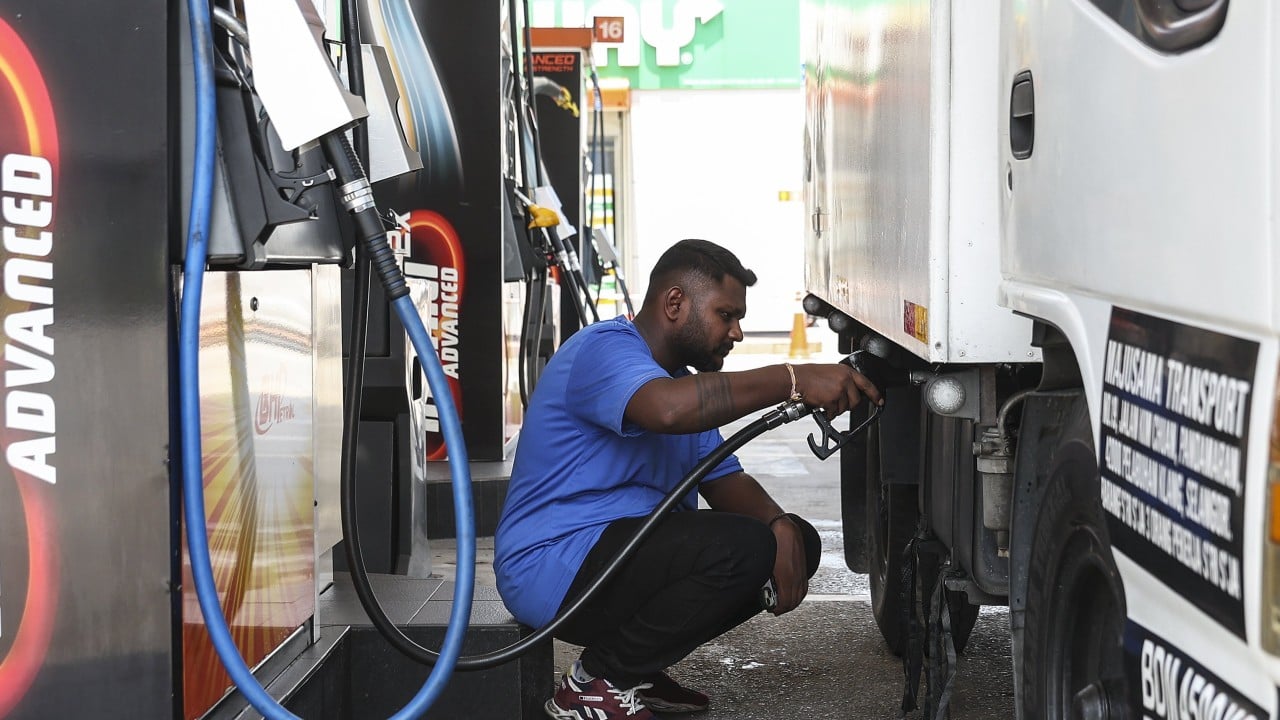
We are told that fuel prices drive inflation. While true, it is a narrow truth. Artificial price suppression drives inefficiency. When fuel is cheap, there is zero incentive for logistics companies to optimize routes. There is zero incentive for developers to build transit-oriented housing. We are building a country designed for a $30 barrel of oil in a world where $100 is the new baseline.
The Brutal Path Forward
If you want to actually "fix" the subsidy bill, you don't look at Iran. You look at the mirror.
- End the RON95/RON97 charade. The current distinction is a joke that high-income earners exploit by simply using the cheaper option.
- Automate the Target. Use the PADU database—if it actually works—to link fuel rebates directly to the car’s registration and the owner’s tax bracket at the point of sale. No more vouchers. No more manual claims.
- Kill the Dividend Dependency. Stop using Petronas as a piggy bank to cover up fiscal mismanagement.
The downside? It will hurt. Prices will go up. Middle-class families will have to rethink their second cars. But the alternative is a slow slide into a debt trap where the interest payments on our national debt eventually exceed our development budget.
The competitor articles will tell you that the "rising bill" is a tragedy. I’m telling you the rising bill is a symptom of a government that prefers a comfortable lie to a difficult truth.
The Iran war didn't break Malaysia’s budget. The refusal to evolve did.
Stop asking when the prices will go down. Start asking why you’re still okay with a system that pays for a millionaire's gas while the public hospitals run out of beds.
The bill is due. Pay it now, or your children will pay it with interest in a country that can no longer afford to keep the lights on.
Don't look at the tankers in the Persian Gulf. Look at the pump in front of you. That’s where the theft is happening.