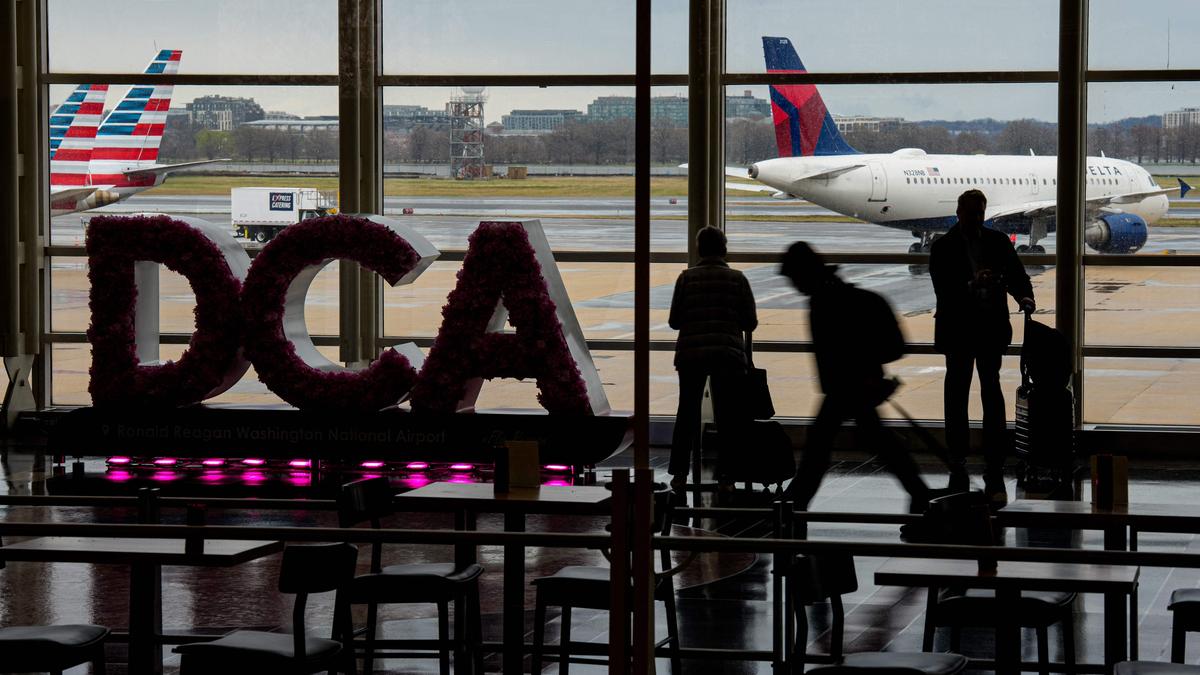
The departure board at Terminal 3 doesn't care about your sister’s wedding. It doesn’t acknowledge the business deal that took eight months to broker, and it certainly has no feelings about the fact that you haven’t seen your parents since before the world changed. When the pixels shift from a steady green "On Time" to a blinking red "Cancelled," the board is simply reporting a mathematical impossibility.
A flight is a promise made in kerosene and aluminum. Right now, over the Middle East, those promises are evaporating.
For most of us, the sky is an abstract concept. We look up and see blue, or grey, or the faint white stitches of a jet engine’s exhaust. We assume the path between London and Singapore, or New York and Dubai, is a straight line. It isn't. The sky is a complex jigsaw puzzle of invisible corridors, political permissions, and narrow gates. When a conflict escalates on the ground, those corridors don't just become dangerous. They vanish.
The Invisible Walls
Imagine driving a car across a vast, open desert. You assume you can go anywhere. Suddenly, giant, invisible glass walls drop from the sky. You have to slam on the brakes, turn around, and find a dirt road that adds six hours to your journey. That is the reality for every long-haul pilot navigating the airspace near Lebanon, Israel, and Iran this week.
Major carriers like Lufthansa, Air France-KLM, and United Airlines aren't just reacting to headlines. They are reacting to physics. When a missile battery is active or a drone swarm is detected, a 777 becomes a liability. The decision to ground a flight isn't usually made by a CEO in a high-rise office; it’s a calculation made by risk assessment teams who look at "Notams"—Notices to Air Missions—that flicker across their screens like a digital fever dream.
British Airways and Delta have joined the retreat, suspending routes to Tel Aviv and Amman. These aren't just lines on a map being erased. They are lifelines.
Consider a hypothetical traveler named Elias. Elias is a software engineer in London. His mother is in Beirut. For Elias, the "escalation of regional tensions" isn't a headline in the Financial Times. It is the sound of a dial tone. It is the three days he spent trying to find a seat on a Middle East Airlines flight that wasn't already triple-booked by people more desperate than him. When the sky closes, the world shrinks. We are reminded, violently, that our global connectivity is a fragile luxury, not a birthright.
The Math of the Long Way Around
Airlines are businesses built on razor-thin margins. Fuel is the largest expense. When the direct route over the Eastern Mediterranean is blocked, planes have to go the long way. They fly over Egypt, or swing wide around the southern tip of the Arabian Peninsula.
This creates a brutal chain reaction.
A flight that used to take seven hours now takes nine. Those extra two hours burn through thousands of gallons of additional fuel. The crew hits their "timeout" limit sooner, meaning the airline needs more pilots and flight attendants to cover the same number of routes. The plane that was supposed to turn around and head to Chicago is now stuck in a holding pattern or sitting on a tarmac in Cyprus, waiting for a window that might never open.
Data from flight tracking services shows a haunting image: a massive, empty hole in the sky where some of the world’s busiest air corridors used to be. The traffic hasn't stopped; it has just bunched up at the edges, like water trying to squeeze through a clogged pipe. This congestion leads to delays in places that have nothing to do with the conflict. Your flight from Frankfurt to Tokyo is late because the plane was diverted three days ago on a completely different continent.
The Human Cost of Disconnection
We live in an era where we expect the world to be accessible at the click of a button. We buy a ticket, we show up, we fly. We have forgotten that aviation is a miracle of cooperation. It requires nations that hate each other to agree on radio frequencies and altitude separations.
When that cooperation breaks down, the "human element" becomes a series of frantic phone calls. It’s the student who can’t get back to university. It’s the doctor whose medical conference is cancelled. It’s the family sitting on their suitcases in an airport terminal, watching the sun go down, wondering if they should go home or sleep on the floor.
The uncertainty is the worst part.
Airlines often cancel flights in rolling 24-hour windows. They hold out hope that the situation will stabilize, only to pull the plug at the last minute. This leaves travelers in a state of suspended animation. You are packed, you are ready, but you are nowhere. You are caught in the friction between geopolitics and gravity.
The New Shape of Global Travel
The geography of the 21st century is no longer defined by mountains and oceans. It is defined by "Safe Airspace."
We are seeing a permanent shift in how we move across the planet. Some routes may never go back to the way they were. Just as the closure of Russian airspace forced flights between Europe and Asia to add hours of travel time, the instability in the Middle East is carving new, more expensive, and more exhausting paths into our schedules.
The cost of these cancellations ripples outward. Insurance premiums for aircraft rise. Ticket prices follow. The "security surcharge" becomes a standard line item on your receipt. But the true cost isn't found in the bank statement of a multi-national corporation.
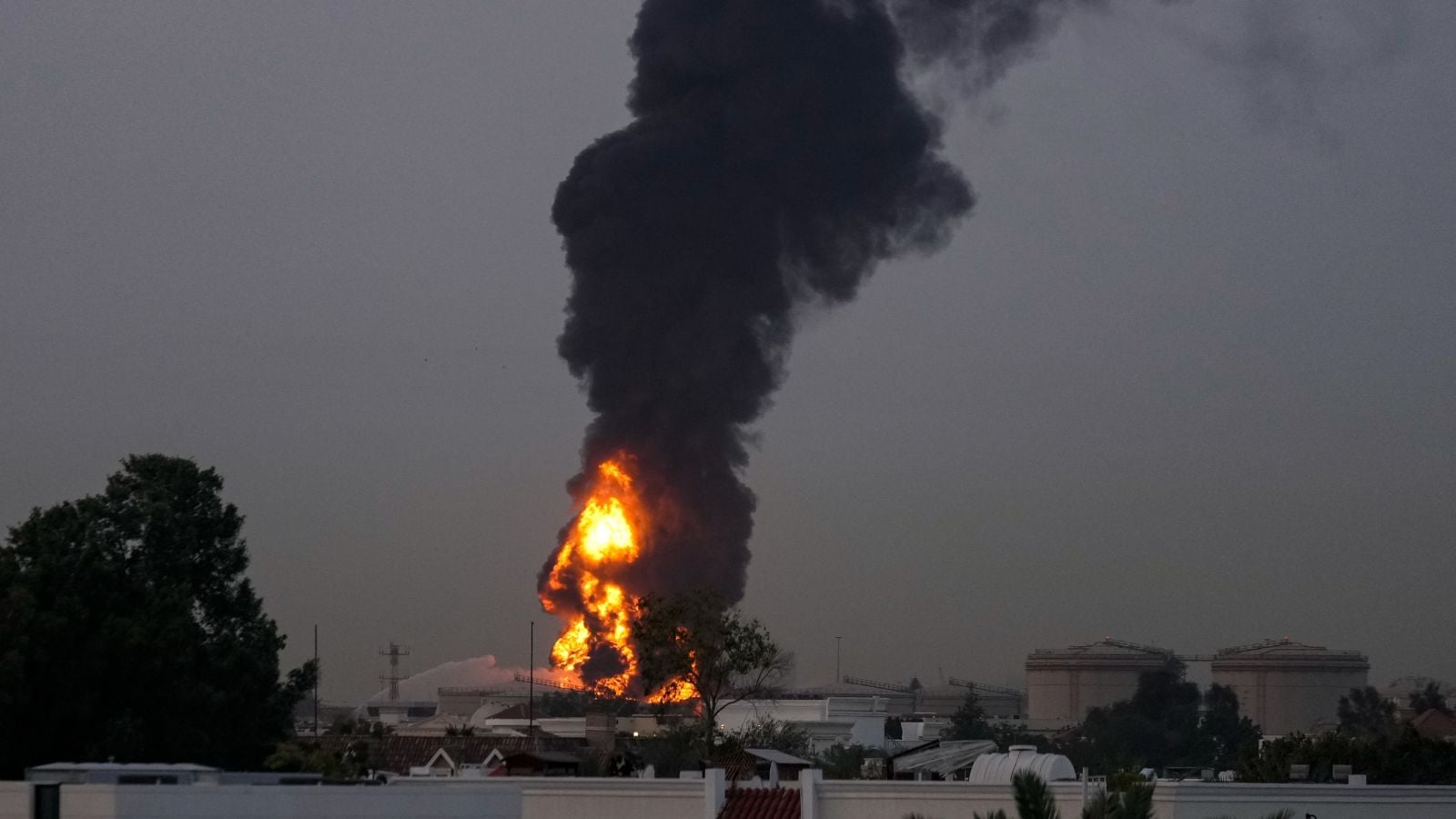
It is found in the quiet moments of a father who has to explain to his daughter why they aren't going to see their cousins this year. It is found in the exhaustion of a flight crew that has spent twelve hours in a cockpit navigating around a war zone they can see from thirty thousand feet—a series of silent flashes on a dark horizon.
The map is changing. The sky is getting bigger, the world is getting smaller, and the lines that connect us are fraying. We are learning, once again, that the shortest distance between two points is not a straight line. It is a peace treaty.
The departure board flickers again. Another flight vanishes. Somewhere, a traveler sighs and begins the long walk back to the taxi stand, their suitcase feeling much heavier than it did an hour ago.