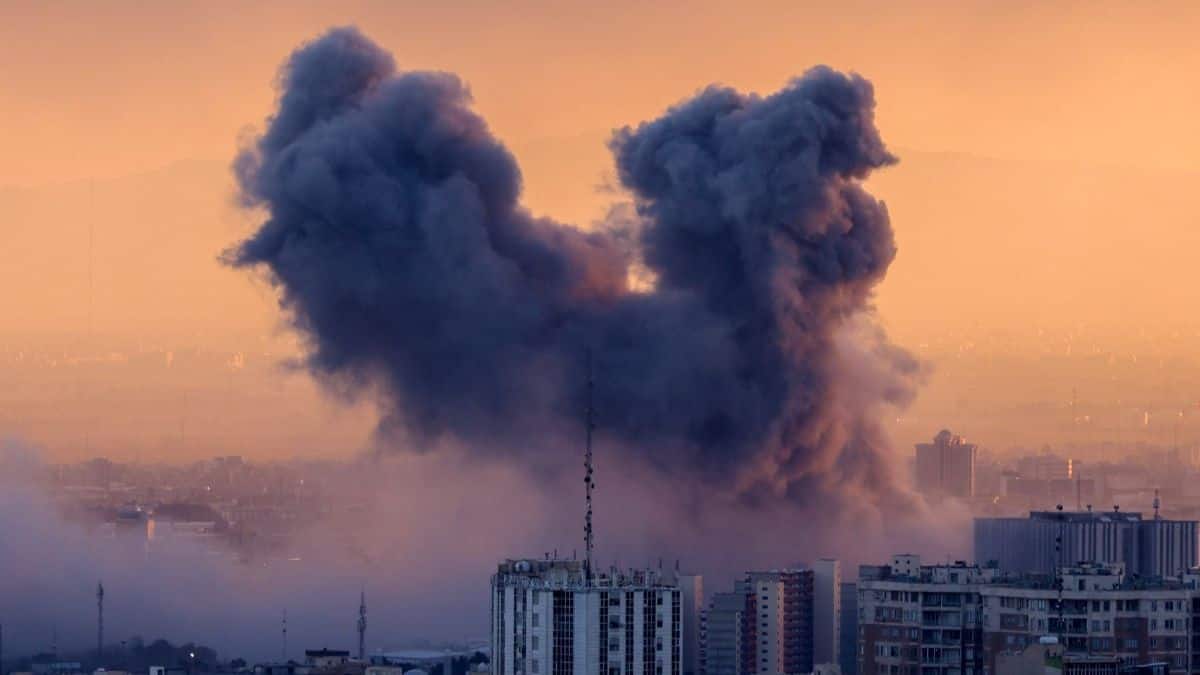
The windows in Tehran don’t just rattle anymore; they hum with a frequency that feels like it’s vibrating inside your marrow.
For decades, the geopolitical tension between the United States and Iran has been a slow-motion chess match played in the shadows of backroom diplomacy and proxy skirmishes. But the "Epic Fury" operation changed the physics of the game. It wasn't a skirmish. It was a surgical dissection of a regime’s nervous system, executed with a precision that makes old-school carpet bombing look like a blunt stone tool.
Consider a young woman named Samira—a hypothetical but representative soul in the heart of the capital. She isn't a politician. She’s a graphic designer who wants to drink her coffee and hope the internet stays on long enough to upload a file to a client in Dubai. When the American "blitz" began, Samira didn't hear a whistle and a bang. She heard the sound of the 21st century collapsing.
The Ghost in the Machine
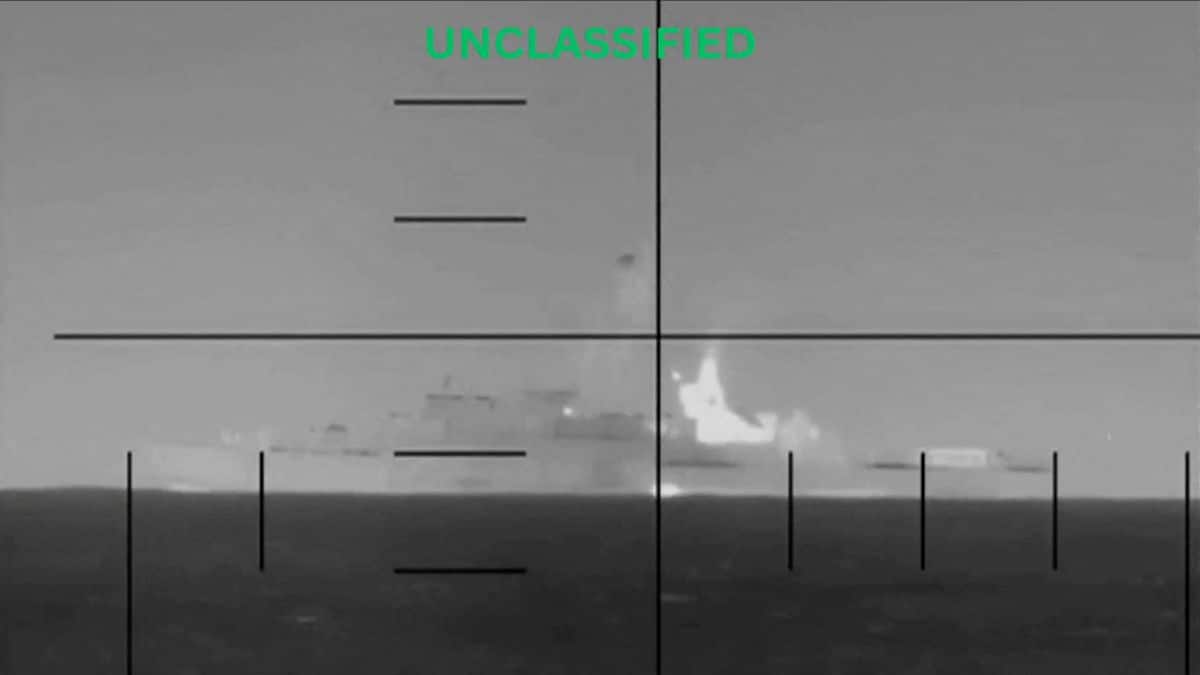
The U.S. military didn't just drop explosives. They dropped a message. By targeting the IRGC’s command and control centers with "Epic Fury," the Pentagon demonstrated that the "impenetrable" shield of the regime was effectively a screen door.
The technical term is "integrated kinetic and non-kinetic effects." In plain English? It means the Americans turned off the lights, scrambled the radios, and then hit the targets before anyone could even find a flashlight. This wasn't about leveling cities. It was about proving that the regime’s grip on power is a digital illusion that can be deleted with a keystroke and a drone.
The air was thick with the smell of ozone and burnt insulation. This is the reality of modern warfare. It’s clean for the attacker and psychologically devastating for the defender. When your most elite defensive units can’t even communicate with the battery next door, the "Great Satan" starts looking less like a propaganda bogeyman and more like an invisible, inescapable force.
A Lion in the Rose Garden
While the smoke was still rising, Donald Trump took to the digital stage. His message to the Iranian people wasn't a standard diplomatic communique. It was an invitation to an uprising.
"Now is your chance," he told them.
It is a heady, dangerous proposition. To a Westerner sitting in a comfortable armchair, it sounds like a movie trailer for a revolution. To someone like Samira, it sounds like a tightrope walk over a canyon. For forty years, the Iranian people have lived under a government that views dissent as a terminal illness. The scars of 2009 and 2022 are still fresh. They are deep.
Trump’s rhetoric rests on a singular, massive gamble: that the pain of staying the same has finally outweighed the fear of change. He is betting that the "Epic Fury" operation didn't just destroy missile silos, but that it cracked the foundation of the regime’s internal terror. If the IRGC cannot protect its own headquarters from a drone, how can it hope to police every alleyway in Isfahan?
The Calculus of Courage
We often speak of "regime change" as if it’s a menu option at a restaurant. It isn't. It is a violent, chaotic rebirth.
The facts on the ground are stark. Iran’s economy has been in a state of managed collapse for years. The rial is a ghost of a currency. Inflation has turned meat into a luxury and hope into a commodity. When a superpower systematically dismantles the military infrastructure of your oppressors, a vacuum is created.
Nature hates a vacuum. So does power.
The invisible stakes here aren't just about who sits in the seat of government in Tehran. They are about the ripples that move through the entire Middle East. If the Iranian regime falls—or even if it is forced to retreat into a defensive crouch—the lifeblood of groups like Hezbollah and the Houthis begins to dry up.
Imagine a map of the region where the red veins of influence suddenly turn gray. That is the "Epic Fury" objective. It is a decoupling of a revolutionary state from its regional reach.
The Mirror of History
It is tempting to look at this through the lens of 1953 or 1979. We love cycles. We love to say that history repeats itself. But history doesn't repeat; it rhymes, and this rhyme is being written in code and carbon fiber.
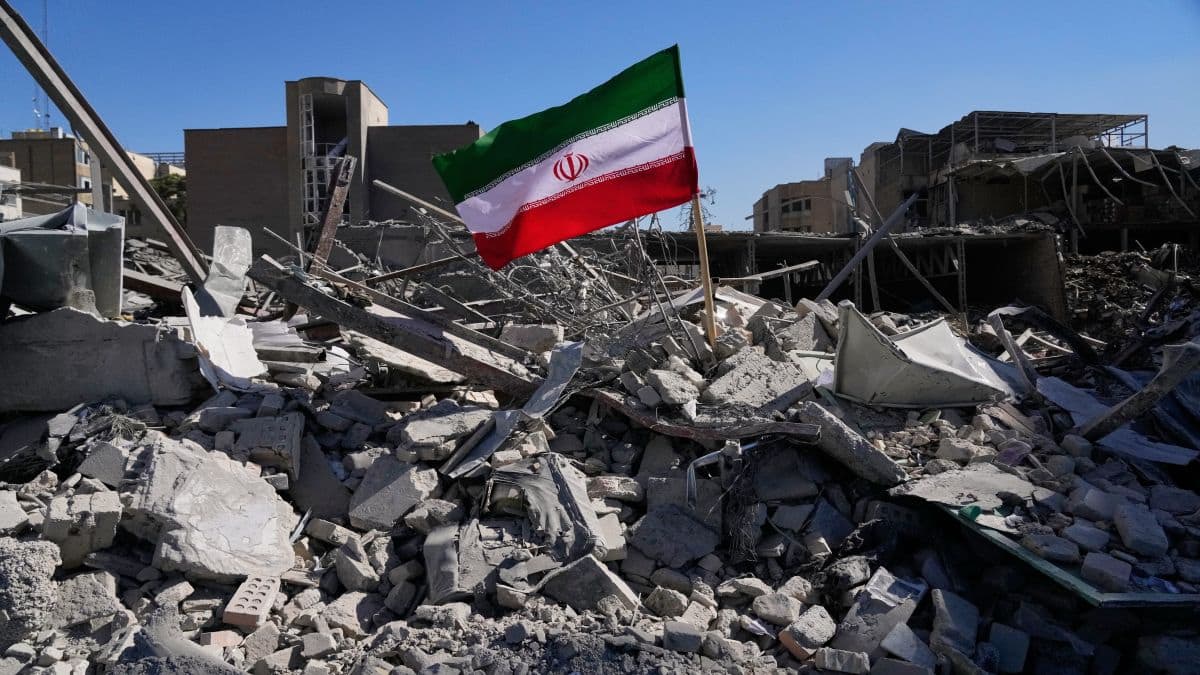
In the past, a "blitz" meant thousands of casualties and scorched earth. Today, the U.S. can target a specific room in a specific building while the bakery across the street stays open. This creates a bizarre, surreal atmosphere. You can watch the end of an era from your balcony while checking your social media feed.
But the "human-centric" reality is that a revolution isn't won by drones. It is won by people who decide they are no longer afraid of the person holding the baton. Trump’s call to "take over the country" is an attempt to capitalize on a moment of profound vulnerability. He is using the military as a giant, high-tech crowbar to pry open a door that has been locked for two generations.
The Weight of the Silence
After the explosions stop, there is a specific kind of silence that follows. It isn't the silence of peace. It’s the silence of a breath being held.
The Iranian regime is not a monolith of incompetence. They are survivors. They have spent decades learning how to endure pressure. They will likely respond with a mixture of domestic crackdowns and asymmetric "pinpricks" abroad. They will try to prove they are still relevant, still dangerous, and still in control.
But you cannot un-ring the bell of "Epic Fury."
Every Iranian general now knows that his coordinates are a matter of public record in a server farm in Virginia. Every citizen now knows that the "iron fist" of the state can be bypassed by a teenager with a satellite link or a stealth bomber that doesn't show up on a 1980s-era radar screen.
The stakes are personal. They are as small as Samira’s morning coffee and as large as the global oil supply.
When the U.S. military "blitzes" a nation, they aren't just hitting targets. They are reshaping the psychology of a population. They are asking a question that has no easy answer: If the walls are crumbling, do you run outside, or do you try to hold up the ceiling?
The night sky over Tehran didn't just burn with the light of missiles. It burned with the realization that the old world is gone. What replaces it isn't written in a Pentagon briefing or a presidential tweet. It’s being decided right now, in the quiet conversations between neighbors who are tired of being afraid, looking at the smoke on the horizon and wondering if this is finally the dawn.
The hum in the windows has faded, but the air still feels electric, like a storm that hasn't quite finished passing through.
You can smell the rain coming, but you don't know if it will bring life or a flood.