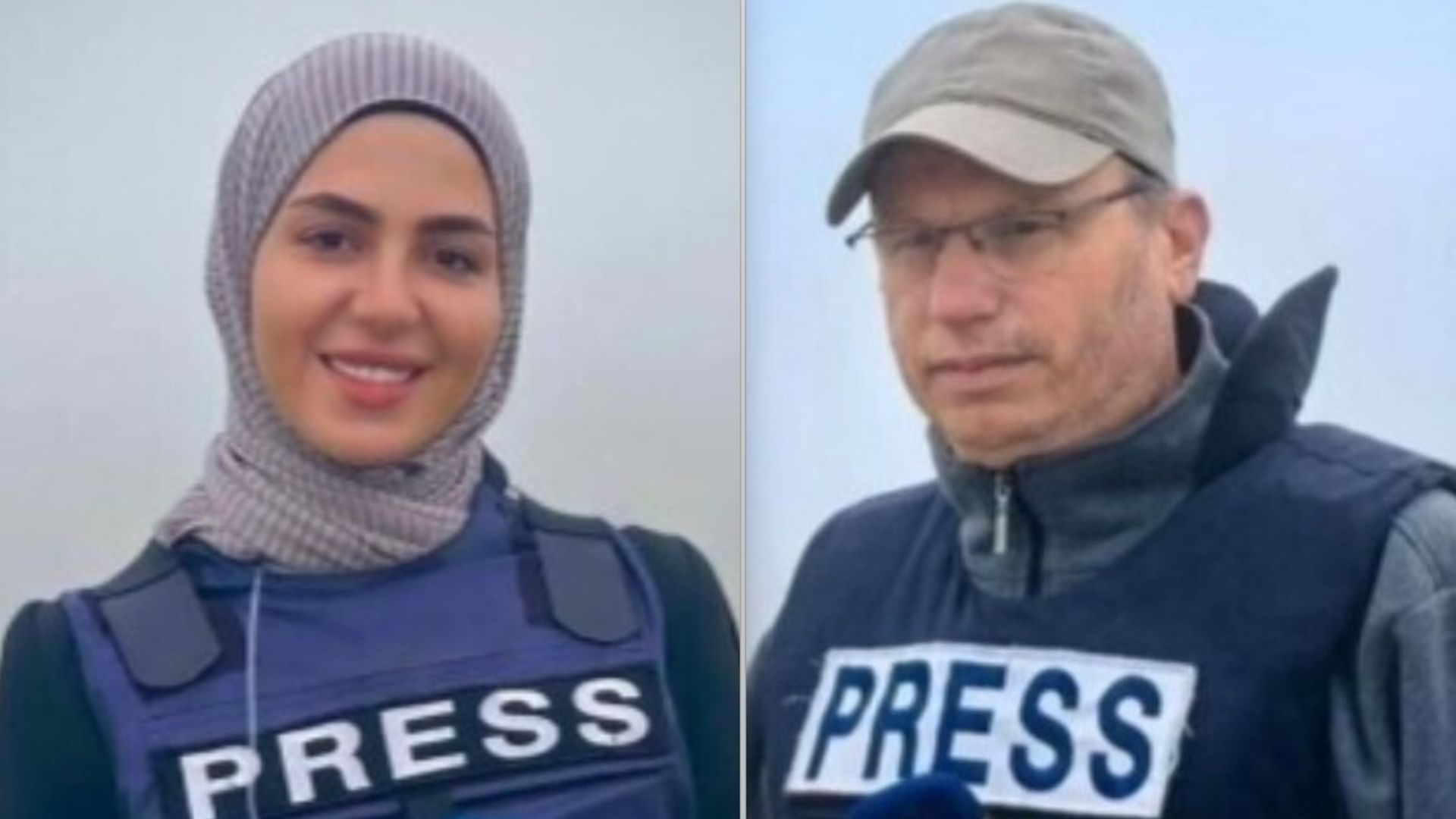
The targeted or incidental destruction of media personnel in active war zones represents more than a humanitarian crisis; it signifies a systemic failure in the deconfliction mechanisms designed to separate non-combatant observers from military objectives. When a vehicle carrying three Lebanese journalists is neutralized by an airstrike, the event is rarely an isolated tactical error. It is the result of a breakdown in one of three critical operational pillars: identification protocols, real-time intelligence verification, or the political weight assigned to the "Press" designation within a specific Rules of Engagement (ROE) framework.
The Mechanics of Deconfliction Failure
In modern kinetic environments, the safety of a journalist relies on a process known as deconfliction. This is the systematic sharing of coordinates and movement plans between non-governmental entities and military command centers to prevent "blue-on-blue" or accidental targeting. You might also find this connected story useful: The $2 Billion Pause and the High Stakes of Silence.
The failure of this system generally follows a predictable causal chain:
- Signal Degradation: The physical markers of a press vehicle—large "PRESS" decals, specialized license plates, or roof-mounted identifiers—are often bypassed by high-altitude Unmanned Aerial Vehicles (UAVs) relying on thermal imaging or electronic signatures rather than visual spectrum confirmation.
- Intelligence Latency: If a vehicle is flagged as suspicious due to its proximity to a launch site or a known insurgent transit route, the time required to cross-reference that vehicle against a database of registered media personnel often exceeds the window for a "time-sensitive target" strike.
- Targeting Logic Overlap: In asymmetric warfare, the distinction between a civilian vehicle and a combatant transport is functionally non-existent to an algorithm or an operator looking at heat signatures. If the ROE prioritizes the neutralization of "fleeing threats" over the "positive identification of non-combatants," the probability of a lethality event for journalists increases exponentially.
The Tactical Vulnerability of Mobile Reporting
Movement is the highest risk variable for media operating in Southern Lebanon or similar contested corridors. A stationary office is a known coordinate; a moving car is a dynamic variable. The vulnerability of the three journalists killed in the recent strike can be quantified through a Risk Coefficient ($R$) determined by several environmental factors: As extensively documented in latest reports by Reuters, the effects are significant.
$$R = \frac{V \cdot P}{C \cdot D}$$
Where:
- $V$ = Velocity and unpredictability of the route.
- $P$ = Proximity to active combatant infrastructure (launchers, tunnels, or command nodes).
- $C$ = Clarity of non-combatant signaling (visual and electronic).
- $D$ = Density of active electronic warfare (jamming that prevents GPS or cellular deconfliction).
When $D$ is high, as is common in Israeli-Lebanese border operations, the ability of a journalist to broadcast their position to a "No-Strike List" database is compromised. This creates a "blind transit" scenario where the military actor perceives any movement in a sanitized zone as inherently hostile.
The Erosion of Protected Status under Asymmetric ROE
International humanitarian law provides a theoretical shield for journalists, categorizing them as civilians. However, the operational reality in the Levant suggests a shift toward a "Guilt by Proximity" doctrine. Under this framework, the presence of a journalist in a restricted military zone is treated not as a neutral observation, but as a tactical complication that may be disregarded if the perceived military advantage of the strike is high enough.
The legal threshold for "Proportionality" often fails the journalist. If a military commander believes a high-value target is within the same vicinity as a media vehicle, the "collateral damage estimation" (CDE) might allow for the strike regardless of the presence of "PRESS" markings. This suggests that the "Press" designation is no longer a hard barrier, but a soft variable in a cost-benefit calculation.
Technical Limitations of Visual Identification
Human-in-the-loop targeting is increasingly supplemented by automated target recognition (ATR). These systems are trained to identify patterns. A vehicle traveling at specific speeds between known Hezbollah strongholds may trigger an automated engagement prompt.
The limitations of these systems are three-fold:
- Resolution Constraints: At high altitudes, "PRESS" lettering on the hood of a car is often indistinguishable from random geometric noise or camouflage.
- Thermal Masking: The heat signature of a civilian sedan and a vehicle modified for tactical use is nearly identical.
- Contextual Blindness: AI-driven targeting cannot interpret the "intent" of a vehicle's occupants. It only measures the "behavior" of the platform.
The Intelligence Gap: Verification vs. Execution
The primary friction point in the deaths of these journalists lies in the verification phase of the "Find, Fix, Track, Target, Engage, Assess" (F2T2EA) cycle.
- Find/Fix: The vehicle is spotted by a Heron or Hermes drone.
- Track: The drone follows the vehicle to ensure it isn't an decoy.
- Target: The decision is made to engage. This is where the failure occurs. If the intelligence layer responsible for checking the "No-Strike List" is bypassed due to "operational urgency," the strike proceeds.
This "urgency bypass" is becoming the standard rather than the exception in high-intensity urban and rural skirmishes. When the time-to-impact is measured in seconds, the bureaucratic layer of verifying civilian status is the first to be discarded.
Strategic Implications for Media Safety Protocols
The current model of "passive protection"—wearing a blue vest and driving a marked car—is obsolete in a theatre dominated by autonomous sensors and high-altitude precision munitions. To mitigate the risk of "kinetic misidentification," media organizations must shift toward an "active integration" model.
This involves:
- Transponder Integration: Utilizing encrypted, low-probability-of-intercept (LPI) transponders that feed directly into the regional Air Operations Center (AOC).
- Pre-Approved Transit Corridors: Moving away from "freelance" movement toward established, verified routes that are monitored by third-party neutral observers.
- Real-time Telemetry Sharing: Providing live GPS feeds to all belligerents simultaneously, removing the "fog of war" excuse for misidentification.
The death of journalists in Lebanon highlights that the "Press" vest is no longer armor; it is merely a data point that is frequently ignored by the algorithms of modern warfare. Organizations must either adopt military-grade deconfliction technology or accept that every "marked" vehicle is a high-probability target in a sanitized kill zone.
Implement a dual-layer deconfliction strategy: combine physical visual markers with a dedicated, persistent electronic beacon (SQUAWK) registered with the regional command's deconfliction cell. Failure to broadcast a digital identity in an ATR-dominated environment is equivalent to operational invisibility.
Would you like me to analyze the specific electronic deconfliction hardware currently available for non-governmental organizations in high-threat environments?