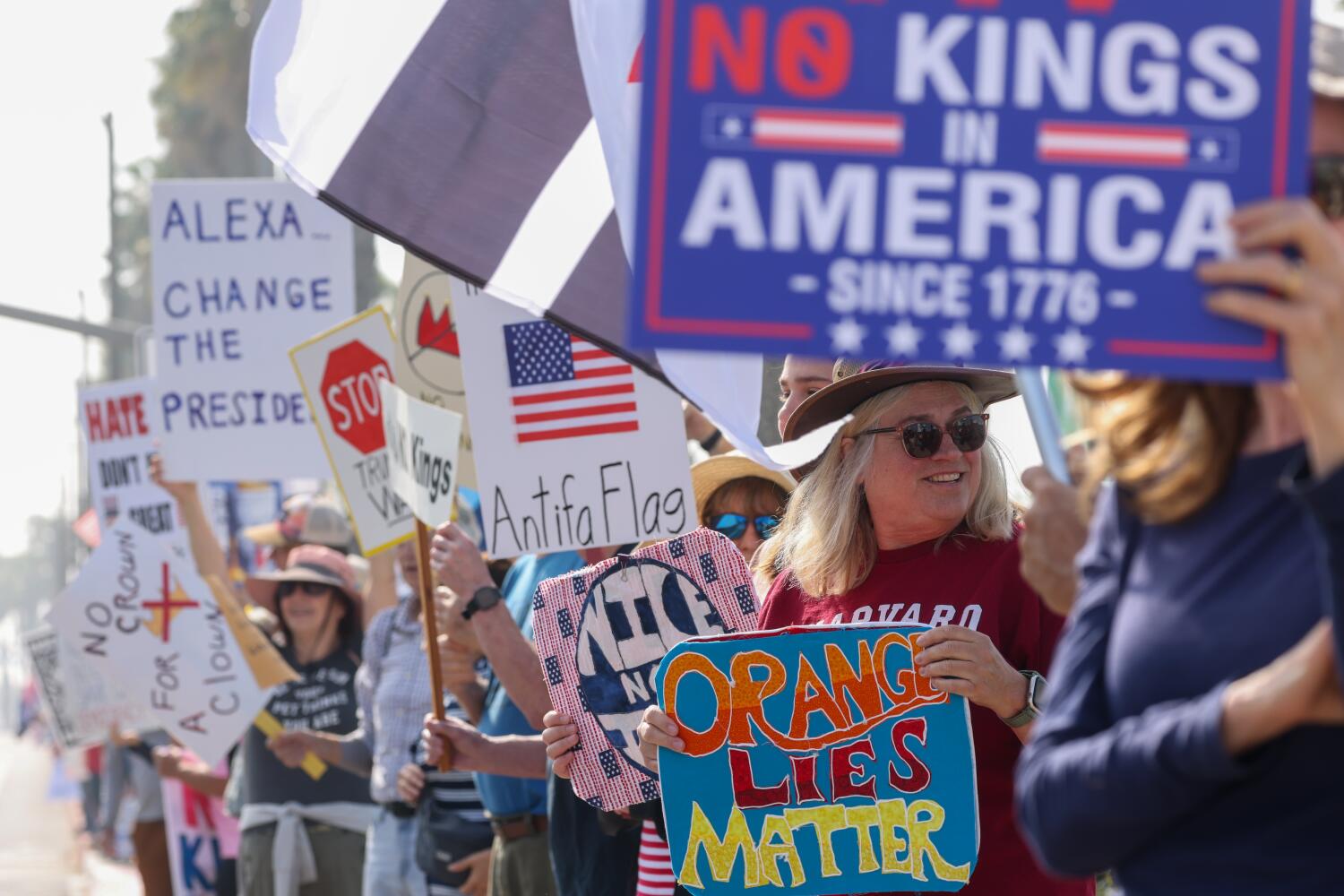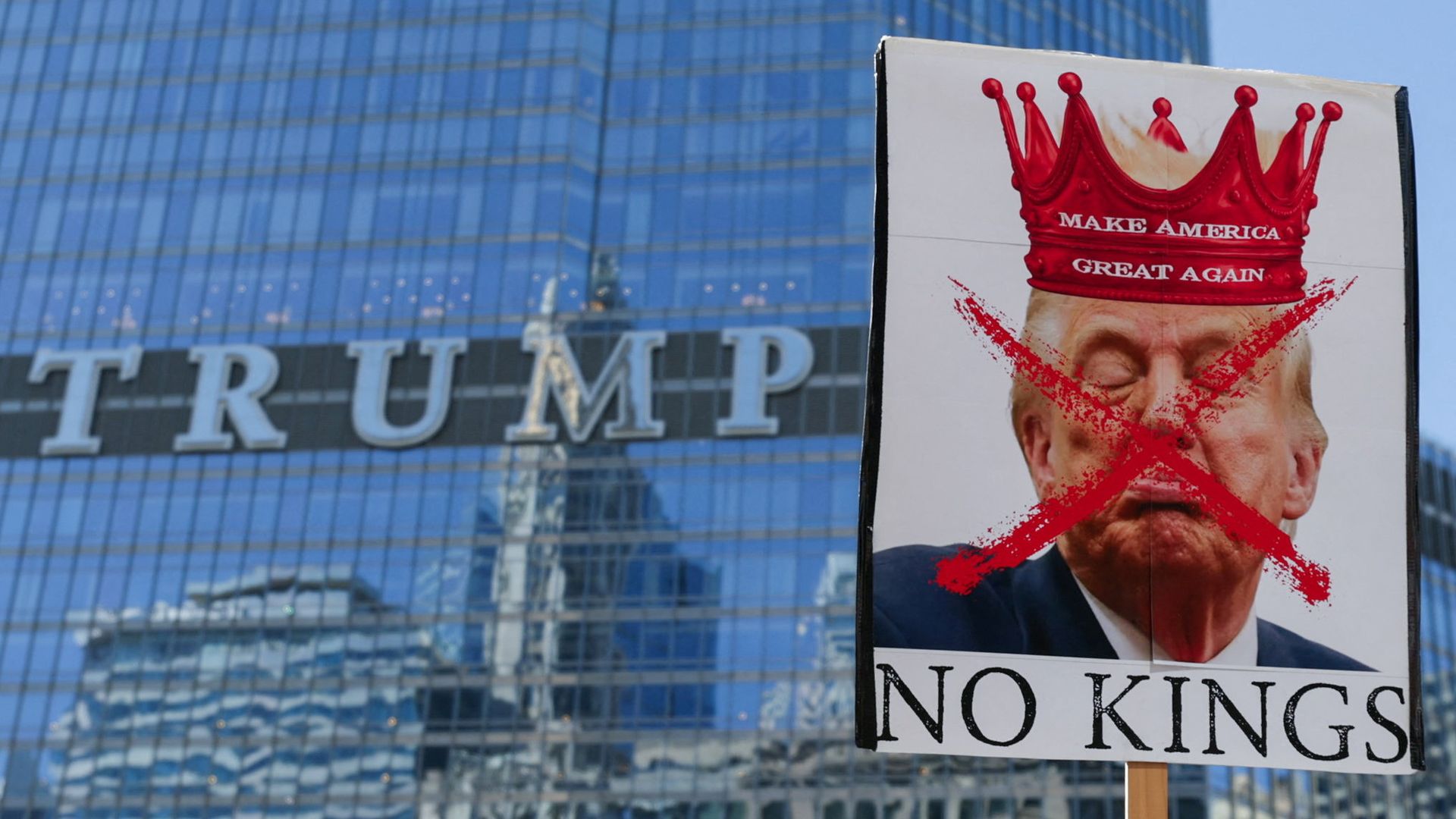
The rapid mobilization of the "No Kings" rallies across major American urban centers represents a predictable response to a perceived shift from a constitutional republic toward an unchecked executive model. To analyze these events through a strategic lens, one must look past the optics of "large crowds" and examine the underlying mechanics: the activation of specific civic networks, the resource cost of sustained dissent, and the legal framework that serves as the movement’s primary friction point. The movement is not merely a collection of grievances but a synchronized attempt to re-assert the separation of powers through public pressure and legal precedent.
The Tripartite Framework of Democratic Friction
The "No Kings" movement operates on three distinct pillars that dictate its effectiveness and longevity. When any of these pillars weaken, the movement shifts from a strategic threat to a symbolic gesture. Learn more on a similar issue: this related article.
1. The Jurisdictional Buffer
Protests are most frequent in "Blue City" enclaves within "Red States" or deep-blue coastal hubs. This creates a jurisdictional buffer where local law enforcement and municipal governments are ideologically aligned with the protesters. This alignment reduces the "cost of participation" by minimizing the risk of aggressive policing or legal retribution, thereby increasing the raw numbers seen in the streets of New York, Chicago, and Los Angeles.
2. The Institutional Counterweight
The movement relies on the "No Kings" moniker as a direct reference to the Supreme Court’s rulings on presidential immunity. The logic suggests that if the judiciary provides a pathway for expanded executive power, the public must act as the ultimate check. This is an application of the Social Contract Theory, where the populace signals that the perceived breach of constitutional norms has invalidated the silent consent of the governed. Additional analysis by Reuters highlights comparable perspectives on this issue.
3. The Network Effect of Professional Activism
The speed at which these rallies appeared—within days of major political shifts—indicates a high level of "pre-existing infrastructure." This includes mailing lists, digital coordination platforms, and funding for logistics like permits and sound equipment. The "No Kings" rallies are a product of professional civic organizations leveraging a moment of high emotional volatility to convert digital engagement into physical presence.
Quantifying Crowd Density and Participation Velocity
The competitor narrative focuses on the adjective "large," which lacks analytical utility. To understand the scale, we must evaluate Participation Velocity: the rate at which an organization can move individuals from a "passive observer" state to an "active participant" state.
Crowd dynamics are governed by the Jacobs Method, which calculates density based on the number of people per square meter. In high-density protest zones, this often reaches $1 \text{ person per } 4.5 \text{ square feet}$. In the recent rallies, the density was concentrated at transit hubs and historic civic plazas, suggesting a strategy of "Maximum Visibility" rather than "Maximum Occupancy." By occupying high-traffic areas, the movement achieves a disproportionate psychological impact compared to the actual percentage of the population involved.
The Economic and Social Cost of Sustained Dissent
Mass mobilization is not a zero-cost activity. It requires an immense expenditure of "Civic Capital." The sustainability of the "No Kings" movement depends on the following variables:
- Opportunity Cost: For every hour a participant spends at a rally, they sacrifice labor or leisure. High-frequency protesting usually leads to "activism fatigue," where the marginal utility of the tenth protest is significantly lower than the first.
- Media Saturation: The movement faces a declining rate of return on media attention. As rallies become a recurring feature of the urban environment, their "newsworthiness" drops, forcing organizers to either escalate their tactics or broaden their coalition to maintain relevance.
- Legal Friction: While the First Amendment protects the right to assemble, the "No Kings" movement specifically targets the executive branch's use of the Department of Justice. The strategy here is to create a "Public Record of Dissent" that can be cited in future litigation regarding executive overreach.
The Logic of the "No Kings" Nomenclature
The choice of "No Kings" as a slogan is a deliberate linguistic tool designed to bypass partisan labels and appeal to foundational American mythology. It frames the current executive branch not as a political opponent, but as an existential threat to the concept of $Lex \text{ Facit Regem}$ (The Law Makes the King).
By using this framing, the movement attempts to:
- Neutralize the "Partisan" Accusation: By framing the protest around the concept of monarchy versus republic, they aim to attract constitutional conservatives who may be wary of executive expansion.
- Define the Legal Stakes: The slogan directly references the Trump v. United States immunity ruling. It serves as a shorthand for the argument that the President should be subject to the same criminal code as any other citizen.
Strategic Bottlenecks and Failure Points
Despite the visual scale of the rallies, the movement faces significant structural bottlenecks. The first is the Centralization Trap. If the movement remains centered in coastal cities, it fails to influence the legislative actors in the "swing" districts who actually hold the power to check the executive.
The second bottleneck is the Lack of a Legislative Vehicle. A protest without a corresponding bill, impeachment inquiry, or court filing is merely a data point in a poll. For the "No Kings" movement to transition from a news cycle to a policy shift, it must coordinate with the Congressional minority to create "Trigger Events"—specific legislative hurdles that force a vote on executive limits.
The third limitation is the Elasticity of Public Concern. History shows that public outrage is elastic; it stretches in response to a crisis but tends to snap back to a baseline of economic and personal concerns. If the executive branch avoids high-profile "monarchical" actions in the short term, the movement's momentum will likely dissipate into smaller, fractured interest groups.
The Mechanism of Executive Response
An analytical view of the executive branch's strategy reveals a counter-play focused on Normalization. By ignoring the rallies or framing them as "routine professional activism," the administration reduces the perceived stakes of the conflict. The executive branch relies on the fact that while 50,000 people in a street looks significant on camera, they represent a negligible fraction of the 150+ million voters in the national electorate.
The executive strategy likely involves:
- Peripheral Engagement: Addressing the "causes" of the protest in a broad, non-specific manner to deflate the emotional urgency.
- Legislative Bypass: Using executive orders to achieve goals while the "No Kings" movement is focused on the legislative or judicial process.
- Data Counter-Programming: Releasing economic or security data that shifts the public conversation away from constitutional theory and toward material conditions.
Strategic Recommendation for Institutional Monitoring
To accurately predict the trajectory of the "No Kings" movement, analysts should ignore the total number of attendees and instead track the Rate of Repeat Participation. A movement that grows through new recruits is expanding; a movement that relies on the same core group of activists is stagnating.
Monitor the following indicators:
- Legal Filing Correlation: Track whether rallies precede or follow major filings in federal court. A tight correlation suggests a highly integrated legal-activist strategy.
- Municipal Resource Allocation: Watch for changes in how "Blue Cities" fund or permit these events. If city councils begin to restrict access, it indicates a breakdown in the Jurisdictional Buffer.
- Donor Diversification: Analyze whether funding is coming from a few large non-profits or a broad base of small-dollar donors. Small-dollar dominance suggests a more resilient, "sticky" movement.
The immediate tactical play is to observe the movement's transition from "Reactionary Protest" to "Programmatic Opposition." If the "No Kings" rallies result in the formation of a permanent "Executive Watchdog" coalition with a funded legal arm, they will have successfully converted temporary energy into long-term institutional friction. If the rallies remain focused on the person of the President rather than the powers of the office, they will remain a transient phenomenon of the current political cycle.
Would you like me to analyze the specific legal precedents being cited by the "No Kings" legal teams to determine their likelihood of success in the current Supreme Court?