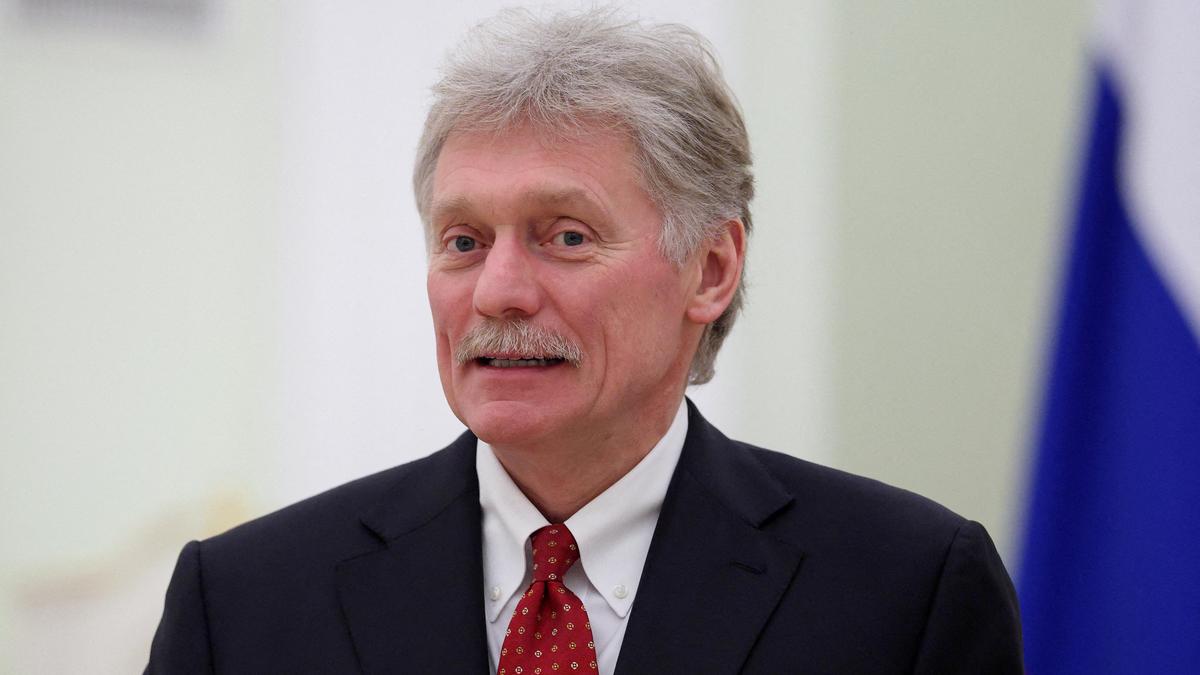
The Kremlin has officially pulled the curtain on its most vital trade corridor. On Friday, spokesperson Dmitry Peskov confirmed that Russia will no longer disclose quantitative data regarding its crude oil exports to India, citing a need to shield the trade from "too many ill-wishers." This move isn’t just a bureaucratic shift; it is the final transition of the Indo-Russian energy alliance into a permanent "shadow" economy. By scrubbing the ledger, Moscow is attempting to decouple its primary source of wartime revenue from Western surveillance at a moment when the global oil market is fracturing under the weight of new conflicts.
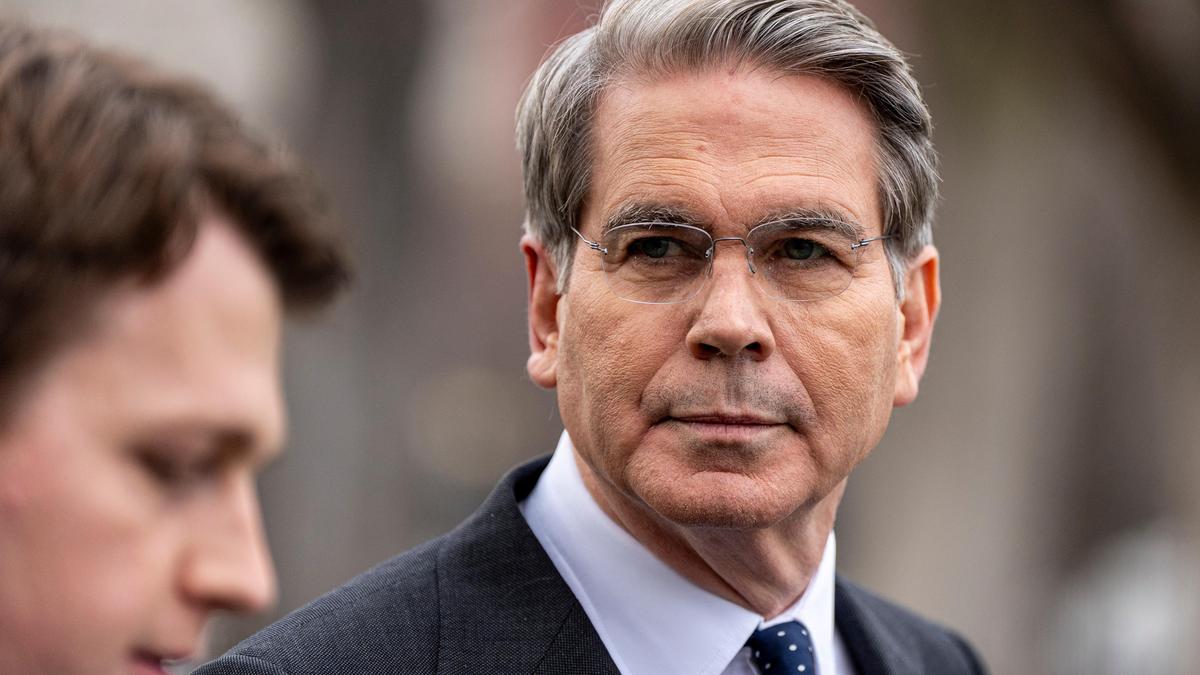
The timing is far from coincidental. The announcement landed just hours after U.S. Treasury Secretary Scott Bessent issued a temporary 30-day waiver allowing Indian refiners to purchase Russian crude despite escalating sanctions. While the waiver suggests a brief diplomatic thaw, the Kremlin’s move to hide the data reveals a deeper distrust of Western "permission." Moscow isn't interested in 30-day windows; it is building a fortress around its trade routes to ensure that when the waiver expires, the flow of oil continues in the dark.
The Geography of Secrecy
For decades, the global oil trade relied on transparency. You could track tankers, verify insurance, and audit payments. That world is dead. In its place, Russia has deployed what analysts call a "closed-loop" logistics system. Russian state television recently aired a map showing a massive flotilla of tankers moving from the Arabian Sea toward the Bay of Bengal, destined for India’s eastern coast. This was a rare, controlled leak—a signal of strength to the domestic audience—but the actual volumes remain a state secret.
This blackout is a direct response to the "ill-wishers" Peskov mentioned. In the parlance of the Kremlin, these are the G7 price-cap enforcers and the maritime intelligence firms that have spent the last two years tagging "shadow fleet" vessels. By refusing to publish data, Russia makes it significantly harder for the U.S. Office of Foreign Assets Control (OFAC) to pin down which specific Indian refineries are exceeding the G7 price cap, which currently sits at a dynamic level of approximately $44.10 per barrel for EU-linked services.
The 22 Million Barrel Mystery
The immediate catalyst for the Kremlin’s data ban appears to be Indian media reports suggesting Moscow could deliver 22 million barrels of crude to India in a single week. To put that in perspective, that is roughly 3.1 million barrels per day—a staggering volume that would represent nearly two-thirds of Russia’s total seaborne exports.
If those numbers are even remotely accurate, it suggests a massive redirection of Russian energy away from China and toward the Indian subcontinent. It also suggests that the "Hormuz Factor"—the near-total shutdown of the Strait of Hormuz following recent U.S.-Israeli strikes on Iran—has forced India to abandon its recent strategy of diversifying back toward Gulf suppliers like Saudi Arabia and Iraq.
India’s energy security is currently dictated by a brutal arithmetic. In January 2026, India’s imports of Russian oil had actually fallen to a 44-month low, as New Delhi tried to appease Washington in hopes of a broader trade deal. But when the Middle East ignited and the Strait of Hormuz became a no-go zone, the "cheap" Russian oil New Delhi had been trying to move away from suddenly became the only viable lifeline.
The Payment Trap
Hiding the volume of oil is only half the battle. The real vulnerability lies in how the oil is paid for. The Indo-Russian trade is currently a $70 billion lopsided mess. Russia sends tens of billions in oil; India sends back a fraction of that in pharmaceuticals and engineering goods. This has left Moscow sitting on a mountain of Indian rupees that it cannot easily spend or convert.
- The Yuan Solution: Russian sellers have increasingly demanded payment in Chinese yuan, which can be directly converted into rubles.
- The Indian Resistance: New Delhi is loath to use the currency of its primary regional rival, fearing it bolsters the yuan’s global status at the expense of the rupee.
- The Compromise: Most settlements are now being funneled through the UAE dirham, a currency pegged to the U.S. dollar, which ironically brings the trade back into the crosshairs of Western banks.
[Table of Indian oil import currency share, 2024 vs 2026]
| Currency | 2024 Share (%) | 2026 Share (%) (Est.) |
|---|---|---|
| U.S. Dollar | 45% | 15% |
| UAE Dirham | 30% | 50% |
| Chinese Yuan | 20% | 25% |
| Indian Rupee | 5% | 10% |
The Shadow Fleet's New Frontier
The Kremlin’s data ban isn't just about hiding oil. It’s about protecting the ships. As of 2026, the global "shadow fleet" has grown to over 1,300 vessels, many of which are aging, uninsured, and operating with their AIS (Automatic Identification System) transponders turned off. By not disclosing quantitative data, Russia shields these vessels from being linked to specific delivery volumes that could trigger secondary sanctions on Indian ports or insurance providers.
This is a high-stakes gamble. The EU is currently preparing its 20th sanctions package, which would end the price-cap regime in favor of an outright ban on maritime services for Russian crude. If approved, the "shadow fleet" will be the only way for Russia to move its oil to India. The Kremlin’s decision to hide the data is the first step in making that transition permanent.
The India Dilemma
For India, the Kremlin’s new secrecy is both a blessing and a curse. It provides plausible deniability to Western partners who want to see global oil supplies stay stable but need a face-saving way to ignore the breaking of the price cap. However, it also leaves Indian refiners at the mercy of a single, increasingly opaque supplier.
With 88% oil import dependency and the primary supply route through the Strait of Hormuz effectively closed, India has no choice but to follow Russia into the shadows. The transition is complete. The numbers are gone. All that remains is the oil.