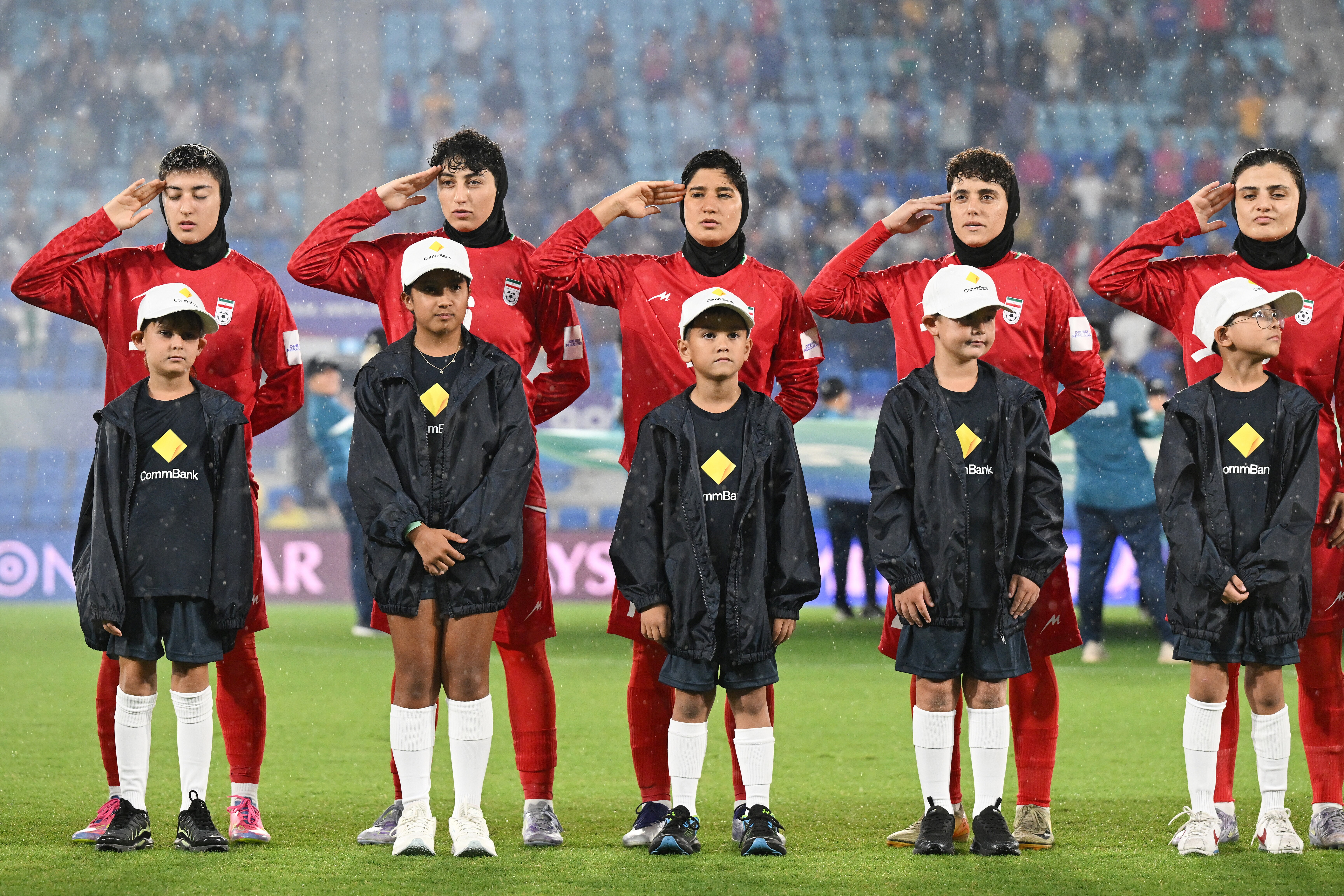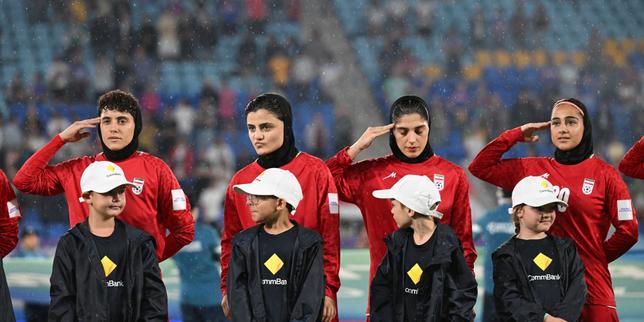
The roar of a stadium is usually a wall of sound designed to swallow everything in its path. It is a tidal wave of drums, horns, and synchronized chanting. But for five women standing on the grass, the most terrifying sound in the world was the one they refused to make.
They stood in a line, shoulders touching, the fabric of their jerseys heavy with the humidity of competition and the weight of a choice. The anthem began. It is a melody designed to stir the blood, a state-mandated prompt for loyalty. Most athletes move their lips out of habit, a mechanical reflex of the jaw. These five women kept theirs pressed firmly together.
In that moment, the silence wasn't a void. It was a roar of its own.
The Cost of a Closed Mouth
To understand why five members of the Iranian national football team are now walking through the arrivals gate of an Australian airport instead of training in Tehran, you have to understand the geography of risk. In many parts of the world, a protest is a weekend activity, something captured on a smartphone and posted to a feed before heading to dinner. In Iran, a protest is a high-stakes gamble where the currency is your life, your family’s safety, and your right to ever step onto a pitch again.
These athletes weren't just playing a game. They were navigating a minefield. Following the death of Mahsa Amini in 2022, the simple act of showing hair or refusing to sing a song became a declaration of war against a status quo that demands total domestic submission. When these five women chose to remain silent during the national anthem at an international tournament, they weren't just "making a statement." They were burning their return tickets.
The decision to seek asylum is never a "pivot" or a "strategic move." It is an amputation. It is the realization that the ground beneath your feet has become a trap, and the only way to keep your soul intact is to leave your body in a different hemisphere.
The Invisible Stakes of the Pitch
We often treat sports as a vacuum, a place where the only thing that matters is the flight of the ball or the timing of a tackle. We want our athletes to be gladiators—pure, focused, and divorced from the messy reality of the streets. But for these women, the pitch was the only platform they had left.
Imagine the locker room before that match. The air is thick with the scent of liniment and sweat. There is the usual tactical chatter, the snapping of shin guards, the lacing of boots. But beneath the surface, there is a vibrating tension. They know the cameras will find them. They know that back home, officials are watching the feed with notebooks open, ready to circle the faces of the defiant.
To play for your country while being hunted by its government is a psychological paradox that would break most people. You are wearing the flag on your chest while the people who fly that flag are the ones you fear most. Every goal scored is a victory for a nation you love, but also a propaganda tool for a regime you cannot support.
The Australian government’s decision to grant these five players permanent protection visas isn't just a bureaucratic footnote. It is a recognition of the fact that for these women, the game never ended at the final whistle. The "match" followed them into the hallways, into their DMs, and into the hushed phone calls with terrified parents back in Iran.
A New Kind of Home Turf
Australia is a long way from the streets of Tehran. The light is different here; it’s harsher, brighter, reflecting off an ocean that feels like the edge of the world. For the five players, the immediate relief of safety is often shadowed by the crushing weight of displacement.
The transition from national hero to refugee is a dizzying descent. One day you are representing millions on the global stage; the next, you are navigating the complexities of a foreign legal system, trying to figure out how to rebuild a life when your entire identity has been stripped down to a case file.
Consider the logistical nightmare of the soul. You have reached safety, yes. But your mother is still there. Your childhood pitch, the one with the cracked dirt and the goals made of rusted pipe, is still there. Your language, your food, the specific way the sun hits the mountains in the afternoon—all of it is now behind a curtain you may never step through again.
Australia has a complicated history with asylum seekers, but in this instance, the "Sports Diplomacy" visa serves as a rare bridge. It acknowledges that talent does not protect you from tyranny. If anything, being elite makes you a bigger target. You are a symbol, and symbols are either used or broken.
The Myth of the Neutral Athlete
There is a persistent, tired argument that politics has no place in sports. It’s a comfortable lie told by people who have never had to choose between their career and their conscience. For these five women, "neutrality" was a luxury they could no longer afford.
Silence is usually seen as an absence of action. But in the context of a televised international match, silence is a physical force. It is a refusal to lend your voice to a narrative that is killing people who look like you.
The facts of the case are simple: Five women didn't sing. The Iranian authorities noticed. Threats were made. Australia stepped in. But the human reality is a jagged, breathing thing. It is the sound of a suitcase clicking shut in a hotel room in the middle of the night. It is the feeling of looking at your teammates and knowing that some will go back and some will stay, and the group will never be whole again.
The courage required to stay silent is often greater than the courage required to speak. Speech can be a release, a venting of pressure. But silence—the deliberate, cold holding of one's breath while the world expects a song—that is a discipline. It is a declaration that your inner life is not for sale, even if the price is your home.
The Long Game
What happens to a striker when she no longer has a country to strike for?
The journey for these five athletes is just beginning. They are safe from the immediate threat of detention or worse, but they are now entering the long, quiet struggle of the exile. They will have to find new clubs, learn a new rhythm of play, and face the reality that they may never again hear their names chanted in the stadiums of their youth.
They didn't come to Australia for the beaches or the lifestyle. They came because they ran out of places to hide their truth.
The next time you see a team lined up for an anthem, look closely at their faces. Don't just listen for the music. Listen for the gaps between the notes. Listen for the women who aren't singing, because their silence is telling a story that the world needs to hear.
The stadium is empty now, the lights are dimmed, and the grass is recovering from the spikes of the game. But somewhere in a quiet suburb in Australia, five women are waking up in a world where they finally don't have to look over their shoulders before they breathe.
They lost their country, but they kept their voices. And in the end, that is the only victory that cannot be taken away by a whistle or a scoreboard.
The flight was long, the paperwork was endless, and the future is a blurred horizon, but for the first time in a long time, the silence is finally peaceful.