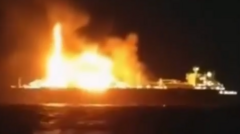
The Mediterranean just became a front line. On March 3, 2026, a Russian-flagged tanker named the Arctic Metagaz went from being a sanctioned "shadow fleet" workhorse to a fireball sitting at the bottom of the sea. It didn't hit a mine. It wasn't an engine failure. Russia says Ukrainian naval drones hunted it down and sank it 240 kilometers off the coast of Libya.
If you think this is just another headline about a boat sinking, you're missing the bigger picture. This is the first time a liquefied natural gas (LNG) carrier has been successfully targeted and destroyed in this conflict. It happened thousands of kilometers away from Ukraine's borders. It's a massive escalation that proves nowhere is safe for Russian energy exports.
The hunt for the Arctic Metagaz
The vessel wasn't exactly a secret. Built in 2003, the Arctic Metagaz was a 277-meter giant that had been dodging Western sanctions for months. It left Murmansk on February 24, loaded with 61,000 tons of LNG, and was supposedly heading for Port Said in Egypt. Egypt, for its part, has already denied any connection to the cargo.
The ship went dark on tracking systems as it exited Malta's exclusive economic zone on March 2. By 4:00 AM the next morning, the Mediterranean was lit up by explosions. Video footage, which analysts like H. I. Sutton have already scrutinized, shows a massive blaze on the deck. The ship didn't just burn; it basically split apart before disappearing beneath the waves between Libya and Malta.
How Ukraine reached out and touched someone
The big question is how. Russia’s Transport Ministry claims the drones were launched from the Libyan coast. If that’s true, it means Ukrainian special forces or their proxies are operating on the ground in North Africa. That's a terrifying thought for any merchant sailor working for Moscow.
While Kyiv hasn't officially claimed the hit, the fingerprints are familiar. We’ve seen the Sea Baby drones evolve. These things now have ranges of 1,500 kilometers and can carry 2,000-kilogram warheads. They aren't just "boats" anymore; they're semi-submersible cruise missiles that are incredibly hard to spot on radar in choppy Mediterranean waters.
- The shadow fleet strategy: Russia uses these older, sanctioned vessels to bypass the G7 price cap. They have opaque ownership and questionable insurance.
- The geographic shift: By moving the fight out of the Black Sea, Ukraine is forcing Russia to protect its assets globally, which they simply can't afford to do.
- The LNG factor: Striking oil is one thing. Blowing up a ship full of pressurized gas is a much more dangerous, and much louder, statement.
The ripple effect on energy markets
Vladimir Putin called this "international terrorism and maritime piracy." Honestly, he’s rattled because this hits the Kremlin's wallet where it hurts most. Russia has been banking on its LNG exports to fund the war effort. If tankers can be picked off in the middle of the Mediterranean, insurance premiums for these "shadow" vessels are going to skyrocket—if they can get insurance at all.
This isn't just about one ship. It's about the fact that 30 Russian crew members had to be pulled from lifeboats by the Maltese and Russian rescue services. It's about the reality that the "safe" transit routes through the Suez Canal are now target zones.
The environmental impact is also a concern, though experts say the gas itself likely evaporated. The real mess is the heavy fuel oil now leaking into the Libyan Search and Rescue zone.
What this means for the next phase
You can expect Russia to start arming its merchant ships or providing naval escorts. But the Mediterranean is a big place. You can't escort every tanker. Ukraine has figured out that it doesn't need a traditional navy to win at sea. It just needs a few fast drones and some brave operators with a satellite link.
This isn't the first time they've done this. In December 2025, they reportedly hit the Qendil off Crete. They're getting better at this. They’re getting bolder. The Mediterranean used to be a playground for the world’s navies; now, it’s a dark alley where a billion-dollar cargo can be turned into a reef in minutes.
If you’re tracking global energy security, keep your eyes on the Libyan coast. The rules of engagement just got tossed overboard.