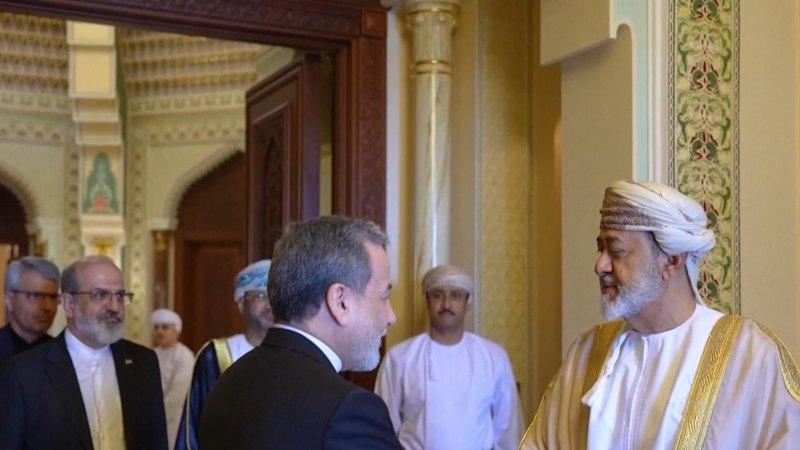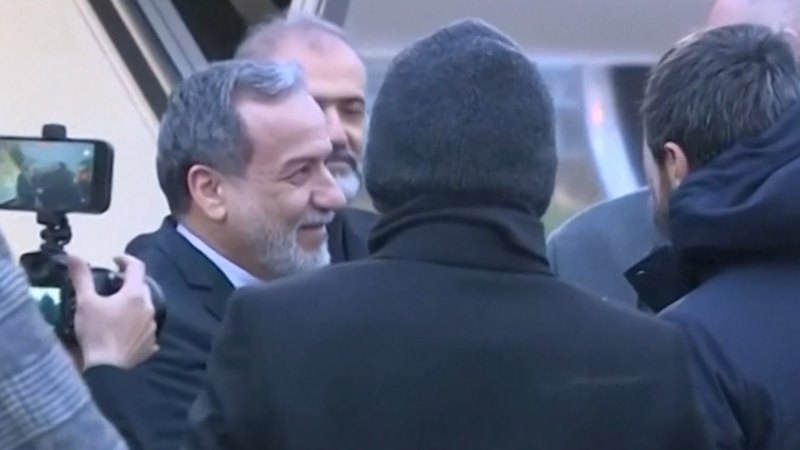
Iranian Foreign Minister Abbas Araghchi arrived in St. Petersburg this week for a high-stakes meeting with Vladimir Putin that signals a seismic shift in the Middle Eastern conflict. While the official narrative centers on "strategic partnership" and regional stability, the reality is far more transactional. Iran is currently locked in a direct military confrontation with the United States and Israel—a conflict that began with massive airstrikes on February 28—and Tehran is now looking to Moscow to bridge the gap between total isolation and tactical survival.
This visit is not a standard diplomatic exchange. It is a plea for the hardware and intelligence required to keep the Islamic Republic’s regional ambitions from collapsing under the weight of a U.S. naval blockade and a paralyzed economy.
The Secret Message from Tehran
During their meeting at the Boris Yeltsin Presidential Library on Monday, Putin confirmed he had received a private message from Iran’s Supreme Leader, Mojtaba Khamenei. While the Kremlin remained tight-lipped about the contents, the timing is impossible to ignore. Following the February 28 strikes, rumors have swirled regarding the health and status of the Supreme Leader, with the Trump administration suggesting he was injured early in the campaign. By publicly acknowledging this message, Putin is performing a specific type of theater. He is validating the legitimacy and continuity of the Iranian leadership at a moment when its domestic and international standing is most precarious.
The optics serve a dual purpose. For Tehran, it shows a defiant front against Western "aggression." For Moscow, it reinforces the image of Putin as the indispensable power broker of the "Global South," a leader who can navigate the wreckage of a regional war that Washington helped ignite.
Intelligence as the New Currency
The most potent aspect of this alliance is not found in public treaties, but in the digital ether. Since the war began, Russia has moved beyond mere verbal support to provide Iran with critical, real-time intelligence.
- Satellite Feeds: Russian assets have reportedly provided Iran with data on U.S. warship movements in the Persian Gulf.
- Electronic Warfare: Cooperation has deepened in the realm of jamming and signal interception, helping Iran’s air defenses attempt to counter sophisticated Israeli strikes.
- The Drone-for-Defense Swap: The flow of Shahed drones from Tehran to the Ukraine front has now turned into a reverse flow of advanced Russian S-400 systems and electronic countermeasures intended to protect Iranian nuclear sites like Bushehr.
This is a marriage of convenience born from mutual desperation. Russia needs a distraction from its own bogged-down campaign in Ukraine, and a hot war in the Middle East provides exactly that. The more the U.S. is forced to commit carrier strike groups to the Strait of Hormuz, the less focus and funding remain for Kyiv.
The Strait of Hormuz Standoff
A central theme of the Araghchi-Putin talks was the "freedom of navigation" in the Strait of Hormuz. Iran has effectively throttled this maritime choke point, through which 20% of the world’s oil and natural gas used to pass. The global economy is feeling the squeeze. Energy prices have skyrocketed, and in a twist of geopolitical irony, this has been a windfall for the Kremlin.
As Iranian oil exports are choked off by the U.S. blockade, Russian Urals crude has surged to over $100 per barrel. Moscow is effectively profiting from the very war its "partner" is losing. This creates a complex dynamic where Putin wants Iran to remain standing as a bulwark against the West, but has little incentive to see the conflict end too quickly if it keeps oil revenues flowing into Russian coffers.
The Mediation Mirage
Russia has offered to act as a mediator, even suggesting it could take Iran’s enriched uranium off its hands to lower the regional temperature. It is a classic Kremlin move: set the house on fire, then offer to sell the fire extinguisher.
The Trump administration has so far ignored these overtures, insisting that Washington holds all the cards. But as Araghchi moves from Moscow to Oman and Pakistan, it is clear that Tehran is trying to build a diplomatic shield. They are searching for a way to reopen the Strait of Hormuz and end the naval blockade without looking like they have surrendered.
The St. Petersburg meeting proves that the "Strategic Partnership" signed in 2025 is no longer a paper tiger. It is a functional, if cynical, alignment. Russia will provide just enough support—intelligence, vetoes at the UN, and advanced hardware—to keep Iran in the fight, but not enough to risk a direct kinetic clash with the United States.
Tehran is learning the hard way that in the world of high-stakes power politics, a "strategic friend" is often just a creditor waiting for the bill to come due. As the conflict enters its third month, the shadow of Moscow over the Persian Gulf has never been longer, or more self-serving.